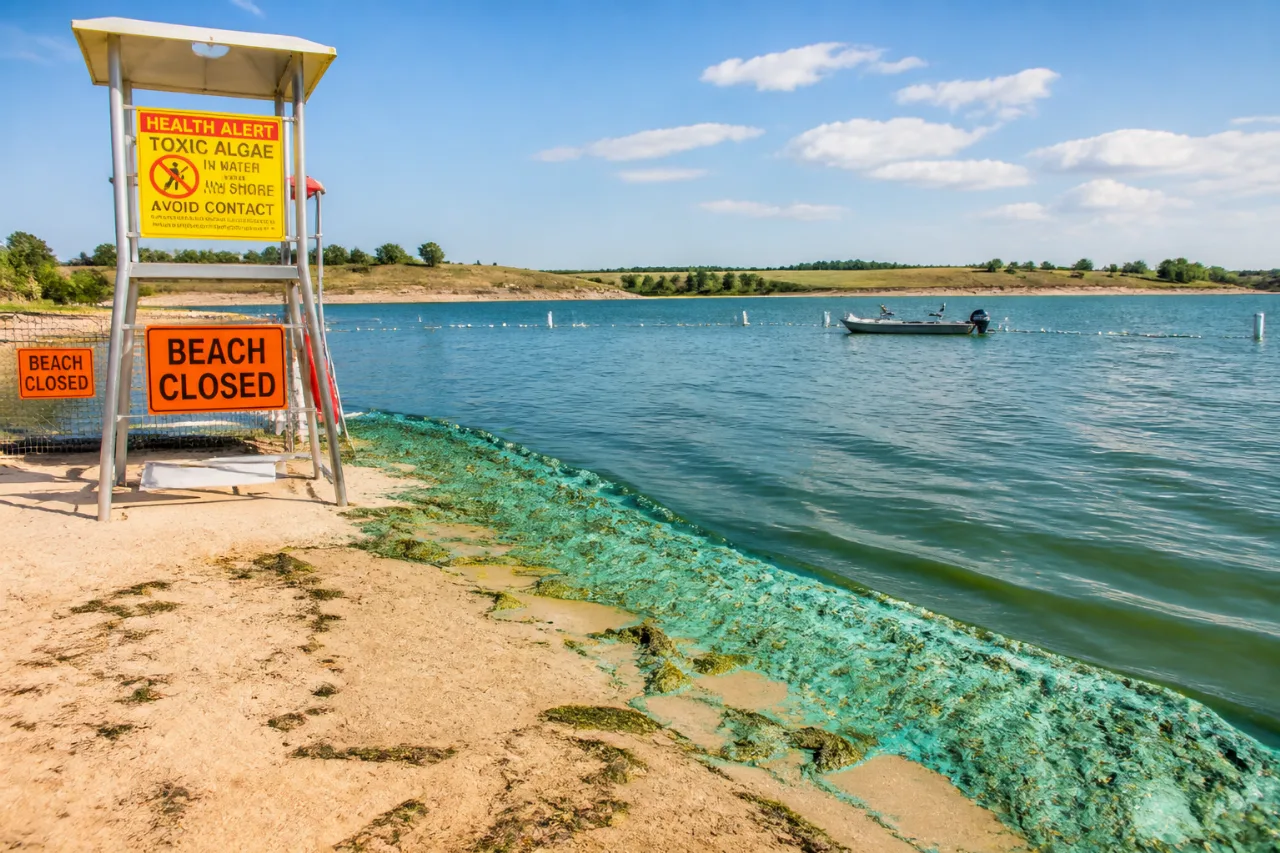
The Nebraska Department of Health and Human Services has issued health alerts for Harmful Algal Blooms (HABs) at Maskenthine Reservoir in Stanton County and Rockford Lake in Gage County after recent tests showed toxin levels above the state’s safety threshold.
Samples collected earlier this week at both lakes measured above the Department of Water, Energy and Environment’s threshold of 8 parts per billion (ppb) of total microcystin, a toxin produced by certain strains of blue‑green algae. In response, state officials are posting warning signs and closing designated swimming beaches at the affected sites.
What residents need to know
Recreational boating and fishing are still allowed at the two lakes, but the public is urged to exercise caution to avoid exposure to the water. Specifically, officials advise people to avoid swallowing lake water and to refrain from activities that could lead to ingesting contaminated water. Pet owners should not allow animals to enter the water or drink from the lake.
People may still use shoreline areas for camping, picnics and other outdoor activities so long as they remain clear of visible algal scums.
- Swimming beaches: Closed during the health alert.
- Boating and fishing: Permitted with caution.
- Pets: Keep away from the water and do not allow them to drink lake water.
- Visible blooms: If you see green, blue‑green, or scummy material on the water, avoid contact and report it.
Monitoring and data
The state has been conducting weekly sampling at public lakes with swimming beaches since May 18, 2026. Sampling will continue weekly through September 14, 2026. Results for microcystin and bacteria are updated on Fridays on the DWEE website.
Officials warn that HABs can develop in the period between sample collection and reporting, and that algal blooms may be present in lakes not included in the state’s sampling network.
| Lake | County | Current status |
|---|---|---|
| Maskenthine Reservoir | Stanton County | Microcystin levels above 8 ppb — health alert posted |
| Rockford Lake | Gage County | Microcystin levels above 8 ppb — health alert posted |
State and local partners performing sampling include the Central District Health Department, Nebraska Public Power District, several Natural Resources Districts and the U.S. Army Corps of Engineers, among others.
Where to find the latest results
Weekly sampling results and an interactive Beach Watch map are available on state websites. The DWEE posts updates each Friday, and the interactive map can be accessed through the Department of Environmental Quality’s site. Officials encourage the public to consult those resources before visiting public lakes.
If you believe you or your pet have been exposed to contaminated water, contact a health care provider or local veterinarian. For more information about what to look for and how to reduce exposure, the state’s HAB fact sheet and the DWEE resources provide guidance and contact information.
News Block will continue to monitor updates from state agencies and local health departments and will report changes to advisories or reopenings.