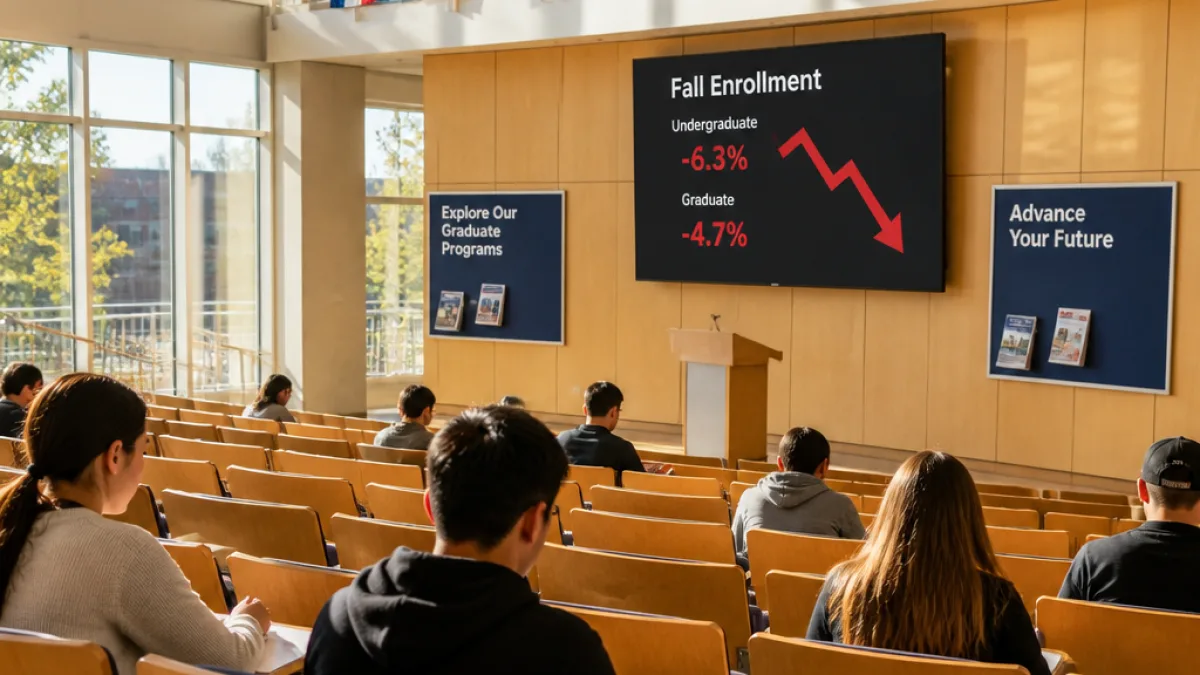
The University of Nebraska system reported a decline in fall enrollment compared with last year, with total headcount falling to 48,948 students — a decrease of roughly 700 students, or 1.4%, according to data released Tuesday.
Who's driving the drop
System officials said the biggest contributors to the decline were fewer international students and a drop in graduate enrollment. International student numbers fell about 11% (roughly 318 fewer students) while graduate enrollment decreased by 5.6% (about 530 fewer students).
University leaders and the release point to several broader forces behind the decreases: lower federal research funding that affects graduate recruitment, national demographic trends such as declining birthrates, and changes in how students move through college.
"Students are taking advantage of programs that allow them to move through college faster, and more quickly entering the workforce," NU President Jeffrey Gold said in a statement.
Gold framed some of the shifts as positive, noting an uptick in new undergraduates and quicker progress toward degrees.
Campus-by-campus snapshot
| Campus | Fall 2026 enrollment | Change from 2025 |
|---|---|---|
| University of Nebraska–Lincoln | 23,577 | down 1.6% |
| University of Nebraska at Omaha | 14,810 | down 1% |
| University of Nebraska at Kearney | 5,477 | down 3.9% |
| University of Nebraska Medical Center | 4,847 | up 0.6% |
| Nebraska College of Technical Agriculture | 237 | up 11.3% |
Notable trends and context
- The system reported an increase in first-time freshmen to 7,987, a rise of 163 students (about 2%).
- Total credit hours across the system remained relatively steady at roughly 602,000, a slight decline of 0.7%, suggesting students are maintaining or increasing course loads to accelerate graduation.
- Some campuses bucked the overall trend, with the medical center and the technical agriculture college recording gains.
Officials said figures were calculated using enrollment on the sixth day of classes. University spokespeople linked the graduate decline to national patterns in federal research funding and reiterated that demographic shifts are affecting higher education nationwide.
University administrators will now weigh the enrollment changes as they plan budgets, staffing and programing for the coming year. For students and families, the immediate practical impacts may appear in course availability, advising capacity and financial aid allocations at particular campuses.
Reporting from Lincoln. For more information on campus-specific enrollment and program changes, contact the University of Nebraska system communications office.