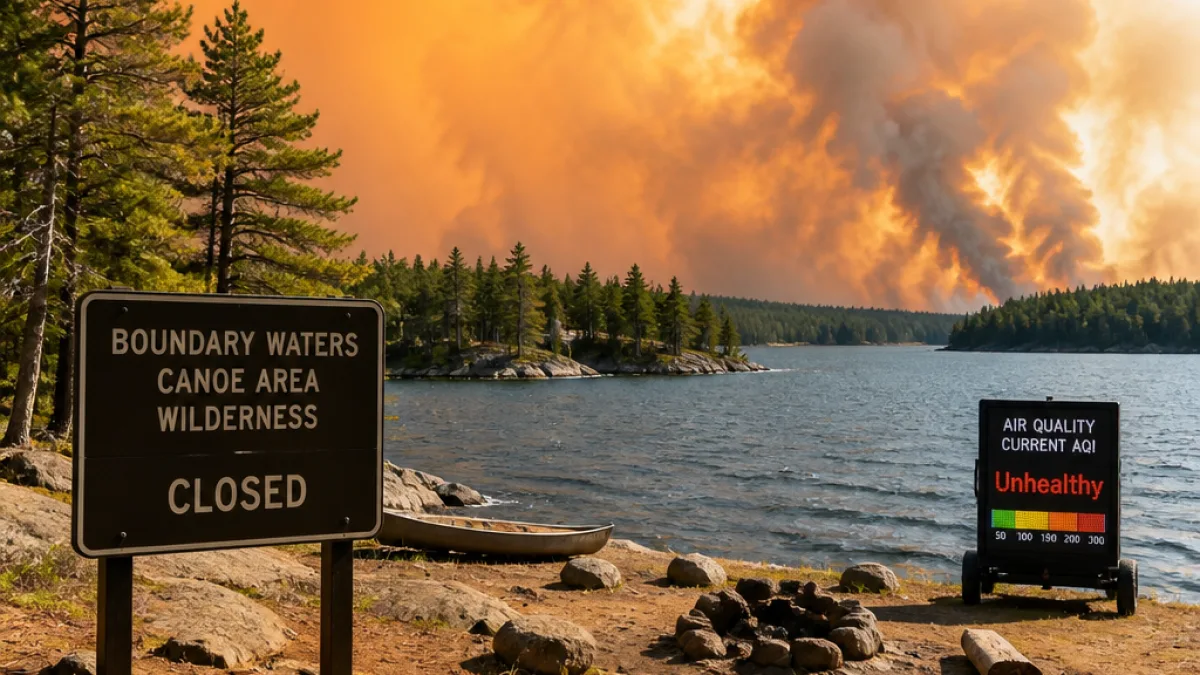
The U.S. Forest Service has closed the Boundary Waters Canoe Area Wilderness as multiple wildfires burn across northeastern Minnesota and an extremely hot, dry weather pattern is expected into the coming week.
Where smoke and fires have been reported
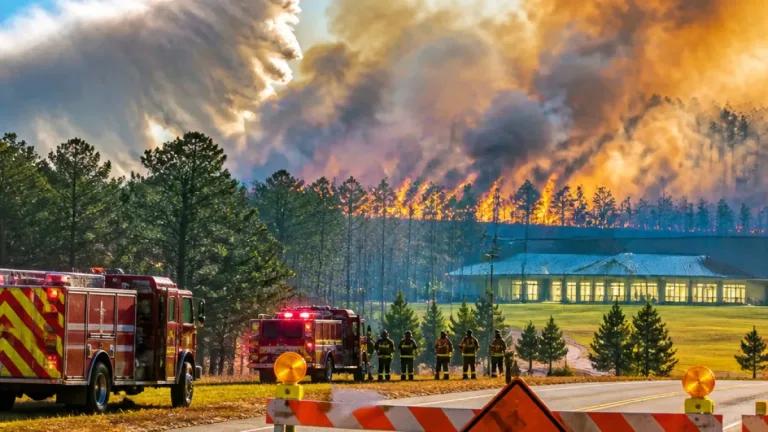
Photographs and agency updates show smoke near the Fall Lake Campground outside Ely, and visible plumes from the Bear Trap Fire column on the Superior National Forest on Saturday, July 11. Smoke was also observed from Winton. As of 10 a.m. Tuesday, the far-northeastern town of Grand Portage had the worst air quality in the United States, according to the U.S. Environmental Protection Agency's AirNow data.
Public-safety implications and regional stakes
The closure of the Boundary Waters affects campers, outfitters and residents relying on the wilderness for recreation and local commerce. Smoke and poor air quality present health risks for sensitive groups across the North Shore and adjacent communities, while the hot, dry forecast raises the potential for further fire activity and complications for containment.
- Closures: Boundary Waters Canoe Area Wilderness closed by U.S. Forest Service.
- Smoke impacts: Visible near Fall Lake Campground, Ely and Winton; Grand Portage registered the nation's worst air quality Tuesday morning.
- Weather risk: Extremely hot, dry conditions are forecast to continue into the upcoming week, increasing wildfire concern.
Practical information for residents and visitors
Officials have underscored the risks of traveling into smoke-impacted areas and advised people to monitor local updates. For real-time air quality, the EPA's AirNow.gov provides current readings. People with respiratory or cardiovascular conditions, older adults and young children should limit outdoor exertion when air quality is poor.
| Location | Reported impact |
|---|---|
| Fall Lake Campground (near Ely) | Visible smoke |
| Winton | Smoke visible from town |
| Grand Portage | Worst air quality in U.S. as of 10 a.m. Tuesday (EPA/AirNow) |
Photos accompanying agency releases and local reporting document smoke columns and hazy conditions across the region. The closure and air-quality alerts underscore the immediate impact on public health and local outdoor recreation economies, and signal an elevated fire-management posture for federal and state agencies as conditions evolve.
Local residents and visitors should watch for further announcements from the U.S. Forest Service and state agencies for potential evacuations, additional closures or updated health guidance.