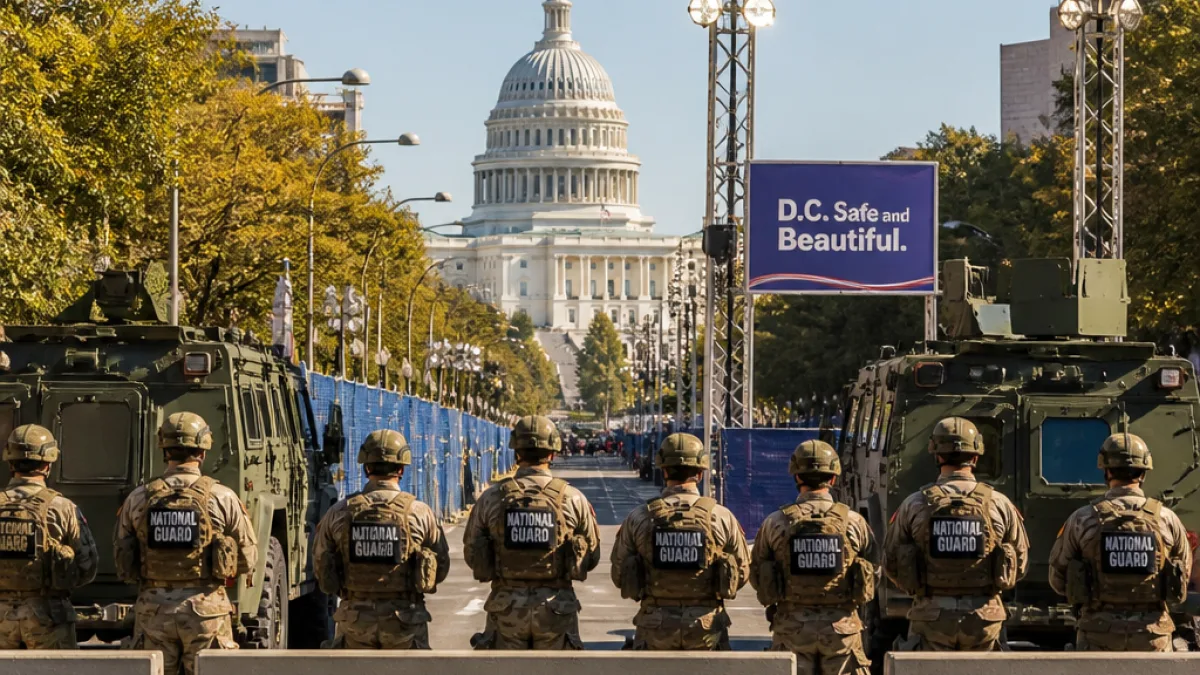
The Pentagon has confirmed that National Guard troops will continue to operate in Washington, D.C., through Inauguration Day, Jan. 20, 2029, as part of the administration’s anti-crime initiative unless the president orders an earlier end to the deployment.
Scope and current posture
A Pentagon spokesman told local media the so-called “D.C. Safe and Beautiful Mission” has been extended to Jan. 20, 2029, “or until terminated by the President.” According to a joint task force count, as of July 8 there were nearly 5,150 National Guard personnel from multiple states serving in the District.
"The DoW remains committed supporting the D.C. Metropolitan Police Department and our Federal law enforcement partners until law and order are fully restored in our Nation's Capital," a Pentagon official told 7News.
Who is contributing
The Pentagon statement notes support from nine states and territories. The forces are assigned to assist with Freedom 250 and related summer activities running from May through the end of August, the official said.
- Deployment began last August after the president issued an executive order declaring a crime emergency.
- For this summer, Guard troops are tied to ceremonial and public-safety missions surrounding large events on the Mall and at RFK Stadium.
- D.C. officials have variously pushed back and sought clarity about command, duties and costs.
Local reactions and implications
District Councilmembers have criticized the prolonged activation, pointing to long-term downward trends in some crime statistics and raising questions about the necessity of a multiyear Guard presence. City lawmakers also face practical issues related to coordination with federal authorities and potential strains on municipal resources.
For residents and visitors, the extended mission means a continued visible military presence in public spaces during large events this summer and possibly beyond. The Pentagon framed the deployment as support to the Metropolitan Police Department and other federal law enforcement partners rather than as a replacement for civilian policing.
| Item | Detail |
|---|---|
| Authorized end date | Jan. 20, 2029 (unless terminated sooner) |
| Personnel (as of July 8) | ~5,150 National Guard members |
| State/territory contributors | 9 |
| Summer operations | May through end of August (Freedom 250 and related events) |
What to watch next
Residents and elected officials will be watching for several turning points: any formal change in the president’s directive; requests from the District for additional federal coordination or oversight; and reporting about mission costs, scopes of authority and interactions between Guardsmen and civilians. The D.C. Council and local advocacy groups may seek briefings and legal clarification about civil liberties, oversight and the criteria for ending the deployment.
The extended presence of armed, uniformed personnel in public spaces raises practical questions about crowd management at events, training requirements, and how city agencies and the Guard delineate responsibilities. City residents looking for updates should follow announcements from the Pentagon, the D.C. Metropolitan Police Department and the Office of the Mayor for operational notices affecting street closures, event security and public access.
As Washington continues to host large-scale summer events, the Guard’s role is likely to remain a subject of local debate — balancing public-safety aims with concerns about prolonged militarized presence in the nation’s capital.