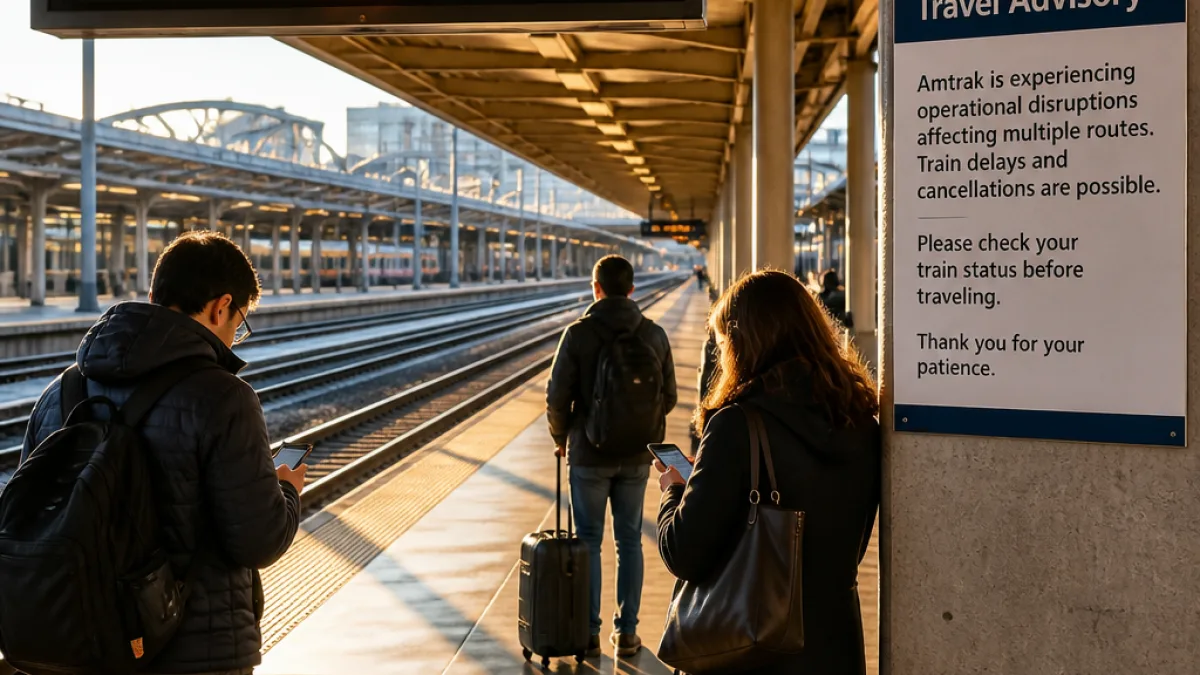
Amtrak passengers traveling through the Washington area faced significant disruption Saturday after a regional signal outage prompted the railroad to warn of delays and cancel scheduled service between Boston and Washington.
What happened and who’s affected
At 5:53 a.m. Saturday, Amtrak issued a travel advisory saying all services operating out of Washington could experience delays of up to two hours because of a signal problem in the Washington area. The advisory did not give an estimated time for normal operations to resume.
The outage forced Amtrak to cancel two Northeast Corridor trains that serve long-distance passengers: Train 160 between Washington and Boston, and Train 165 from Boston to Washington. The company said affected customers may rebook on the next available service at no additional cost.
Practical guidance for travelers
- Check train status before heading to the station; Amtrak advised travelers to confirm schedules as additional itinerary changes remain possible.
- Rebooking is available at no extra charge for passengers on the canceled trains.
- Expect delays if your trip originates, terminates or connects through Washington; plan for up to two hours of additional travel time per Amtrak’s advisory.
Union Station and other Washington departures typically handle heavy commuter and intercity traffic, so even a localized signaling issue can ripple across the Northeast Corridor. Officials did not provide further detail Saturday morning on the cause of the outage or a timeline for repairs.
Fast facts
| Item | Detail |
|---|---|
| Advisory issued | 5:53 a.m., Saturday, July 18, 2026 |
| Maximum delay warned | Up to two hours |
| Canceled trains | Train 160 (Washington–Boston); Train 165 (Boston–Washington) |
| Rebooking | Available on next service at no additional cost |
Commuters and intercity travelers should follow Amtrak’s website, mobile app or station postings for the latest updates. News Block will provide follow-up coverage if Amtrak issues further information on the cause of the signal outage or additional service changes affecting the Washington region.