Coordinated demonstration draws scrutiny despite no reported arrests
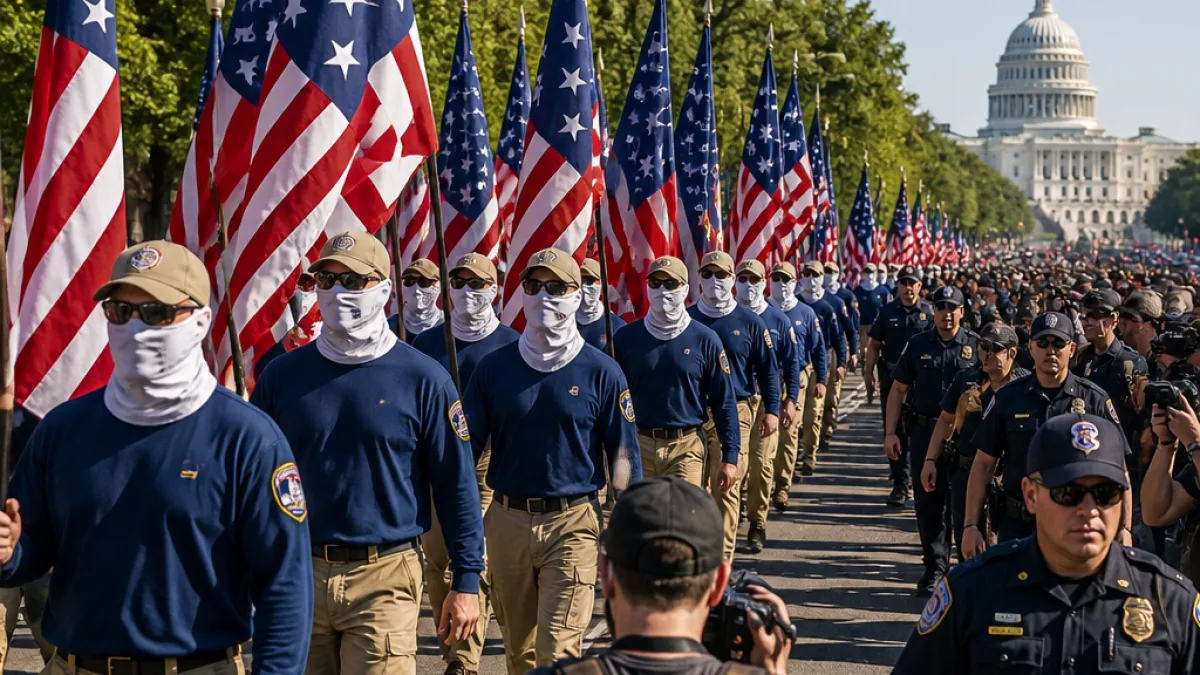
On July 4, hundreds of people affiliated with the group Patriot Front marched through Washington, D.C., during the city’s Independence Day events, drawing attention for their uniform appearance and branded materials. Participants wore coordinated apparel — notably khaki pants, blue shirts and white face coverings — and carried flags, including Patriot Front insignia, Confederate banners and modified American flags. Chants such as “Reclaim America” were heard along their route. Metropolitan Police monitored the demonstration and, according to public reports, recorded no arrests or major incidents.
First Amendment protections and a high-profile comment
The march prompted renewed public discussion about the line between protected political expression and unlawful conduct. On CNN’s State of the Union broadcast the day after the march, U.S. Interior Secretary Doug Burgum said that while he found the group’s ideology objectionable, the demonstration itself was protected speech because participants had not broken the law.
“protected by the First Amendment because participants had not violated the law.”
The comment fed broader debate over how federal officials, and the current administration, identify and respond to white supremacist organizations.
Media strategy and concerns from researchers
Observers and journalists have pointed to Patriot Front’s deliberate use of imagery and video as a core element of its operations. Members frequently adopt matching gear and appear to come prepared with protective equipment; reporting shows they sometimes wear shin guards and carry shields. The group also records footage from body cameras, which is later processed by an in-house media team and distributed online, a tactic critics say amplifies visibility and aids recruitment, particularly of younger participants.
- Appearance: coordinated clothing (khaki pants, blue shirts, white face coverings)
- Materials: Patriot Front, Confederate and altered U.S. flags
- Tactics: body cameras, staged imagery, organized chants
Local impact and why D.C. attention matters
Washington’s role as the nation’s capital makes demonstrations here both symbolic and strategic for groups seeking national reach. Public safety officials in the District must balance the constitutional right to assemble and speak with the responsibility to protect residents and visitors. Even when demonstrations are lawful and nonviolent, their presence can heighten anxiety among communities targeted by extremist rhetoric and imagery.
| Detail | Fact |
|---|---|
| Date | July 4 |
| Location | Washington, D.C. |
| Group | Patriot Front |
| Police response | No arrests reported |
Local residents and civil-rights advocates have repeatedly urged vigilance and reporting when they see targeted harassment or vandalism. City agencies and nonprofits that serve communities often provide guidance and resources after demonstrations to address safety concerns and community wellbeing.
Researchers who study extremist movements say the visual and media-driven approach used by Patriot Front is designed to normalize membership and portray the group as disciplined and unstoppable — an image crafted to appeal to disaffected youth. Investigations by news organizations have described the group as a secretive, young membership network that ramped up publicity efforts after the 2017 events in Charlottesville.
For Washington residents, the practical questions remain: how law enforcement will monitor future demonstrations, what steps city and federal agencies will take to counter online recruitment and propaganda, and how community groups can support neighbors affected by the display of extremist symbols. As the debate continues, officials and residents alike will be watching how authorities balance civil liberties with proactive measures to prevent violence and intimidation.
— Reporting from Washington, D.C.