
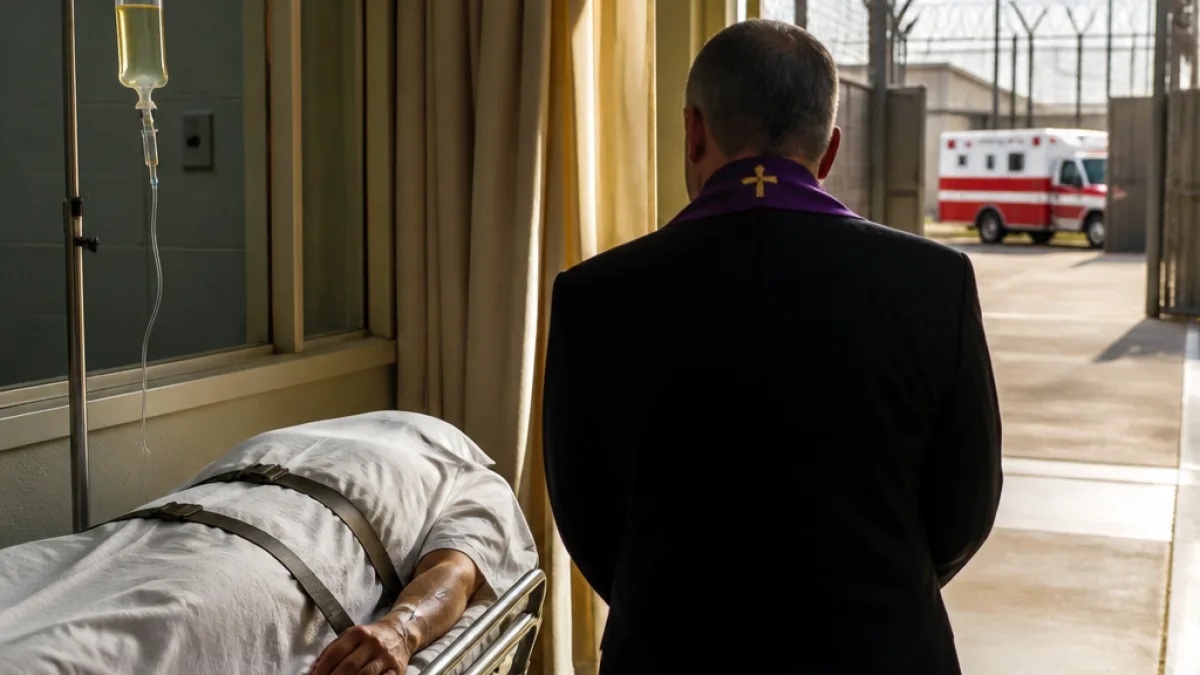
NASHVILLE — Christa Pike, 50, survived a scheduled execution Wednesday evening at the state prison in Nashville after two doses of the drug intended to carry out the sentence failed to stop her breathing, according to media witnesses.
What happened inside the death chamber
Witnesses described the scene beginning shortly after 7:00 p.m. Pike was strapped to a gurney with an IV in her arm as the curtain separating the chamber from the media observers was raised at approximately 7:27 p.m. Her spiritual adviser remained at her side, offering comfort before officials began administering the lethal injection.
Throughout the procedure Pike appeared responsive at times. She spoke, smiled and asked prison staff whether a sensation of pain in her arm was normal. Ten minutes after the curtain rose — about 7:37 p.m. — she sighed, and at 7:41 p.m. a small rock- or paperweight-sized object was placed on the ledge that separates the execution chamber from the control room. At 7:46 p.m. the curtain was closed, blocking the witnesses’ view; it rose again three minutes later.
"I’m ready to be free," Pike told witnesses before the injection began, adding, "This is a happy day."
Outcome and immediate aftermath
After two injections of pentobarbital, Pike continued to breathe and produce sounds described by witnesses as snoring. She also complained about her arm. Rather than the expected outcome of death, Pike left the prison in an ambulance, not a hearse.
The execution would have marked the first time Tennessee executed a woman in more than two centuries; Pike was 18 at the time of the 1995 killing for which she was sentenced to death. Media organizations in the chamber, including The Associated Press, witnessed the attempt.
Timeline
| Time (approx.) | Event |
|---|---|
| 7:27 p.m. | Curtain raised; Pike strapped to gurney; spiritual adviser present |
| 7:37 p.m. | Pike sighed; remained responsive |
| 7:41 p.m. | Small weight placed on ledge separating chamber and control room |
| 7:46 p.m. | Curtain closed; view blocked from witnesses |
| 7:49 p.m. | Curtain raised again; later Pike leaves by ambulance |
Questions raised
- Protocol and transparency: The placement of the small object on the ledge and the subsequent curtain closure appeared to correspond with internal steps of the lethal-injection protocol; officials have not publicly explained those actions.
- Medical outcome: Two doses of pentobarbital did not produce death as intended, prompting immediate scrutiny of how the drug was administered and monitored.
- Legal and ethical implications: The botched attempt touches on broader debates about execution methods and oversight in Tennessee.
The state Department of Correction has not released a detailed public account explaining why the procedure did not result in death, nor has it provided additional specifics on the apparent pause and curtain closure during the process. As questions mount, state officials will likely face calls for a review of execution practices and for greater transparency about protocols and medical monitoring.
For now, the immediate consequence is that a scheduled execution did not result in death, leaving unanswered legal and procedural issues that affect victims’ families, the inmate, and the institutions responsible for carrying out capital punishment.
Reporting from the chamber and media witness area formed the basis of this account.