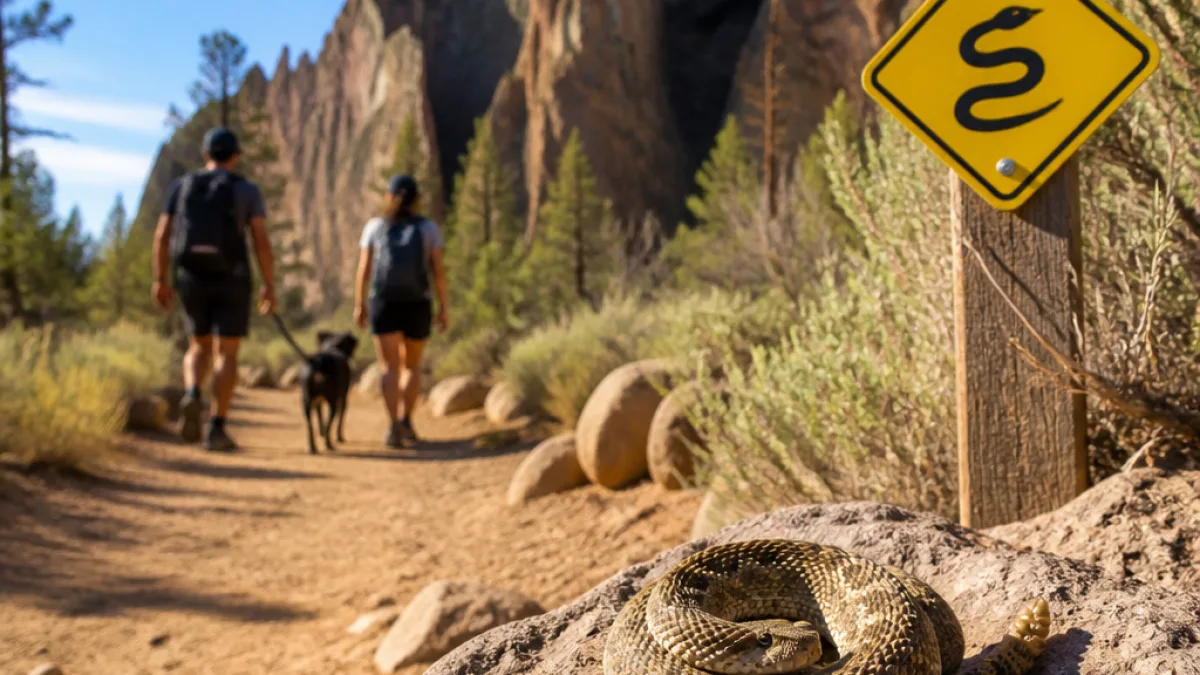
Central Oregon outdoor enthusiasts were reminded this week that venomous snakes remain part of the landscape after a Northern Pacific rattlesnake was observed at Smith Rock State Park on July 8. The sighting — reported along the Canyon Trail — is a prompt for hikers, climbers and pet owners to refresh basic safety precautions and know how to respond if they meet a rattlesnake on the trail.
Where and when you’re most likely to see them
Oregon is home to about 15 native snake species, including the venomous western rattlesnake and its subspecies, the Northern Pacific rattlesnake, which can occupy dry, rocky country in central Oregon. Rattlesnakes often favor crevices near den sites and are most commonly observed in spring and fall, or during cooler parts of the day and night; during the hottest hours in mid-summer they typically shelter from the heat.
Simple steps to avoid an encounter
Park managers and the Oregon Department of Fish and Wildlife recommend common-sense habits that reduce the chance of a close encounter or a bite:
- Stay on well-used trails and avoid walking through thick brush or rock piles.
- Watch where you put your hands and feet — avoid reaching or stepping where you can’t see.
- Keep pets leashed and close at hand; pets are often the first to disturb a snake.
- Wear over-the-ankle boots and long, loose pants when hiking in rattlesnake country.
- Make noise or tap a walking stick on the ground to warn snakes of your approach.
“Tread carefully, stay on the trail, and watch where you sit,”
— advice shared by SmithRock.com following the recent sighting.
If you see a rattlesnake
Wildlife officials emphasize that rattlesnakes are generally avoidant of people. The first action should be to give the snake plenty of space and move away calmly in the opposite direction. As ODFW puts it:
“Snakes tend to be inconspicuous, preferring to move away and hide or lie still in the hope of being overlooked.”
Do not try to handle, harass or kill a rattlesnake — these actions increase the risk of a defensive strike and are often illegal in protected areas.
What to do if someone is bitten
While bites are uncommon when people follow precautions, they can occur. The immediate focus after a bite should be on rapid medical evaluation. Basic guidance from wildlife and health authorities includes keeping the bitten person calm and still, seeking emergency medical care right away, and avoiding unproven or harmful first-aid measures such as cutting the wound, applying a tourniquet, or attempting to suck out venom.
| Situation | Recommended action |
|---|---|
| See a rattlesnake | Back away slowly; give at least several yards of space |
| Bitten | Call emergency services; keep victim calm and immobilized; do not use tourniquets or cuts |
| Hiking with pets | Keep pets leashed and close; avoid allowing pets to explore rock crevices |
Rattlesnake presence is part of recreating in much of central Oregon. As visitation to public lands remains high in summer, officials say vigilance and respect for wildlife are the best ways to prevent accidents. Park visitors who encounter a rattlesnake are encouraged to report the sighting to park staff so they can share information with other visitors and monitor activity in heavily used areas.
For the most current guidance and local alerts, check the Oregon Department of Fish and Wildlife and the official Smith Rock State Park resources before heading out.