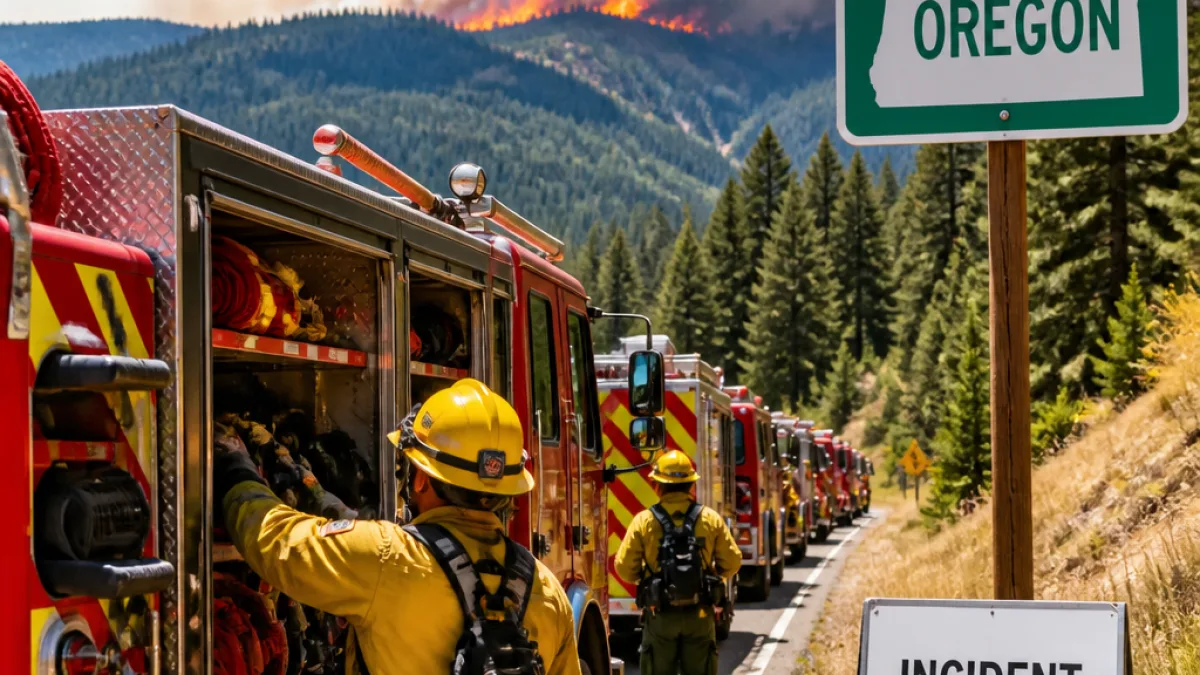
California announced Wednesday that it has deployed 10 CAL FIRE firefighters to Oregon to help lead suppression efforts on the East Evans Creek Fire, a blaze that has burned more than 2,600 acres and remained at 0% containment as of July 14, 2026.
Neighbor helping neighbor across the Northwest Compact
The deployment, announced by California Gov. Gavin Newsom and CAL FIRE leadership, marks the first time the state has sent personnel to Oregon under the Northwest Compact. The California crew departed Tuesday and is expected to remain in Oregon for up to 14 days, according to the announcement.
“The principle of neighbor helping neighbor is one of California’s core values and it’s how we respond to major wildfires. Oregon has been there to help us, and now we are showing up with a helping hand.”
CAL FIRE Director and Fire Chief Joe Tyler emphasized the longstanding mutual aid relationship between the states, noting California will maintain full staffing levels at home by deploying reserve engines so capacity in California is not diminished during this transfer of resources.
What officials say and what it means locally
State officials framed the move as reciprocity: Oregon crews have in recent years assisted California during large incidents, including the 2025 Eaton and Palisades Fires. This latest transfer places ten experienced CAL FIRE personnel in “critical leadership positions” on the East Evans Creek incident, a role that typically involves incident command, strategy planning and coordination among local, state, federal and tribal agencies.
- Personnel sent: 10 CAL FIRE firefighters in leadership roles.
- Fire size: Over 2,600 acres burned.
- Containment: 0% as of July 14, 2026.
- Length of deployment: Up to 14 days.
For communities near the East Evans Creek Fire, the infusion of experienced leadership can speed coordination of resources and help shape tactics on the ground. For Oregon more broadly, the deployment highlights the cross-border nature of wildfire response in the western U.S. — where weather, smoke and resource needs often span state lines.
State mutual aid and capacity
California said its nationally recognized mutual aid system has long sent trained personnel and specialized resources to disasters outside the state. Officials said the current deployment will not compromise California’s ability to protect its communities because reserve resources and mutual aid structures remain in place.
| Item | Detail |
|---|---|
| Number of CAL FIRE personnel | 10 |
| Reported size of fire | 2,600+ acres |
| Containment (July 14) | 0% |
| Expected deployment duration | Up to 14 days |
Residents should continue to follow official notices from Oregon emergency management and local fire agencies for evacuation orders, road closures and air quality alerts. While this announcement does not change local evacuation status, it signals additional leadership resources are on hand as crews work to establish containment lines amid elevated fire weather and gusty winds.
The move also underscores broader trends: western states increasingly rely on formal compacts and mutual aid systems to move experienced teams rapidly during peak fire season. For Oregonians watching the East Evans Creek incident, the arrival of California leaders represents both solidarity and a tactical boost in an unfolding wildfire response.