Major construction and restoration projects across Washington are altering familiar public spaces and raising fresh questions for residents about preservation, access and long-term stewardship of the National Mall and other civic sites.
Reflecting Pool and Mall work draw renewed attention
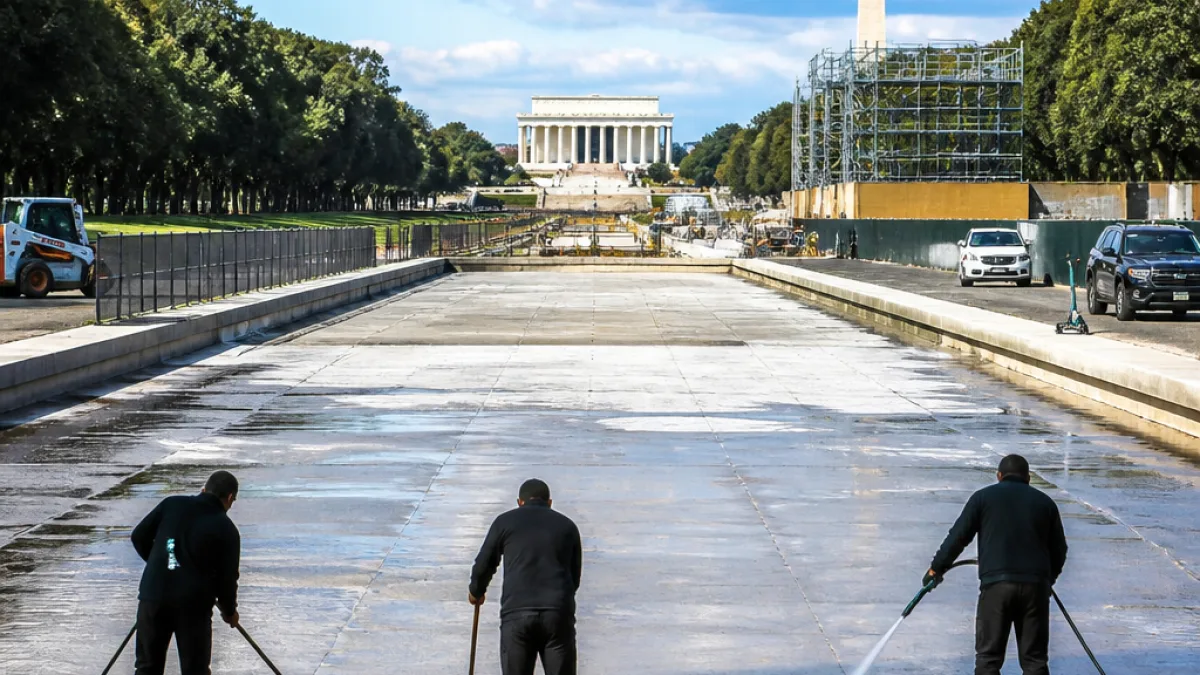
The Lincoln Memorial Reflecting Pool, a signature element of the National Mall, was drained again in June after a high-profile renovation and a brief reopening that attracted criticism over cost, algae proliferation and allegations of vandalism. Photographs taken June 25 show workers cleaning algae from the pool, accompanied by an increased law enforcement presence along the Mall.
“The Lincoln Memorial Reflecting Pool is being drained once again, just weeks after reopening from a high-profile renovation that sparked debate over rising costs, algae growth and allegations of vandalism.”
For District residents and visitors, intermittent closures and maintenance of the pool affect foot traffic, outdoor events and the use of the stretch of the Mall that connects major memorials and museums. The visible work has also become part of a larger, citywide transformation tied to federal proposals and approvals.
White House plans prompt preservation scrutiny
Among the most consequential federal proposals is the plan to replace the East Wing with a much larger White House ballroom capable of seating about 1,000 guests. The proposal has already prompted legal challenges from preservation groups and left portions of the project on hold while litigation proceeds.
Construction activity has been visible on the White House campus. A photograph dated May 19 shows work continuing where the East Wing once stood. Proposals tied to the South Lawn — including a reported granite helipad — and other restoration efforts have joined a slate of projects that together are reshaping the capital's public and ceremonial landscape.
Many projects at different points in the approval process
The current wave of work across Washington includes items already under construction, proposals moving through federal review, and others that remain tied up in court. That mix means the timeline and final scope of changes will vary:
- Active construction: work visible on White House grounds and ongoing maintenance on the Mall.
- Under review: proposals that require additional federal approvals or agency decisions.
- Legal challenges: preservation groups have filed suits that pause or complicate specific parts of the plans.
| Project | Status (as reported) |
|---|---|
| Lincoln Memorial Reflecting Pool | Recently renovated; drained again for cleaning |
| White House ballroom (East Wing replacement) | Under construction in part; portions held by litigation |
| South Lawn proposals (e.g., helipad) | Announced; subject to review |
For neighbors in areas surrounding the Mall — from the National Mall itself to residential neighborhoods near the White House and along the avenues that feed downtown — the cumulative effect of multiple projects can mean more construction traffic, temporary closures of public space, and longer-term changes to how ceremonial grounds are used.
What residents and visitors should watch for
Officials and preservationists will continue to debate the balance between modernization, security and historic preservation. As litigation unfolds and federal approvals move at different speeds, District residents should expect:
- Intermittent restrictions on access to portions of the Mall and areas around the White House.
- Public hearings or agency notices when proposals require additional environmental or historic reviews.
- Ongoing maintenance work that may lead to repeated short-term closures, as seen with the Reflecting Pool.
These projects touch landmarks that are part of daily life for many in Washington. While the final outcomes remain uncertain in places, the visible work already underway has made clear that the capital’s public face is changing—and those changes will matter for residents who use and steward these shared civic spaces.
Reporting note: Project descriptions and recent work referenced here reflect reporting and public images from late spring and early summer; legal filings and federal review processes are active and may affect timelines.