New genetic evidence has connected the nutria discovered in California’s San Joaquin Valley to a population in Central Oregon, pointing to a likely deliberate reintroduction rather than a hidden remnant of an eradicated population. The finding was announced in April and stems from comparisons of contemporary specimens with decades-old museum skins and skulls.
What the genetics show
Researchers compared DNA from living nutria with samples preserved in museum collections across California. The study, published last November in Evolutionary Applications, found that the nutria now found in California trace back to a single genetic lineage, whereas older specimens represented several different lineages. That pattern is consistent with a recent, singular reintroduction rather than a small, surviving population persisting undetected since eradication efforts in the late 1970s.
Why this matters in Oregon and California
Nutria are large, semiaquatic rodents that can grow to about 2.5 feet long and over 20 pounds. They feed on wetland vegetation and burrow into banks, creating holes that can weaken levees, earthen dams and other water infrastructure. That vulnerability has particular importance for the Sacramento-San Joaquin Delta and other California waterways already stressed by atmospheric rivers, drought and groundwater pumping.
“Nutria can weaken levees to the point where even minor stresses or environmental changes can trigger a breach,”
— Farshid Vahedifard, engineering professor (quoted in coverage of the research).
Ongoing response and scale
California launched an aggressive eradication campaign after a pregnant female turned up in Merced County in 2017. Since then, crews have captured 7,841 nutria. Statewide eradication efforts require significant resources; California spends roughly $5 million annually on detection and removal across hundreds of thousands of acres of wetland and riverside habitat.
| Item | Figure |
|---|---|
| Nutria captured since 2017 (California) | 7,841 |
| Annual eradication spending (California) | $5 million (approx.) |
| Published study | Evolutionary Applications (November) |
The genetic link to a Central Oregon population raises immediate questions for managers and the public in both states: if these animals were moved deliberately, who moved them and why? Illegal translocation complicates containment and eradication because new releases can seed distant, vulnerable habitats and undermine costly control programs.
What this means for residents
- Nutria damage wetland vegetation and can undermine levees and earthen infrastructure.
- Deliberate movement across state lines can restart infestations and increase the area managers must monitor.
- Ongoing detection and removal efforts require sustained funding and coordination between agencies.
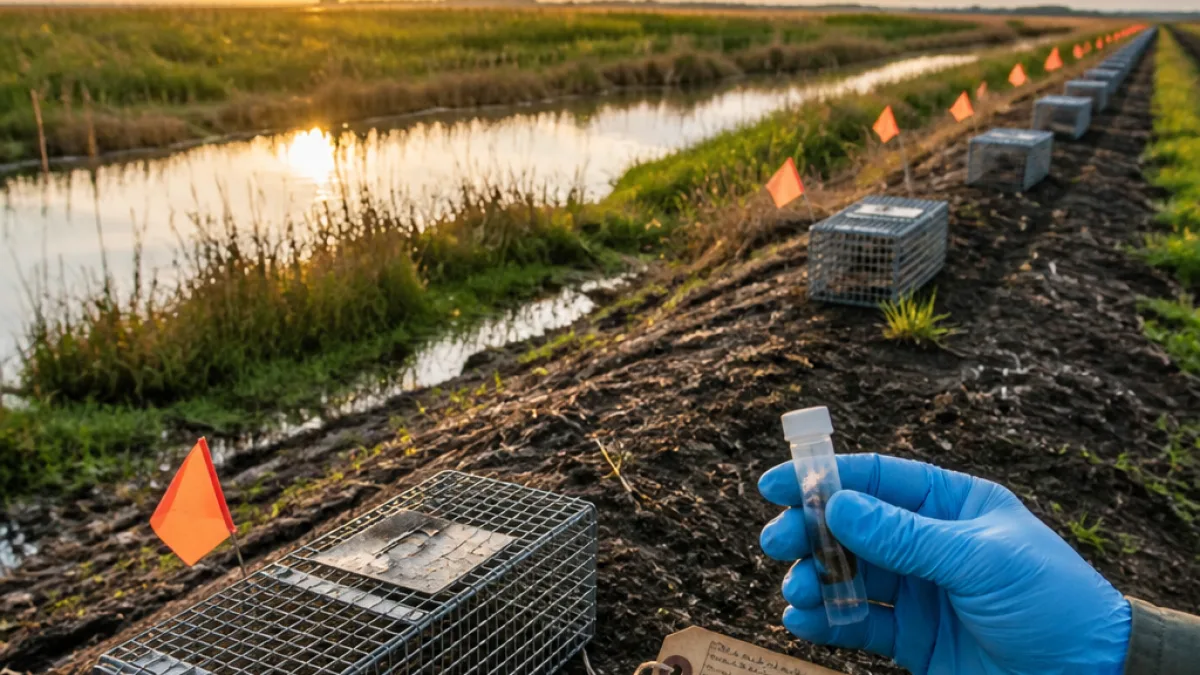
For people who live near wetlands or rivers, the discovery reinforces the need to report unusual large rodents or burrowing activity to state wildlife agencies. Authorities use visual surveys and motion-activated cameras as part of detection efforts, and public tips remain a key tool in locating new animals quickly.
The genetic findings tie a conservation problem in California to populations in Oregon, underlining how invasive species do not respect state boundaries. For wildlife managers and the public alike, the lesson is that preventing and responding to invasions depends on vigilance, interagency cooperation and curbing the intentional movement of potentially destructive species.