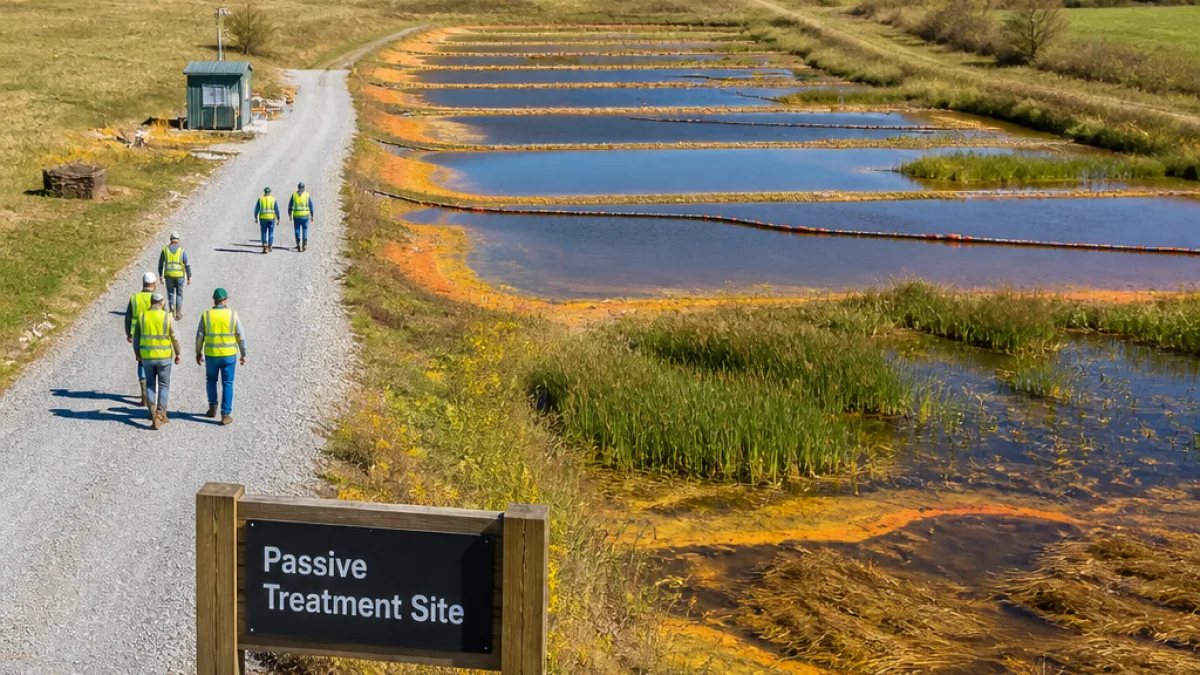
Watershed associations across Pennsylvania are quietly restoring streams harmed by abandoned mine drainage (AMD) with low‑tech, passive systems that capture and remove iron oxide from the water, allowing aquatic life and recreational uses to return to waterways long scarred by mining.
Local work with regional reach
Members of the Sewickley Creek Watershed Association in Westmoreland County marked the group's 35th anniversary on Aug. 7, celebrating two decades of operation at the Lowber passive treatment site, which includes approximately six one‑acre settling ponds and an associated wetland to trap iron oxide. Sewickley Creek flows into the Youghiogheny River, then the Monongahela River at McKeesport, meaning improvements upstream affect water quality for communities downstream.
David Hess, retired secretary of the Pennsylvania Department of Environmental Protection, has described AMD as “our No. 1 pollutant in our streams all across the state,” and credited Sewickley Creek's approach with seeding similar projects elsewhere.
“Sewickley was one of the pioneers in developing this technology that doesn’t use any pumps or fancy chemicals. It uses natural systems to clean the water from abandoned mine contaminated streams and discharges,” Hess said.
What the systems accomplish
Those natural systems — settling ponds and wetlands — remove iron oxide from contaminated discharges without relying on active pumping or chemical treatment. The collected iron‑oxide byproduct has been repurposed in some cases for use in pigments, crayons and soil remediation, offering a reuse pathway for material otherwise removed from the streambed.
- Restoration outcomes: clearer water, return of aquatic life, renewed fishing and recreation in treated reaches.
- Low‑tech approach: passive gravity flow, settling, and wetland vegetation perform most of the work.
- Collaboration: watershed groups often partner with local conservation districts for siting, construction and maintenance.
Statewide adoption
Similar projects have been installed in multiple regions of Pennsylvania, from the Slippery Creek Watershed Association in Butler County to the Catawissa Watershed Association in Schuylkill County, with additional systems across the northeast and in Somerset County in the southwest. Local conservation districts frequently assist in finding funding and organizing long‑term upkeep for these passive treatment systems.
| Project / Association | Location | Note |
|---|---|---|
| Lowber (SCWA) | Westmoreland County | About 20 years in operation; settling ponds and wetlands |
| Brinkerton, Wilson Run, Andrews Run | Westmoreland County | Additional AMD projects managed by SCWA |
| Slippery Creek Watershed Association | Butler County | Similar passive treatment efforts |
While AMD remains a pervasive problem across Pennsylvania’s former coalfields, these passive treatment projects demonstrate a scalable, community‑led response that improves local waterways without the expense of large mechanical treatment plants. For counties bordering impacted watersheds, the benefits include improved water quality downstream and reduced discoloration and sediment from iron deposits.
As more watershed groups adopt the passive approach, the state sees incremental improvements in stream health and new opportunities to reuse iron byproducts. The work underscores how decentralized conservation efforts — backed by county conservation districts and volunteer organizations — can yield tangible gains for rivers that feed larger regional systems.
Reporting is based on comments and information provided during the Sewickley Creek Watershed Association anniversary event and interviews with conservation and regulatory officials attending that celebration.