Colorado’s remaining glaciers are retreating at an accelerating pace, and the change is already noticeable this year in places popular with hikers, anglers and winter sports businesses.
Recent observations and a global synthesis
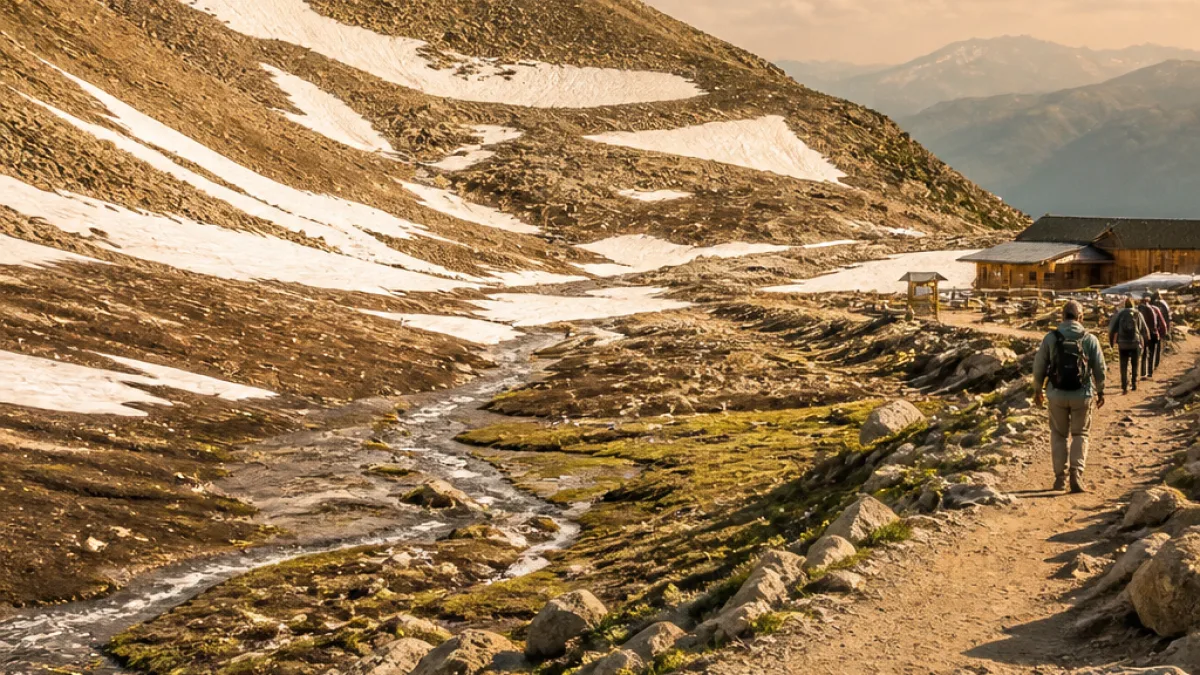
In September, observers recorded the disappearance this year of St. Mary’s Glacier — a long-standing year-round snowfield that until 2026 persisted in northern Colorado. While not a large continental ice sheet, its loss is part of a broader pattern: researchers say the state’s roughly 13 remaining glaciers in the northern ranges are melting rapidly.
Those local losses align with a major new scientific report led by the European Space Agency that used NASA satellite technology. The international analysis found the world’s glaciers outside the polar ice sheets shed more than 12 trillion tons of ice over the past 47 years, with melt rates rising especially fast since 2000 and in the past 15 years.
“These glaciers are the canary in the coal mine,” said Tom Bellinger, an affiliate professor in environmental science at Metropolitan State University of Denver.
What this means for Colorado
Scientists and local experts emphasize several concrete, near-term consequences for Colorado communities and industries:
- Water availability: Mountain snow and glacial storage support river flows into summer; reduced ice changes timing and quantity of runoff.
- Wildlife and fisheries: Earlier, lower flows can stress native fish and riparian habitats.
- Recreation and local economies: Trail access, summer water-based recreation and some winter businesses can be affected as perennial ice shrinks.
The state’s glaciers are unusually small compared with alpine glaciers elsewhere, which makes their loss particularly visible and measurable year to year. Experts note that because these icefields are outliers in size and number, they often serve as early indicators of broader climate trends.
At-a-glance data
| Item | Figure |
|---|---|
| St. Mary’s Glacier | Recorded disappearance in 2026 |
| Remaining named glaciers in northern Colorado | About 13 |
| Global glacier ice loss (past 47 years) | More than 12 trillion tons |
The international study and local observations together reinforce warnings from Colorado researchers: the pace of ice loss is not just a distant, abstract statistic but a present, observable shift with tangible effects on water management, ecosystems and recreation-dependent towns across the state.
As the season moves toward fall and communities plan for coming water years, understanding these changes will shape decisions by reservoir operators, wildlife managers and local businesses that depend on stable mountain water supplies and predictable seasonal conditions.
This developing situation will be important to follow for households, municipalities and industries that rely on Colorado’s mountain snow and ice. Local agencies and researchers are monitoring trends and compiling data to help planners adapt to a landscape where perennial ice is becoming rarer.