BRUNSWICK — A new research center led by scientists from six universities began work this summer to study chemical contamination and community exposures near several Superfund sites in Glynn County. The effort, funded with $15 million from the National Institute of Environmental Health Sciences over five years, will pair environmental monitoring with health studies to better understand what toxins remain and how they affect nearby residents.
Why local residents are watching
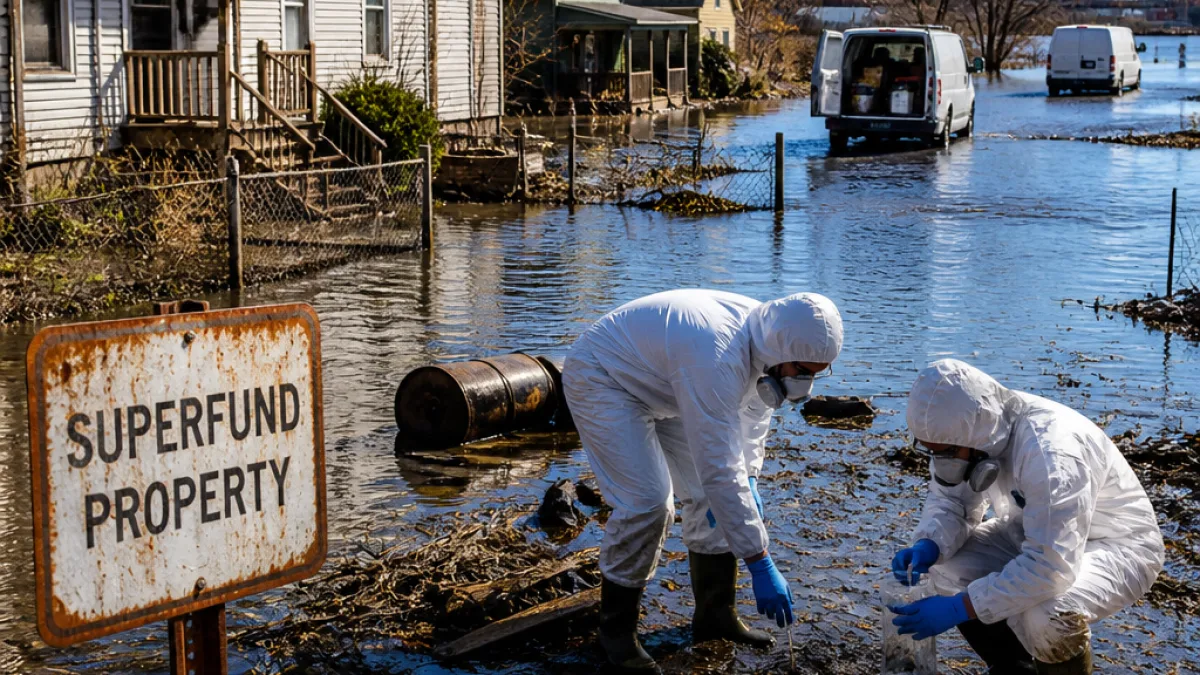
About a half-mile from one of the contaminated properties, neighbors describe recurring floodwater that brings concern about contaminants deposited in soil and waterways. Homeowner Semona Holmes, who lives near Brunswick’s waterfront, said flooding has at times reached knee level and has carried material from the industrial area into residential yards.
"If you can imagine this entire area here completely flooded, the flooding would be — we would have like a river on our street,"
The new Superfund research center plans to take a comprehensive approach: measuring contaminants in environmental media, examining potential exposures among residents, and exploring interventions that could lower future risks.
Who’s involved and the center’s goals
The team includes researchers from Emory University, the University of Georgia, Georgia Tech, Morehouse School of Medicine, Spelman College and Texas Tech University. Emory public health professor Noah Scovronick summarized the dual mission of the center.
"One is to understand the health effects of past chemical exposures, and the other is to try and reduce people's future exposures,"
Investigators plan to focus on four Superfund sites in Glynn County, examining links between known toxicants at those locations and potential health outcomes among local populations. The center will combine environmental sampling, health data analysis and community engagement to inform remediation priorities and protective measures.
- Funding: $15 million from the National Institute of Environmental Health Sciences over five years.
- Partners: Six universities bringing public-health, environmental and community-based expertise.
- Focus: Four Glynn County Superfund sites — environmental contamination, exposure pathways and health effects.
| Institution | Role |
|---|---|
| Emory University | Lead public health research |
| University of Georgia | Environmental and exposure science |
| Georgia Tech | Technical and engineering analyses |
| Morehouse School of Medicine | Clinical and community health research |
| Spelman College | Community engagement and outreach |
| Texas Tech University | Complementary research support |
Local impact and next steps
Residents who live near the sites say the work is overdue. While improvements to stormwater systems have lessened some flooding, community members remain concerned about what legacy contamination might linger in soil, yards and waterways. The research team intends to share findings with local officials and residents as studies progress so that results can inform cleanup priorities and health-protective actions.
For neighbors like Holmes, the center represents the possibility of clearer answers about long-term risk. The research is designed not only to document past exposures but also to identify practical steps that could reduce future contamination and protect public health.
This reporting will continue as researchers begin fieldwork and community engagement in Glynn County. Imani Walker is the Georgia correspondent for News Block covering environmental and public-health issues.