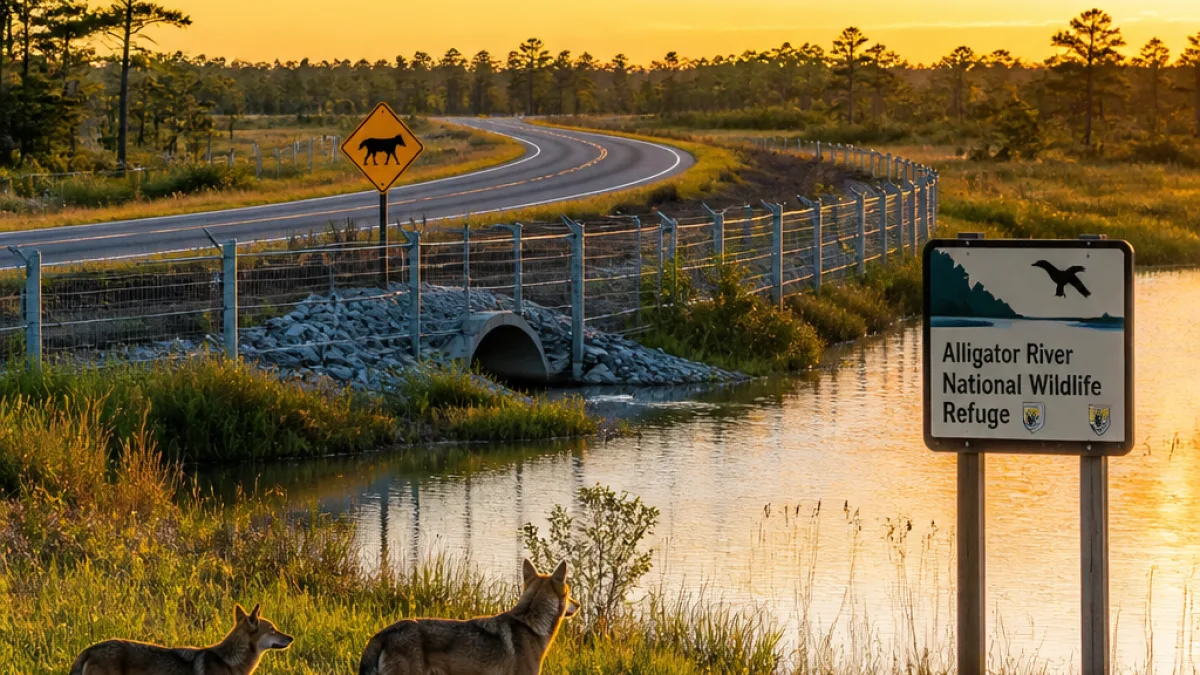
Four litters of endangered red wolf pups have been born in eastern North Carolina so far this year, the U.S. Fish and Wildlife Service’s Red Wolf Recovery Program announced, a development federal and state officials say offers cautious hope for the species’ long-term survival.
Numbers and where pups were found
Between 12 and 16 of the newborns survived their first months, the agency said. One litter was born on private property enrolled in North Carolina’s Prey for the Pack Program, which compensates landowners who allow red wolves on their land; the other three litters were documented in the wild inside or near the Alligator River and Pocosin Lakes National Wildlife Refuges.
“It’s inspiring to see these underdogs making another incredible comeback,” said Will Harlan, Southeast director at the Center for Biological Diversity.
Federal counts show 22 known wild red wolves living in eastern North Carolina as of July, while zoo and captive-breeding partners manage 295 additional animals. The species has been the subject of reintroduction and recovery efforts since conservationists returned wolves to the state in 1987, after population collapse decades earlier.
Threats persist; roads a leading danger
Despite the recent births, survival challenges remain. Since 2020, the leading cause of death has been vehicle collisions; regulators reported eight red wolves killed by vehicles in the past six years, with nearly all road fatalities occurring along Highway 64, which bisects prime habitat in the refuges.
| Metric | Count |
|---|---|
| Wild red wolves (as of July) | 22 |
| Captive red wolves | 295 |
| Litters born this year | 4 |
| Pups surviving first months | 12–16 |
State policymakers have recently taken steps that could affect wolf survival on roads. Gov. Josh Stein signed a budget that includes $10.2 million every two years to construct wildlife crossings under major highways. The state has also secured $31.25 million to support related infrastructure and conservation work.
What the recovery means locally and for the state
For Dare, Tyrrell and other counties that include the Alligator River and Pocosin Lakes refuges, the births represent both ecological and economic implications: successful recovery can boost tourism and grant opportunities, but it also requires sustained coordination among federal agencies, private landowners and state planners to reduce vehicle strikes and manage human-wildlife interactions.
- Federal recovery and captive-breeding programs remain central to survival efforts.
- Private landowner participation — including financial incentives — continues to be a key part of expansion on nonfederal lands.
- Transportation projects and targeted wildlife crossings could reduce road mortality.
Conservationists and wildlife managers say the new litters are encouraging but not a signal that threats have subsided. Continued monitoring, habitat protection and targeted mitigation along major roadways will be necessary to translate this year’s births into a durable population rebound.
Reporting for this story relied on information released by the U.S. Fish and Wildlife Service’s Red Wolf Recovery Program and statements from conservation groups and state budget actions tied to wildlife crossings.