ASHEVILLE — North Carolina health officials say more than 200 cases of cyclosporiasis, an intestinal illness caused by the parasite Cyclospora cayetanensis, have been reported statewide as agencies work to identify sources and limit spread.
Where cases are appearing
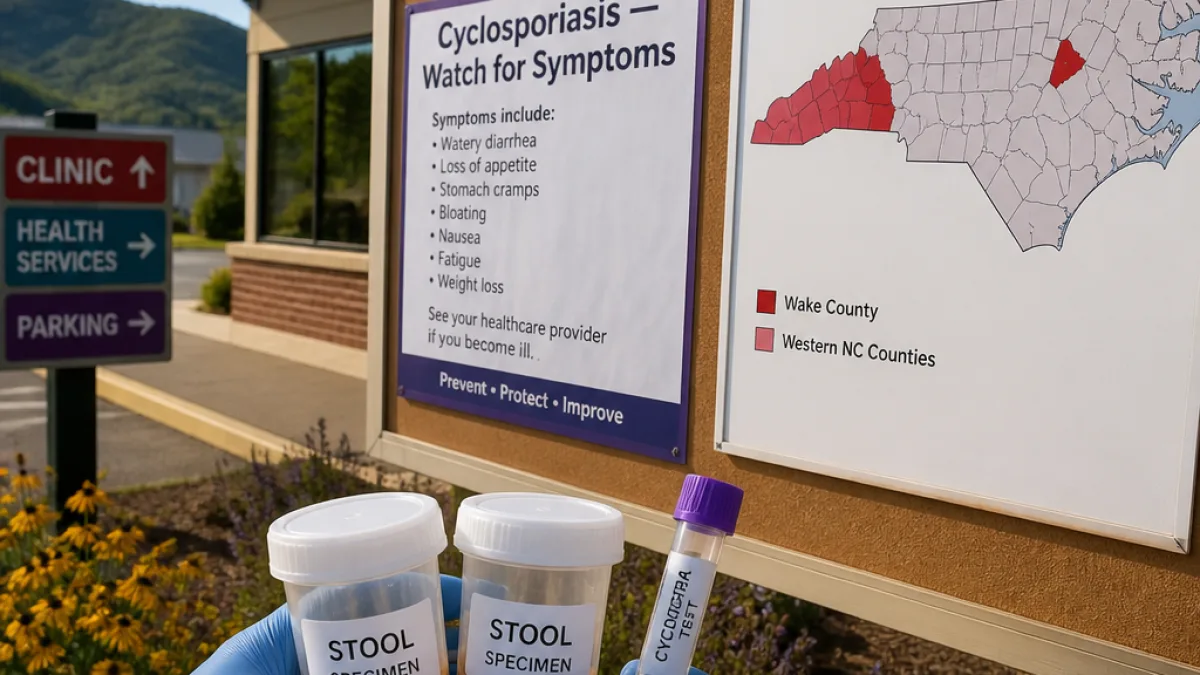
The North Carolina Department of Health and Human Services reported the highest concentration of cases in Wake County. Health agencies have also confirmed infections in parts of western North Carolina, including Buncombe, Henderson, McDowell and Rutherford counties.
| County | Confirmed cases |
|---|---|
| Wake County | Highest reported count statewide |
| Buncombe County | 1 |
| Henderson County | 3 |
| McDowell County | 2 |
| Rutherford County | 1 |
Symptoms, treatment and when to seek care
Cyclosporiasis typically causes gastrointestinal symptoms. The Centers for Disease Control and Prevention lists watery diarrhea as the most common symptom, along with loss of appetite, weight loss, cramping and nausea. Most people recover within days, but clinicians warn some cases can become more severe.
"Low-grade fever, some abdominal cramping, then going into some more profuse diarrhea, which can be very watery and uncomfortable," said Dr. Jonathan Schwartzman, medical director at Pardee Urgent Care. He advised seeking care for significant abdominal pain, blood in stool, persistent vomiting or inability to keep fluids down.
Treatment for cyclosporiasis is available. Clinicians often recommend supportive care, such as rehydration and over-the-counter medicines for symptom relief, while specific antiparasitic therapy may be used when indicated.
- Watch for red-flag symptoms: severe abdominal pain, bloody stool, persistent vomiting or inability to retain fluids.
- Stay hydrated: replace lost fluids and electrolytes during bouts of diarrhea.
- Contact your provider: if symptoms are severe or prolonged; public-health authorities may also request stool testing to confirm cases.
Public-health response and context
State and local health officials are investigating suspected exposures and monitoring case reports to determine potential common sources. Cyclosporiasis outbreaks have previously been linked to contaminated fresh produce and water; investigations typically involve interviews with patients to identify shared food items or locations.
For residents, the immediate priorities are recognizing symptoms, seeking medical advice for concerning signs, and following guidance from health departments. Officials have not yet announced a specific source for this cluster of infections.
Health departments generally recommend proper food handling, thorough washing of fresh produce, and avoiding consumption of items suspected to be contaminated until investigations conclude. Clinicians and laboratories play a key role by reporting confirmed infections promptly to public-health authorities to help trace and contain outbreaks.
News Block will continue to follow updates from state and county health departments as investigators release further details about case counts, suspected exposures and any public advisories.