
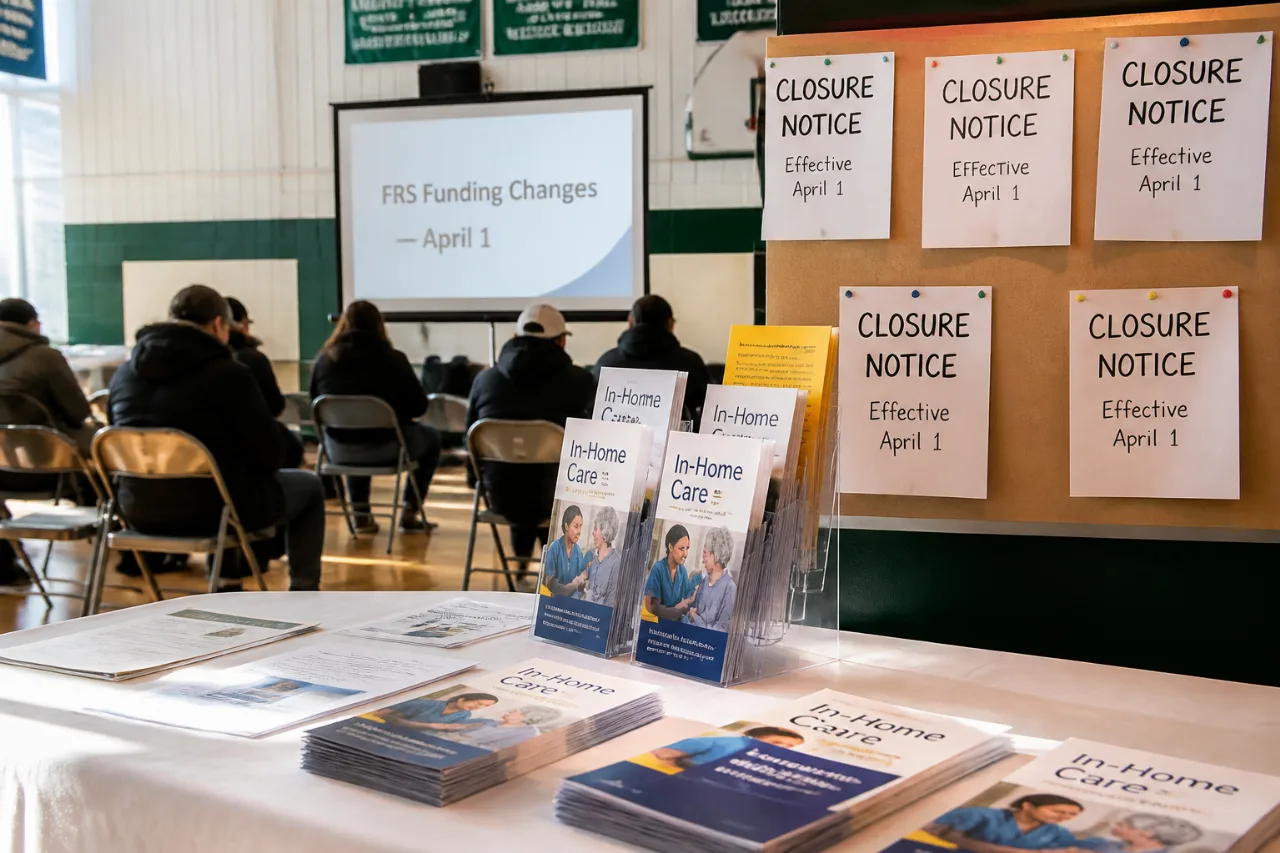
EAGAN, Minn. — Providers, families and a state provider association filed a federal lawsuit this week accusing the Minnesota Department of Human Services of systematically dismantling an in‑home disability care program relied upon by more than 3,000 people.
What plaintiffs say changed
The case centers on the Family Residential Services (FRS) program, which places people with disabilities in provider homes. According to provider leaders and clients, the state moved April 1 to a fixed reimbursement rate for FRS services. Providers say the new flat rate is frequently insufficient to cover care costs that previously were reimbursed according to each client’s assessed needs.
At a town hall Thursday at Eagan High School, clients and providers described a rush of provider closures and growing fear among families that long‑standing care arrangements will end.
“DHS has systematically created policies that would dismantle the program,”
— Sandra Bond, president of the Minnesota Association of Residential Service Homes, which represents FRS providers, speaking about the effect of the rate change.
Clients describe stakes
Clients interviewed said losing their current caregivers would mean moving into group homes — a change they described as a severe reduction in quality of life. One client, who currently lives with an FRS provider, told reporters she fears the alternative could lead to crisis and institutional settings.
Family members and guardians joined providers in the lawsuit, saying the fixed rate does not cover necessary supports and that closures are already occurring. Provider leaders told the town hall they expect as many as 80% of FRS providers could shut down under the new reimbursement model; they said they are receiving closure notices daily.
Legal action and requested outcome
MARSH (Minnesota Association of Residential Service Homes) and multiple clients filed suit in federal court seeking reversal of the reimbursement change and restoration of the prior client‑need based rate system. Plaintiffs say restoring the prior system would allow the clients named in the suit to remain with their current in‑home providers.
| Item | Detail |
|---|---|
| Program | Family Residential Services (FRS) |
| Effective date of rate change | April 1 |
| People served (approx.) | 3,000+ |
| Provider closure estimate (MARSH) | About 80% |
Local and statewide impact
If providers close and clients must move into congregate settings, advocates warn of both personal and systemwide consequences: disruption of long‑term relationships between caregivers and clients, increased demand on group homes and other institutional placements, and potential strain on the broader disability services network across Minnesota.
The lawsuit and public meetings make this a live policy issue for state lawmakers and DHS administrators. The plaintiffs are asking the court to require DHS to restore the previous, individualized reimbursement framework so clients can remain with current providers. DHS has not provided a public comment in the materials reviewed for this report.
- Who is involved: Clients in FRS, provider group MARSH, individual FRS providers, Minnesota DHS.
- Core complaint: Switch to a fixed reimbursement rate on April 1 leaves many providers unable to cover costs.
- Relief sought: Return to needs‑based reimbursement and preservation of in‑home placements.
The suit represents a critical test of how the state balances budget and administrative decisions against the needs of Minnesotans who rely on in‑home care. Lawmakers and agencies will face pressure in coming weeks to explain the rationale behind the rate change and to respond to mounting reports of closures.