BISMARCK, N.D. — North Dakota’s agriculture commissioner is urging residents and visitors to stay alert after the emerald ash borer was confirmed in Fargo in January and subsequently detected north of Mapleton.
Where the pest has been found
Commissioner Doug Goehring reiterated concerns during remarks on July 11, 2026, noting that the state continues monitoring the insect’s spread. The emerald ash borer is an invasive beetle that attacks ash trees and can kill a host tree within a few years of infestation.
| Location | Status |
|---|---|
| Fargo | Confirmed (January 2026) |
| North of Mapleton | Detected (2026) |
Costs, treatment and public outreach
Goehring said there are treatments available to protect or save ash trees, but they can be expensive. Local governments and private homeowners weighing options should expect to consider both the upfront cost and the timeline of repeated treatments if they choose chemical or biological controls.
"People in North Dakota are aware that you shouldn’t bring firewood in from other states,"
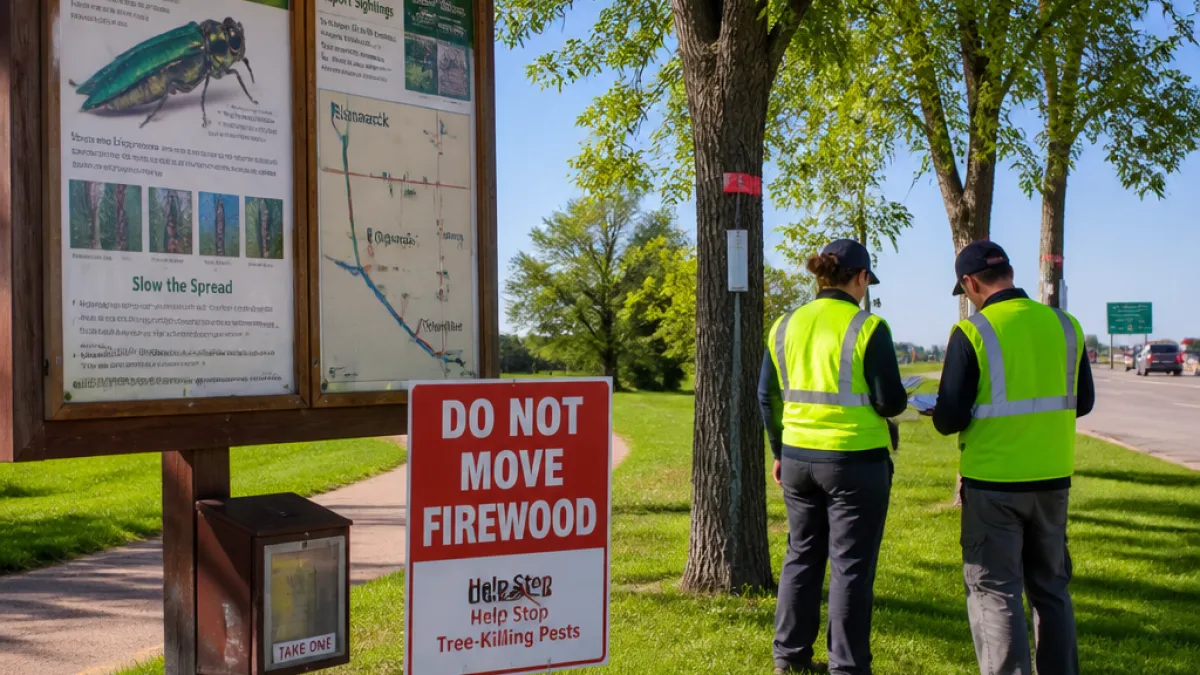
The state is also focusing on prevention. Goehring noted that information is being distributed at highway rest areas to remind travelers to avoid transporting firewood, a common means by which the emerald ash borer spreads to new areas.
- Do not transport firewood from outside the state; use local sources or certified heat-treated wood.
- Report suspected infestations to the North Dakota Department of Agriculture or local extension office.
- Consider cost and timing before starting treatment — options vary by tree size and infestation stage.
What this means locally
Ash trees are common in many North Dakota towns and landscapes. An unchecked emerald ash borer invasion could mean tree loss along streets, in parks and on private property, with costs to remove dead trees and replace canopy cover. Municipalities will face decisions about whether to invest in preventive treatments for public trees or to remove and replace infested specimens.
State officials continue surveillance and outreach to slow the beetle’s spread. Residents who rely on large shade ash trees or manage community tree programs should contact county extension agents or the Department of Agriculture for the latest guidance on detection, treatment costs and disposal rules for infested wood.
For now, the message from state leadership is clear: reduce movement of potentially infested wood, watch ash trees for signs of decline, and report findings promptly to help limit the pest’s advance across North Dakota.