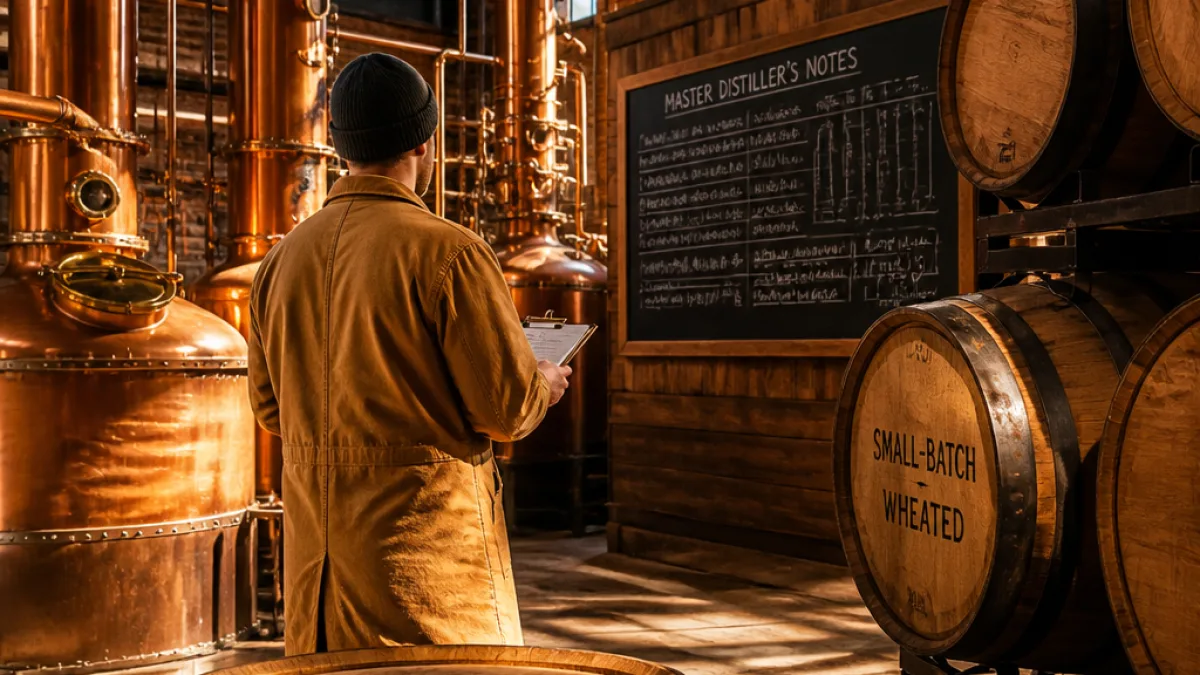
FRANKFORT, Ky. — Bourbon’s long association with male craftsmen in Kentucky saw a notable shift this year as Marianne Eaves assumed the title of the state’s first female master distiller. Her appointment represents both a symbolic and practical change in an industry where tradition and heritage carry substantial weight.
Breaking a long-standing pattern
Eaves began her path into the business as an intern at Brown‑Forman, entering a field she described as historically exclusive. Her academic background in chemical engineering from the University of Louisville gave her a technical foundation that she says drew her to the science behind spirits production rather than the social side of drinking.
“They had been for a long time calling it the Fraternity of Master Distillers, and then I walk through and they have to start renaming things and making it more inclusive,” Eaves said.
She recalled encountering skepticism within the industry when she first rose through the ranks, noting resistance to the idea of a woman — and a younger woman — leading distillation efforts. Despite that, she persisted and secured one of the field’s most respected roles in Kentucky.
Product and approach
Applying a scientific lens to production, Eaves developed a small‑batch wheated bourbon called Forbidden. The recipe emphasizes nontraditional ingredients for some Kentucky producers, including white corn, white wheat and a relatively high proportion of malted barley, reflecting her technical experimentation within established styles.
| Background | Detail |
|---|---|
| Education | Chemical engineering, University of Louisville |
| Industry start | 2009 (entered market as an intern) |
| Brand | Forbidden (small‑batch wheated bourbon) |
Wider implications for the industry
Eaves frames her role as part of a broader effort to diversify who feels welcome in bourbon: both in terms of who makes it and who it is marketed toward. She noted changes in consumer tastes and said younger drinkers have helped renew interest in classic styles, creating an opening for producers who want to reach new audiences.
- Historic milestone: First woman to hold the title of master distiller in Kentucky.
- Technical focus: Uses chemical engineering training to inform product development.
- Market angle: Aims to expand bourbon’s appeal to younger and more diverse consumers.
Industry observers say change in bourbon tends to move slowly, in part because the product itself is defined by aging. Eaves acknowledged that progress in attitudes will not happen overnight, but argued that incremental shifts — like visible leadership roles for women — can speed cultural change inside distilleries and on retail shelves.
Her rise carries local resonance: bourbon is both a major economic sector and a central element of Kentucky’s identity. As producers and marketers adapt to shifting tastes and demographics, leadership changes such as Eaves’ may influence hiring, product development and how distilleries present themselves to tourists and buyers statewide.
For consumers and industry professionals tracking the evolution of bourbon, Eaves’ appointment is a marker of how the commonwealth’s signature spirit is being reinterpreted while rooted in long‑standing tradition.