New law expands concealed-carry eligibility to 18- to 20-year-olds
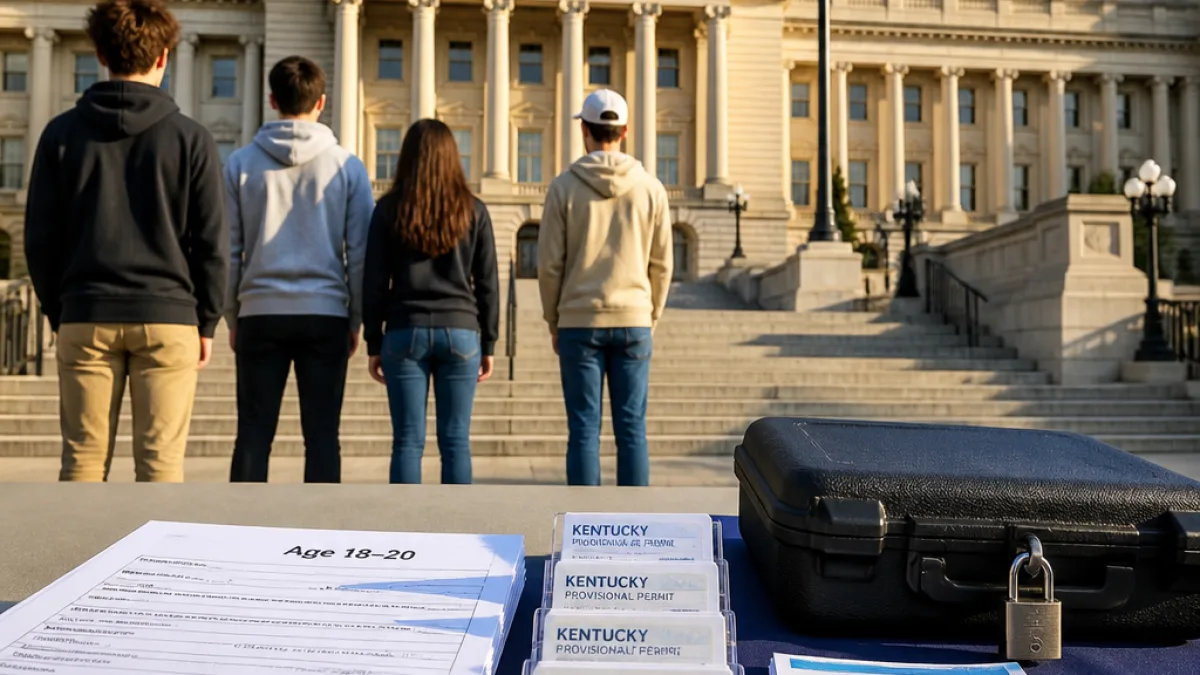
FRANKFORT — Kentucky is lowering the minimum age to obtain a concealed-carry permit from 21 to 18, after the Legislature overrode Gov. Andy Beshear’s veto on House Bill 312. The measure takes effect this week and creates a provisional license for 18- to 20-year-olds that converts to a standard permit when the holder turns 21.
The law requires applicants in the 18–20 age group to complete firearm safety training and pass a background check before receiving the provisional license. Those are the same prerequisites already required of applicants aged 21 and older.
How the provisional license works
The new framework is intended to give younger adults the same pathway to concealed carry as older adults while acknowledging the temporary nature of the permit prior to age 21.
- Applicants ages 18–20 may apply for a provisional concealed-carry license.
- The provisional license automatically becomes a standard license upon the applicant’s 21st birthday.
- All applicants must complete approved firearm safety training and undergo a background check.
| Applicant age | License type | Requirements |
|---|---|---|
| 18–20 | Provisional concealed-carry license | Firearm safety training; background check |
| 21+ | Standard concealed-carry license | Firearm safety training; background check |
Legislative path and practical effect
The bill was passed earlier in the year but was vetoed by Gov. Andy Beshear. Lawmakers subsequently overrode that veto, allowing the measure to become law and take effect this week. The change immediately broadens eligibility to carry a concealed firearm for law-abiding Kentuckians ages 18 through 20 who meet the training and background-check requirements.
For residents in that age range, the practical steps are unchanged from other applicants: complete the mandated safety instruction and submit to the required vetting before receiving the provisional permit. Once issued, the permit will transition to a standard license at age 21 without a separate application at that time.
This marks a significant shift in the state’s concealed-carry rules, aligning legal access for younger adults with the existing framework used for older applicants while preserving the state’s training and background-check prerequisites.