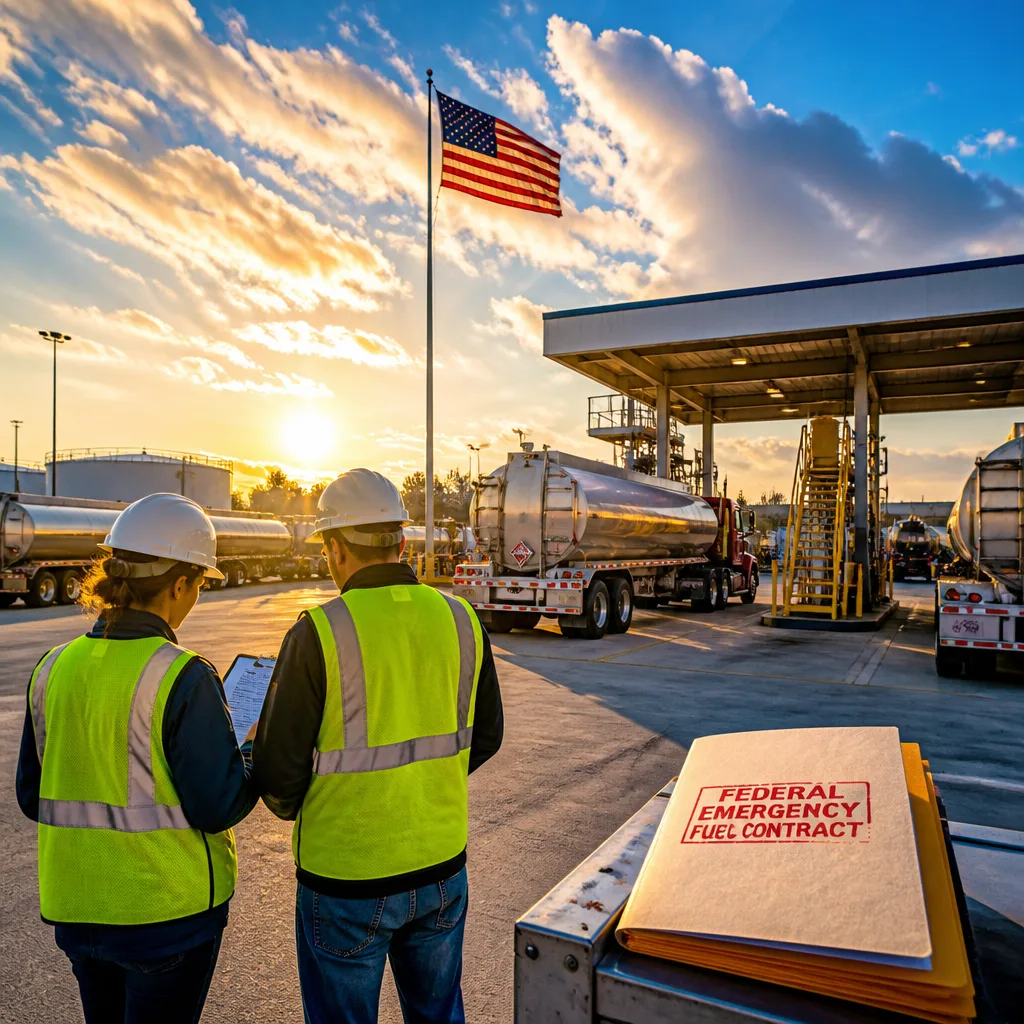
Colonial Group, a Georgia-based parent company spanning energy, chemicals and logistics, has agreed to acquire Foster Fuels, the Brookneal, Virginia wholesale fuel distributor that holds a prominent federal emergency fuel contract. The deal, whose financial terms were not disclosed, is expected to close Oct. 1.
What the deal covers and who stays
Under the agreement, Foster Fuels will continue operating under its existing name and management, with its workforce of about 250 employees retained. The company’s charitable arm, the Foster Foundation, will remain independent after the transaction.
“Deciding to sell our century-old family business was hard. Deciding who to sell it to was easy,”
The company’s CEO, Watt Foster, said the choice to join Colonial was guided by shared values and a long history of business ties between the two family-owned groups.
Federal contract and mission-critical work
Foster Fuels operates a Mission Critical division and holds the prime contract for emergency fuel delivery awarded in 2024 by the Department of Defense in partnership with FEMA and DLA Energy. That contract is valued at up to $442 million over five years and has underpinned the company’s role supporting disaster relief, including responses to hurricanes, major earthquakes and winter storms.
The acquisition raises practical questions for households and businesses that depend on government-coordinated disaster response:
- Continuity of supply: maintaining uninterrupted fuel delivery during emergencies is vital for hospitals, shelters and transportation.
- Operational capacity: retaining experienced staff and leadership aims to preserve the company’s disaster-response capabilities.
- Investment and scale: Colonial Group’s resources may provide capital for expansion or logistics upgrades that affect delivery speed and reliability.
Context and potential consequences
Both Foster Fuels and Colonial Group trace their origins to 1921, and the buyer operates six subsidiaries across related sectors. Colonial said it was impressed by Foster’s business and culture; its president and CEO highlighted those aspects in a company statement.
Because the acquisition involves a firm that holds a major federal contract for emergency fuel, officials at federal agencies and private-sector partners will likely monitor the integration to ensure the contract’s performance is uninterrupted. For households and businesses, the practical measure is whether fuel deliveries to critical response efforts continue on schedule during disasters.
| Item | Figure / Detail |
|---|---|
| Employees | 250 |
| Federal contract (2024 award) | Up to $442 million over five years |
| Expected close date | Oct. 1 |
| Founding year (both companies) | 1921 |
The transaction could bolster Foster’s access to capital and logistics networks, supporting growth while preserving its role in emergency fuel delivery. Observers of supply-chain resilience and federal contracting will watch whether the combined operations maintain or improve service levels during high-demand incidents.
Until the deal closes, Foster will continue its existing operations and commitments under current leadership, and the Foster Foundation will operate independently to continue supporting local scholarships and charities.