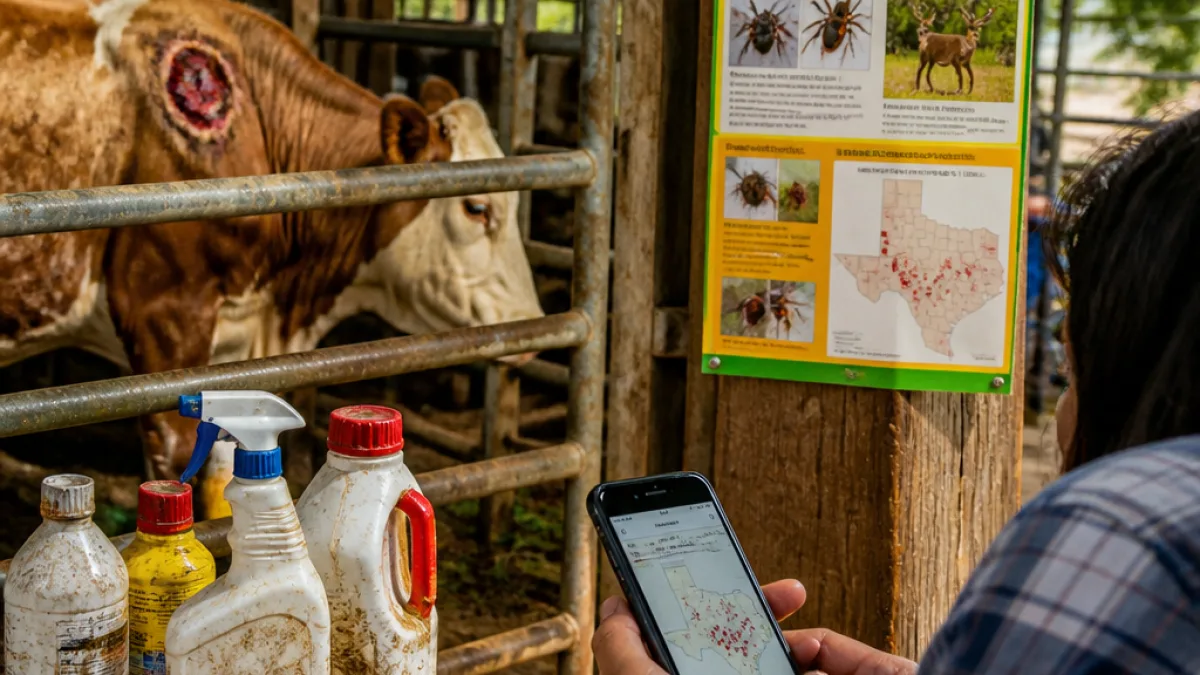
LITTLE ROCK — Arkansas wildlife and veterinary officials are urging residents to avoid do-it-yourself treatments for animals suspected of having New World screwworm, after recent cases were reported in Texas that have put regional livestock producers and pet owners on high alert.
Why screwworm is different
State wildlife veterinarian Dr. Catherine Love cautioned that screwworm larvae feed on living, vascularized tissue rather than dead tissue like common maggots. That behavior allows the parasite to burrow into wounds and cause deep, rapidly worsening infections that make animals very ill and can emit a strong, unpleasant odor.
“It’s actually very dangerous,” Dr. Love said, describing risks tied to people attempting to treat wildlife or livestock without veterinary guidance.
Love said screwworms typically appear after a fly lays eggs in a wound — which can be as small as a tick bite. A single female can lay roughly 200 to 400 eggs over several days, and larvae can hatch within about six to 12 days, quickly establishing an infestation.
Risks of DIY treatment
- Medications commonly used without veterinary oversight may not be approved for wildlife.
- Livestock drugs often carry strict "withhold times" — animals treated may need to be kept out of the food supply for 40–60 days to ensure residues clear before meat enters the market.
- Incorrect treatment can worsen animals' condition or create food-safety issues for consumers.
Dr. Love emphasized there is no direct animal-to-animal transmission: the threat comes from female flies laying eggs on an exposed wound. Still, the rapid reproductive cycle of the fly and the seriousness of infections make vigilance critical for both domestic animals and wildlife.
What Arkansans should do
Officials recommend careful monitoring of pets, farm animals and wildlife for nonhealing or foul-smelling wounds and seeking professional veterinary care if screwworm infestation is suspected. For livestock owners, consult your veterinarian before administering treatments and observe any required withdrawal periods for animals intended for food.
| Concern | Advice |
|---|---|
| Wildlife | Do not attempt treatment; contact state wildlife or veterinary authorities |
| Livestock | Call a licensed veterinarian; follow withholding guidelines to protect the food supply |
| Pets | Seek immediate veterinary assessment for persistent wounds or signs of illness |
The advisory from the Arkansas Game and Fish Commission and the state wildlife veterinarian aims to prevent improper treatment that could endanger animals, people handling them and consumers. Given the proximity of confirmed cases in Texas, Arkansas officials say heightened awareness and prompt professional care are the best defenses.
Reporting suspected cases to local animal-health authorities can help track the spread and protect livestock producers across the region.