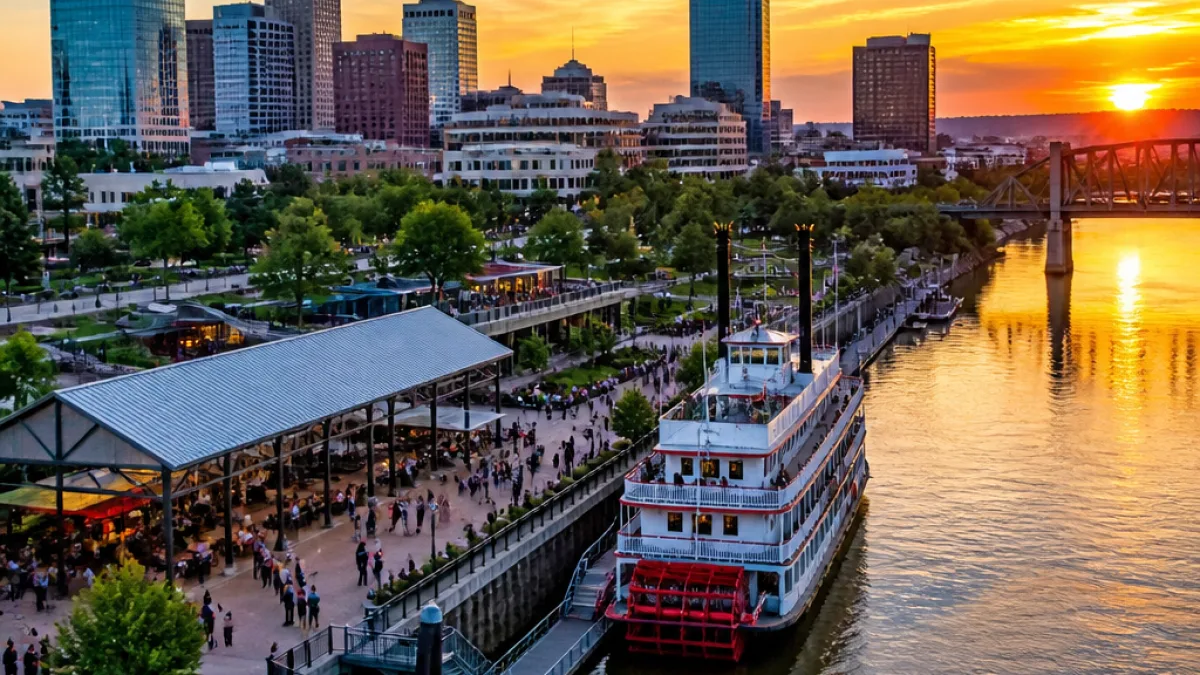
Arkansas reported a record 54.3 million visitor trips in 2025, a 4.4% increase from the previous year, and state tourism officials are pairing that momentum with promotion of major urban hubs including Little Rock, Hot Springs, Bentonville, Fayetteville and Fort Smith. The rise in visitor numbers underscores growing demand for outdoor recreation, cultural tourism and short regional breaks that benefit the capital’s museums, parks and hospitality businesses.
Growth in visits, flat spending
The findings, prepared by Tourism Economics for the Arkansas Department of Parks, Heritage and Tourism, show a mixed economic picture: while volume rose, direct visitor spending edged downward. Visitors spent about $10.2 billion across the state in 2025, a 0.9% drop from 2024, and total tourism economic impact remained unchanged at $17.4 billion. That divergence signals that many of the additional trips were shorter or lower‑spending, with Arkansas residents accounting for roughly 55% of travelers.
“Record 54.3 million visitor trips in 2025”
For Little Rock, which markets itself as an accessible urban stop for regional visitors, the pattern matters. Shorter, in-state day trips generate traffic for restaurants, parks and small attractions but contribute less to hotel occupancy and higher-margin visitor spending that fuels payrolls and tax revenue.
Employment and local business impact
Tourism continued to support local employment: direct tourism jobs in Arkansas rose modestly to 71,860, up 227 jobs from 2024. The sector funneled about $3 billion toward restaurants and local businesses statewide, sustaining tax receipts that benefit municipal services across Pulaski County and other jurisdictions.
- Visitor trips: 52 million (2024) → 54.3 million (2025), up 4.4%
- Direct spending: $10.3 billion (2024) → $10.2 billion (2025), down 0.9%
- Total economic impact: $17.4 billion (unchanged)
| Indicator | 2024 | 2025 |
|---|---|---|
| Estimated visitor trips | 52 million | 54.3 million |
| Direct visitor spending | $10.3 billion | $10.2 billion |
| Direct tourism employment | 71,633 jobs | 71,860 jobs |
The data also show a decline in visits to federal attractions, suggesting changing patterns of where visitors spend time. For Little Rock, which hosts a mix of national and state sites, the challenge will be converting increased visitation into longer stays and higher per‑trip spending. Local tourism stakeholders and city leaders may need to focus marketing and event strategies that encourage overnight stays — from festivals and sporting events to expanded convention draws — to capture more of the economic upside.
State officials framed the results as evidence of strong travel demand across Arkansas, while acknowledging that the industry must turn shorter regional and resident trips into higher‑value visits to grow payrolls and local tax bases. For Little Rock, the report underscores both opportunity and a narrowing margin for capturing meaningful tourism revenue.