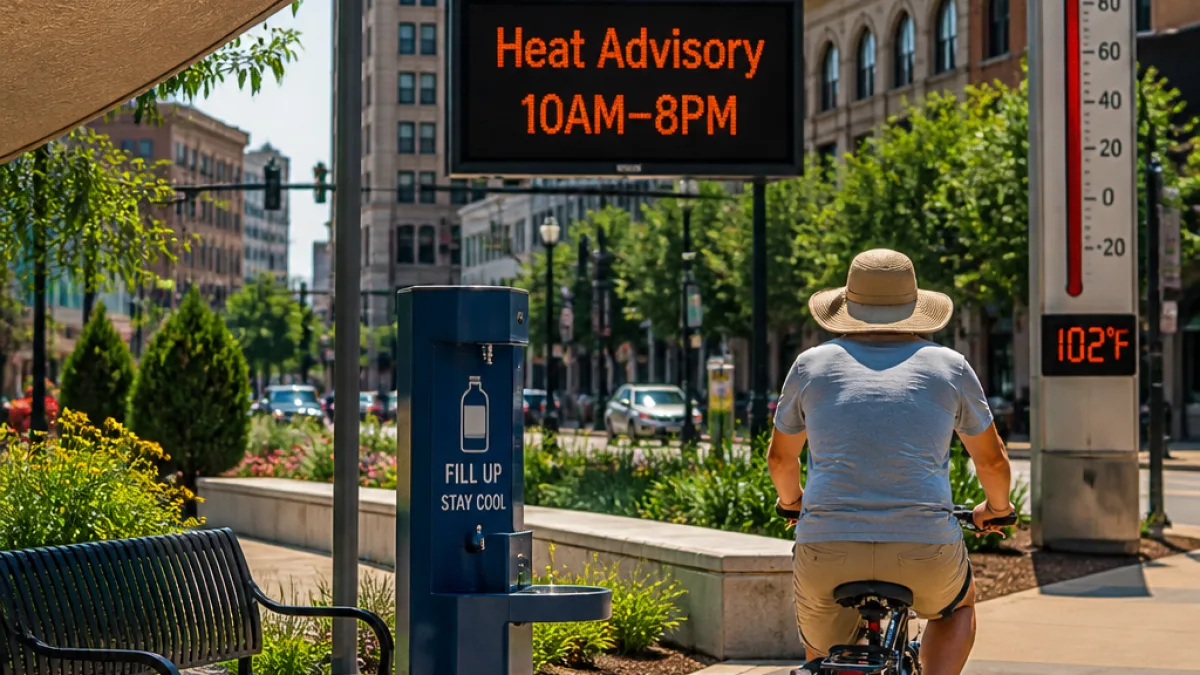
The National Weather Service has issued a Heat Advisory that includes Allentown and much of Lehigh County, effective from 10 a.m. to 8 p.m. Wednesday. The advisory warns that heat index values — the combination of air temperature and humidity — could reach as high as 102–104 degrees Fahrenheit in parts of the region.
When and where
The advisory covers multiple counties in southeastern Pennsylvania. Local officials and public health advisers urged residents to take precautions during the peak heat window.
| Start | End | Potential heat index | Area |
|---|---|---|---|
| Wednesday 10:00 AM EDT | Wednesday 8:00 PM EDT | Up to 102–104 °F | Lehigh, Berks, Northampton and surrounding counties |
Health risks and recommendations
The advisory cautions that hot temperatures combined with high humidity can lead to heat illnesses such as heat exhaustion and heat stroke. The bulletin stresses common-sense precautions, especially for older adults, young children and people with chronic health conditions.
- Drink plenty of fluids and avoid alcoholic beverages.
- Stay in air-conditioned places when possible.
- Limit prolonged or heavy outdoor exertion; schedule strenuous activities for early morning or evening.
- Wear lightweight, loose-fitting clothing and take frequent breaks in shaded or cool areas.
- Check on relatives, neighbors and anyone who may be vulnerable to heat.
"Heat stroke is a medical emergency. Anyone overcome by heat should be moved to a cool, shaded location and 9-1-1 should be called," the advisory states.
Local stakes and context
Allentown is the largest city in Lehigh County, and many residents work outdoors or lack consistent access to air conditioning. Because the advisory specifies a multi-county area that includes urban and suburban neighborhoods, the public-health impact could be wide: increased emergency calls, strain on cooling centers and elevated risk for workers in construction, landscaping and other outdoor trades.
Employers and event organizers in the Lehigh Valley should consider modifying schedules, providing shaded rest areas and ensuring on-site water. The Occupational Safety and Health Administration guidance referenced in the bulletin recommends frequent rest breaks in shaded or air-conditioned environments for outdoor workers.
What residents can do now
Residents are advised to plan ahead for the midweek heat spike. If you or someone you know experiences symptoms such as heavy sweating, weakness, dizziness, nausea or confusion, move to a cooler place, hydrate and seek medical attention if symptoms worsen.
Local cooling centers and municipal resources may be announced by city or county officials; residents without air conditioning should contact local health departments or visit municipal websites for information on available services.