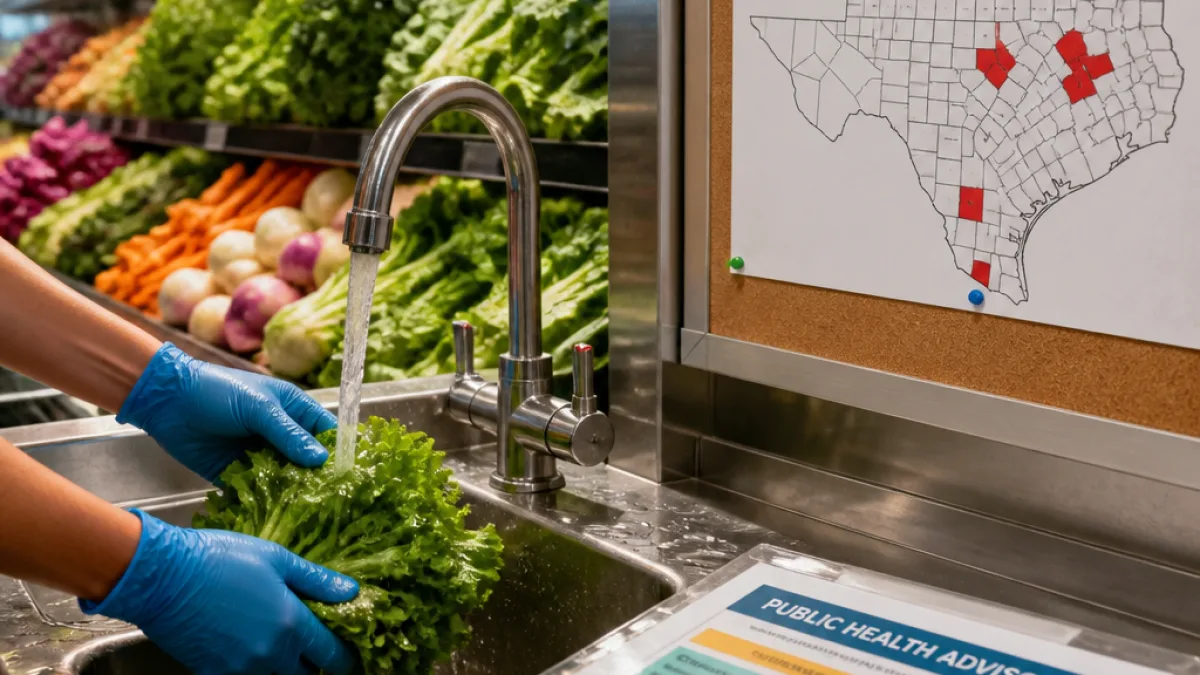
The Texas Department of State Health Services has confirmed 48 cases of cyclosporiasis across 10 counties, prompting public-health officials to warn shoppers and food handlers to take extra precautions when preparing fresh produce.
What authorities are saying
State officials reported no deaths linked to this outbreak. Local health personnel in some Southeast Texas communities say they have not seen confirmed cases in area hospitals, but they urged vigilance because the microscopic parasite that causes the illness can spread through contaminated water or produce long before food reaches consumers.
"I have not heard of an outbreak like this. It’s been a while. It might have been 2023, 2024, and so, you know, and of course, Texas is not immune,"
That comment came from Judith Smith, director of health services in Port Arthur, who also explained how contamination often occurs when floodwater or sewage contacts crops during harvest.
Symptoms, testing and when to seek care
Cyclosporiasis is an intestinal illness that commonly causes watery diarrhea, fatigue, reduced appetite and low-grade fever. Health officials advise anyone experiencing persistent watery diarrhea — particularly lasting more than two to three days — to contact a medical provider. Testing can confirm the parasite, and early treatment can reduce the risk of complications for vulnerable patients, including children and older adults.
- Confirmed cases: 48
- Counties affected: 10 (statewide reporting)
- Deaths reported: None so far
Public-health guidance focuses on safe handling of raw produce and proper kitchen hygiene. Officials highlight that foods eaten raw pose higher risk when contaminated.
| Recommended actions | Why it matters |
|---|---|
| Wash raw produce thoroughly | Reduces surface contamination |
| Clean cutting boards and utensils | Prevents cross-contamination |
| Refrigerate fresh goods promptly | Limits bacterial/parasitic growth |
| Discard produce after symptom onset | Helps identify exposure and prevent further illness |
Local implications and next steps
Health departments across the state will continue case investigations and tracing to identify any common sources of contaminated produce. Because cyclosporiasis is often linked to contamination during harvesting or handling, officials may examine irrigation sources, processing facilities and distribution chains where flooding or sewage contact could have occurred. Retailers and consumers are urged to practice recommended food-safety measures now while authorities work to identify and contain any common source.
Residents with questions about symptoms or seeking testing should contact their primary care provider or local health department for guidance. State health officials typically provide updates as investigations progress and when more specific exposure information becomes available.
— Alejandro Vega, Texas correspondent