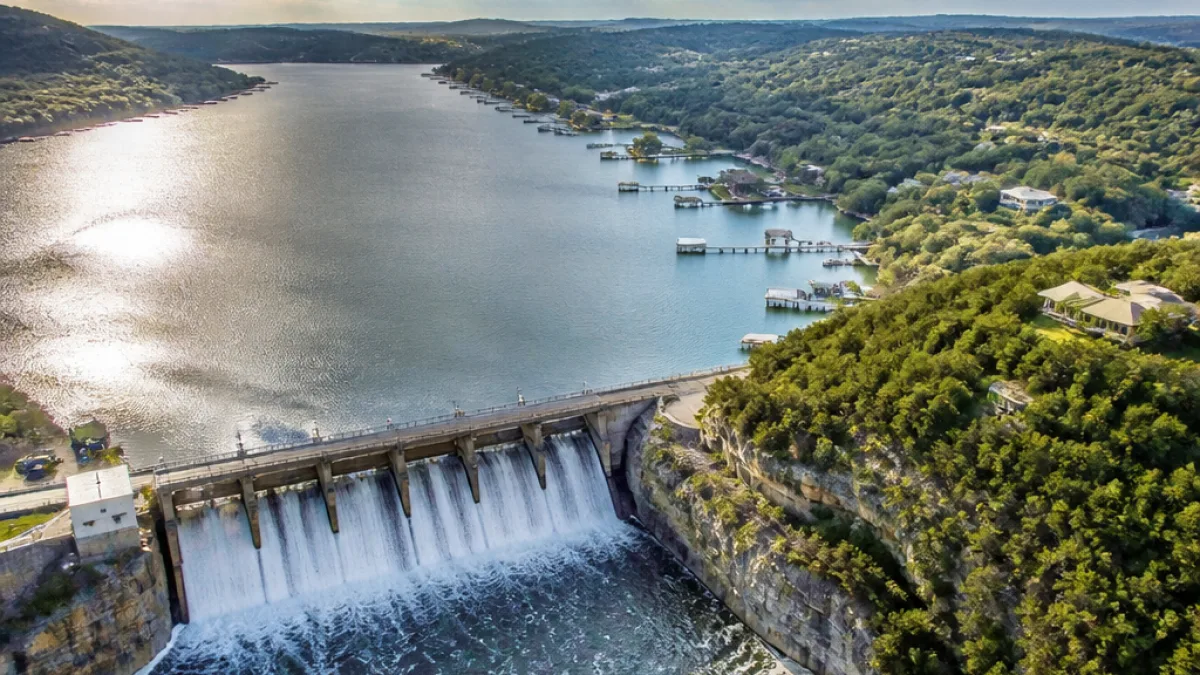
AUSTIN — Runoff from a stubborn storm system that drenched Central Texas last week has pushed Lake Travis to 100% capacity, the first time the reservoir has been full since 2019, officials said Saturday as the region began shifting back toward typical summer weather.
Rain totals and river concerns
The multi-day event dropped historic amounts of water in parts of the Hill Country and Central Texas. Local reports show nearly 7 inches in Mason, almost 6 inches in Fredericksburg, roughly 4.5 inches in La Grange and more than 1.25 inches in Austin on Wednesday alone. That volume of runoff rapidly filled tributaries feeding the Colorado River basin and sent water into Lake Travis.
| Location | Approx. Rainfall |
|---|---|
| Mason | ~7 inches |
| Fredericksburg | ~6 inches |
| La Grange | ~4.5 inches |
| Austin (one day) | >1.25 inches |
Although the immediate deluge has mostly ended, a flood warning remained in effect along the Llano River through Sunday evening as water continues moving downstream. Residents in low-lying areas along affected rivers should remain alert to changes in river levels and follow local emergency guidance.
Transition back to summer heat
With the low-pressure system moving west, a ridge of high pressure is expected to build over the region, bringing drier conditions and a return to warmer temperatures. Forecasts indicate afternoon highs will rebound into the lower 90s by Saturday, with coastal and western zones possibly remaining slightly cooler due to lingering cloud cover. The chance for isolated morning sprinkles is low, around 10%.
Even though daytime temperatures will approach seasonal norms — the mid-90s are typical this time of year — high humidity is expected to make conditions feel much hotter, creating uncomfortable outdoor conditions. Officials urge residents to stay hydrated and use heat-safety precautions as outdoor activities resume.
What this means locally
Lake Travis reaching full pool has several local implications:
- Recreation: Full water levels can restore boating, fishing and lakeside business activity but may also bring stronger currents and submerged hazards.
- Water supply: Higher reservoir levels can ease short-term pressure on regional water resources, though the long-term outlook still depends on seasonal rainfall.
- Downstream flooding: Even as the rain ends, moving water can produce elevated river stages and localized flooding well after precipitation stops.
For now, the most immediate public-safety concern is the Llano River corridor where flood watches remain in place. Residents and visitors should monitor local National Weather Service updates and obey any evacuation or road-closure orders. Emergency management offices remind people not to drive through flooded roadways and to avoid recreating on swifter, higher water.
As Central Texas returns to a more typical summer pattern, officials and water managers will be watching how reservoir levels and downstream flows evolve in the days ahead.
— Alejandro Vega, News Block