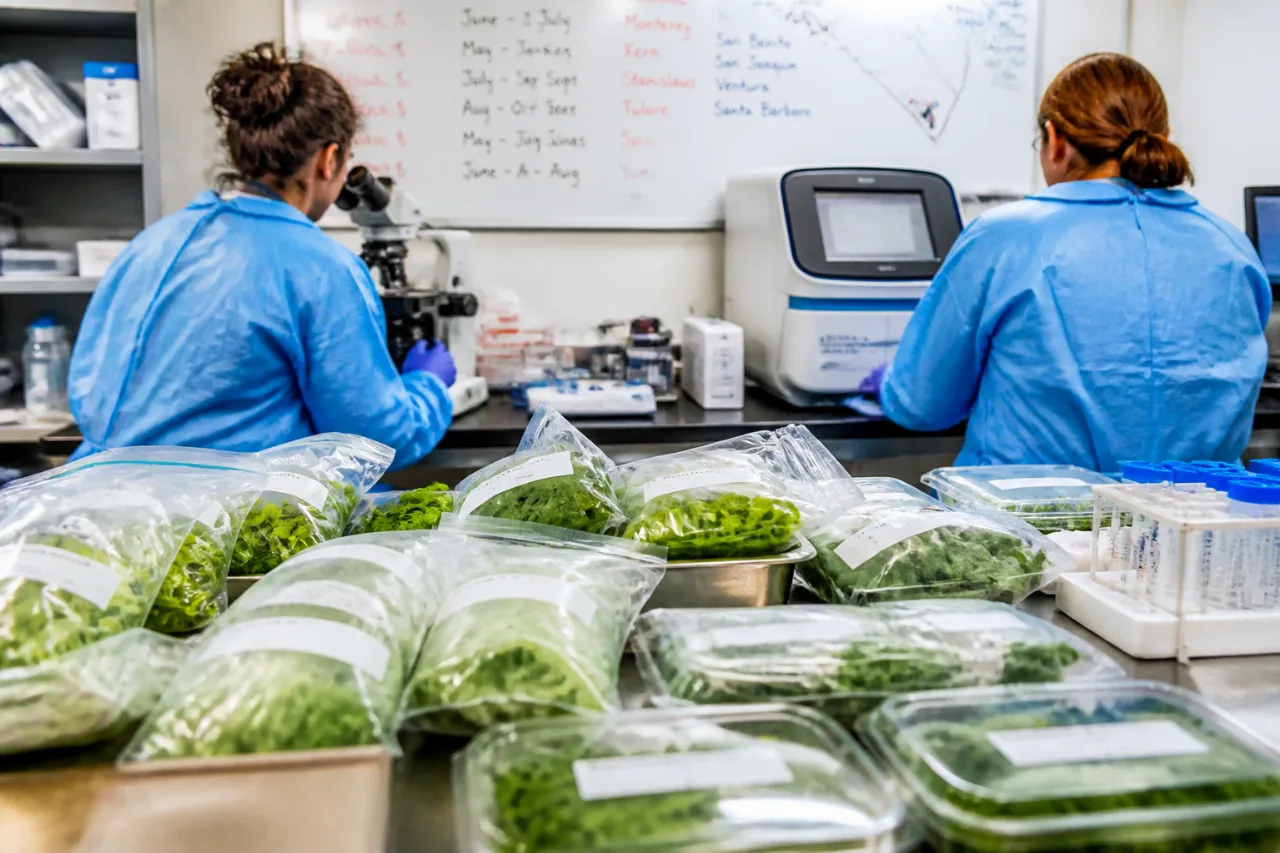
More than 1,000 reported cases of cyclosporiasis this summer have put public health authorities on alert as they race to determine what is fueling the spike in infections caused by the Cyclospora parasite. Federal and state teams, including the Centers for Disease Control and Prevention and the Food and Drug Administration, are investigating multiple clusters but have not identified a single common source.
Why this outbreak is hard to trace
Unlike many bacterial foodborne pathogens, Cyclospora cannot currently be tracked using the standard genetic technique known as whole genome sequencing (WGS). WGS creates detailed genetic fingerprints that help link sick people to the same source — an approach that has been instrumental in recent investigations of E. coli and listeria outbreaks. Because those tools are not useful for Cyclospora, investigators face additional hurdles in connecting cases and pinpointing contaminated products or suppliers.
The CDC notes that cyclosporiasis typically rises in warmer months; the agency defines the parasite’s seasonal window as
"May 1 to Aug. 31". Public health officials say the current cluster is notable for its size and the frequency of new recalls and outbreak announcements.
Implications for consumers and the food system
Past Cyclospora outbreaks have sometimes affected fresh produce. The inability to apply WGS here means investigators must rely on other epidemiologic and traceback methods, which can be slower and less definitive. That complicates efforts to issue targeted recalls and to give consumers clear guidance about which products to avoid.
- More than 1,000 illnesses reported so far in this summer surge.
- CDC defines cyclosporiasis season as May 1–Aug. 31.
- Whole genome sequencing is not currently useful for tracking the Cyclospora parasite.
| Item | Detail |
|---|---|
| Reported cases | 1,000+ |
| Season window (CDC) | May 1–Aug. 31 |
Officials emphasize that cyclosporiasis often presents with sudden, severe diarrheal illness and that summertime increases are expected, but the magnitude and recurring difficulty in finding a source are raising concern among investigators and food-safety experts. Because of the diagnostic and traceback limitations, public health responses may look different from those used in bacterial outbreaks that can be resolved quickly with genetic matching.
Federal agencies continue to pursue detailed interviews, product traceback and laboratory analyses to narrow down potential exposures. Until investigators can identify a specific vehicle of infection, consumers and retailers may see periodic recalls and advisories related to produce items as officials try to interrupt transmission.
The situation underscores an enduring challenge in foodborne disease surveillance: not all pathogens yield to the same modern tools, and that gap can leave investigators and the public with uncertainty even as case counts climb.