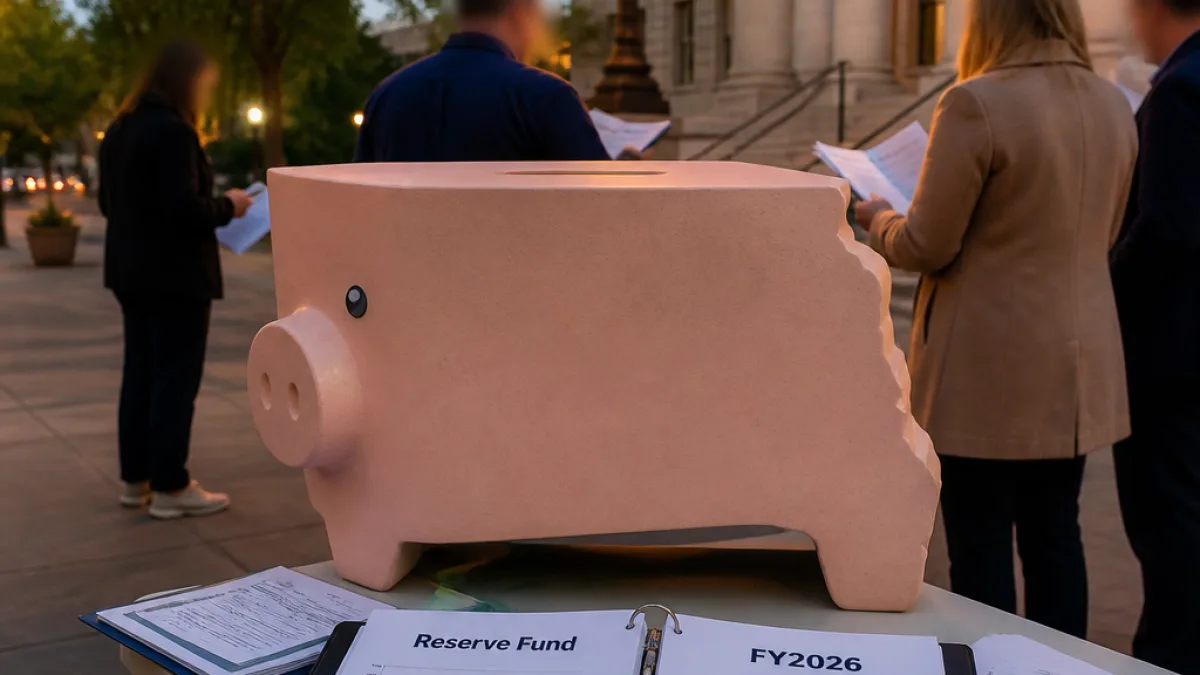
South Dakota closed the 2026 fiscal year with a reported $69 million surplus, Gov. Larry Rhoden announced Monday, a result officials attributed to stronger-than-expected tax receipts and underspent agency budgets.
Where the excess came from
State officials said the surplus breaks down into two main parts: $30 million in revenue above estimates and $39 million in spending reversions — funds that state agencies did not spend and returned to the treasury.
"South Dakota’s robust economy is driving steady revenue growth, moving our budget in an even stronger direction," Rhoden said. "We keep our taxes very low and ensure we have the highest return on each dollar invested."
Sales tax growth was a notable contributor. The state reported sales tax collections rose by 6.6% in FY2026, topping the historical average of 4.7%. That sales tax gain accounted for about $17 million of the surplus.
Agency savings and reserves
The Department of Social Services recorded the largest share of unspent funds, with $32 million in reversions. State officials characterized the overall outcome as evidence of fiscal discipline and prudent management.
- Total surplus: $69 million
- Revenue above estimates: $30 million
- Spending reversions: $39 million
- Sales tax contribution: $17 million
- Largest agency reversion: Department of Social Services, $32 million
Budget and Finance Commissioner Jim Terwilliger emphasized the state’s long-standing fiscal approach: balancing the budget annually, avoiding debt for recurring costs and preserving a fully funded pension system. He framed the result as part of why South Dakota retains top credit ratings from the three major rating agencies.
Growth of the state's rainy-day fund
The entire $69 million surplus was directed into the state’s reserve funds, boosting that balance to $325 million, which officials say equals 12.7% of the FY2027 budget. State leaders indicated those reserves will be used for one-time investments rather than recurring spending.
| Item | Amount |
|---|---|
| FY2026 surplus | $69,000,000 |
| Added to reserves | $69,000,000 |
| Total reserves (post-addition) | $325,000,000 |
For residents, the immediate effects are indirect: larger reserves give lawmakers and the governor more flexibility for one-time projects, emergency response and capital spending without raising taxes or increasing ongoing obligations.
As the new fiscal year gets underway, attention will turn to how the administration and Legislature prioritize those one-time funds and whether continued sales tax growth and agency spending patterns hold steady.
— Garrett Lindholm, News Block