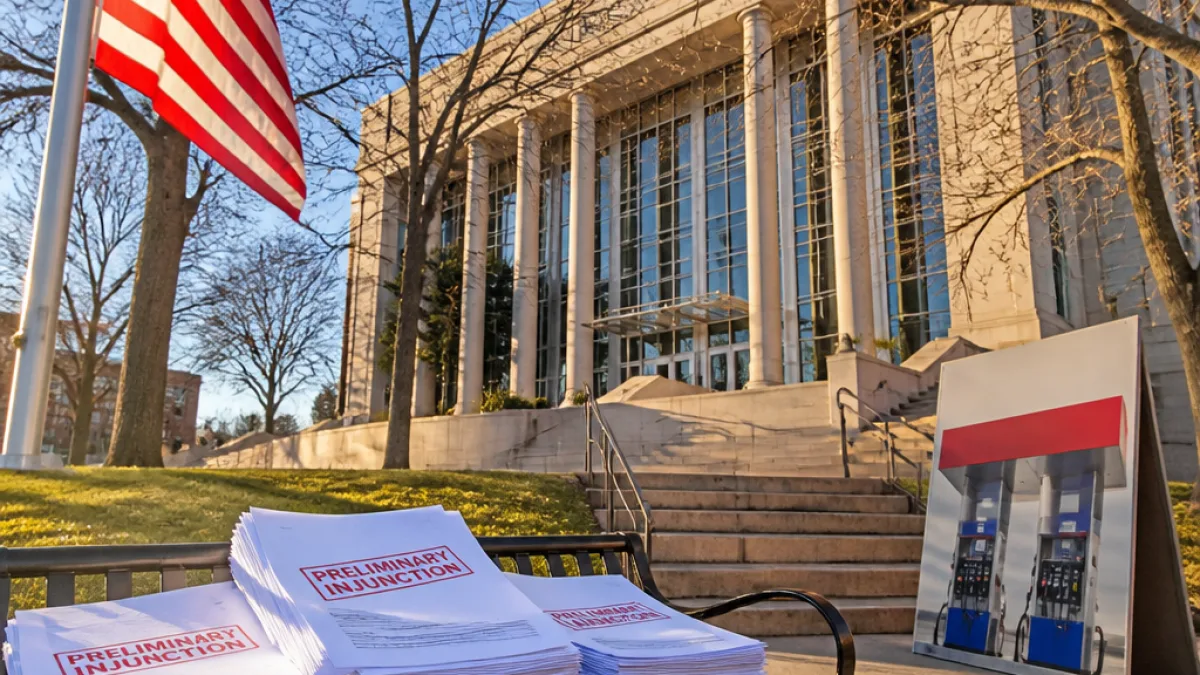
Sioux Falls, S.D. — A federal judge on Friday stopped South Dakota from enforcing its new law that bars advertising for unlawful abortion services against a New York-based nonprofit and a private plaintiff, issuing a preliminary injunction that pauses state action while the case proceeds.
Judge finds plaintiffs likely to prevail on free-speech claim
U.S. District Judge Camela C. Theeler concluded the nonprofit, Mayday Health, and plaintiff Nancy Turbak Berry showed a strong likelihood of prevailing in their constitutional challenge. The injunction prevents the state from applying the law to those plaintiffs, but it does not nullify the statute statewide.
"Information should not be banned," said Jim Leach, the attorney representing Mayday Health.
The statute, which lawmakers approved and the governor signed in March, outlaws the distribution and advertisement of unlawful abortion services — language the state says targets advertising for medication abortion. Abortion itself has been illegal in South Dakota since the U.S. Supreme Court revoked Roe v. Wade, except when the pregnant person's life is in danger; state law criminalizes administering, prescribing or procuring an abortion as a felony.
Background: ads, complaint and the lawsuit
Mayday Health, founded in 2022, runs public information campaigns about the legality and access to abortion pills but does not sell or distribute medication. In December 2025, the group placed gas-station placards in South Dakota that read, "Pregnant? Don't want to be? Learn More at Mayday.Health." The state attorney general, Marty Jackley, filed a complaint over those advertisements and the nonprofit later agreed in March to remove the placards.
Undeterred, Mayday Health and Turbak Berry filed suit in May against Republican Gov. Larry Rhoden and Jackley, arguing the advertising prohibition violates freedom of speech. In her written ruling, Judge Theeler said the state did not try to show the law survives strict scrutiny — the highest standard of constitutional review that requires a compelling government interest and narrowly tailored means.
Gov. Rhoden expressed disappointment with the preliminary decision in a statement Friday but noted it is not a final judgment.
"I remain confident that our law is not only constitutional — it's vitally important," Rhoden said.
What this means locally and next steps
The injunction pauses enforcement against the named plaintiffs only; the law itself remains on the books. The ruling allows Mayday Health to continue its informational activities while the court resolves the constitutional challenge. More broadly, the decision underscores how courts will weigh speech protections against state efforts to regulate abortion-related communications.
- Who is affected: Mayday Health and Nancy Turbak Berry are protected by the injunction; other entities remain potentially subject to the statute.
- Legal posture: Preliminary injunction — not a final ruling on the law’s constitutionality.
- Next steps: Litigation will continue in federal court; the state may seek to defend the statute or appeal the injunction.
| Date | Event |
|---|---|
| Dec. 2025 | Mayday placed gas-station placards in South Dakota |
| March | State law banning advertising for unlawful abortion services was signed; Mayday agreed to remove placards |
| May | Mayday Health and Nancy Turbak Berry filed suit against Gov. Rhoden and AG Jackley |
| July (Friday) | U.S. District Judge Camela C. Theeler issued a preliminary injunction |
For South Dakotans, the ruling raises immediate questions about the scope of permitted speech around reproductive health and how state enforcement will proceed while the case is pending. The case will be closely watched by advocacy groups, legal observers and state officials as it could shape the boundaries of advertising and information about abortion services in the months ahead.