Morning inversion trapped smoke over Spokane Valley
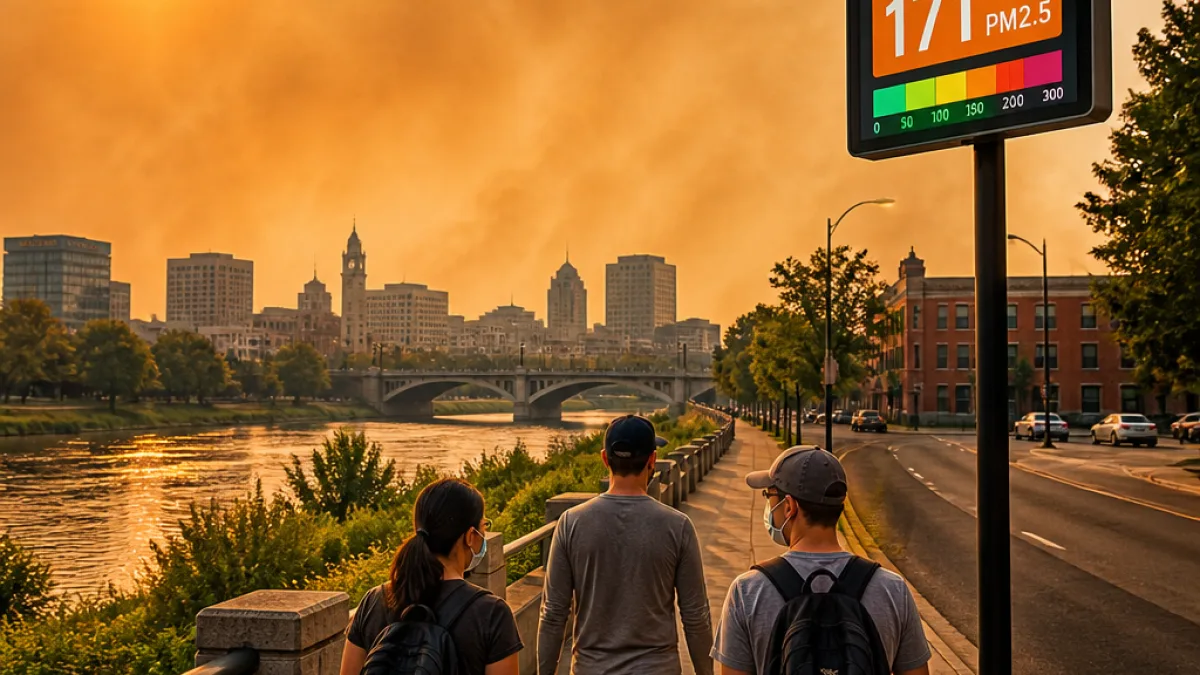
Wildfire smoke moved into the Spokane region overnight and into Thursday morning, producing air-quality readings that prompted an unhealthy alert from the Spokane Regional Clean Air Agency. Monitors recorded the morning spike in fine-particulate pollution, which can aggravate respiratory and cardiovascular conditions.
The monitor in Spokane Valley registered a fine-particulate reading of 168 at 8 a.m., a level the air agency classifies as unhealthy. By 3 p.m. that same monitor had fallen to 62, a value in the moderate range. Downtown Spokane saw its worst hourly measurement between 10 a.m. and 11 a.m., when the pollutant index reached 111.
“In the morning, a layer of warm air acts like a giant lid and traps cooler air near the ground,” said Daniel Butler, a meteorologist with the National Weather Service, explaining why smoke was concentrated earlier in the day.
Why conditions changed through the day
Meteorologists said a temperature inversion early Thursday prevented smoke plumes from rising and dispersing. As the surface warmed, the inversion broke and smoke mixed into the atmosphere, making conditions noticeably clearer by afternoon.
- Spokane Valley monitor: 168 at 8 a.m.; 62 at 3 p.m.
- Downtown Spokane peak: 111 between 10–11 a.m.
- Cause: Smoke likely from multiple wildfires north of Spokane
Fire activity tied to the smoke
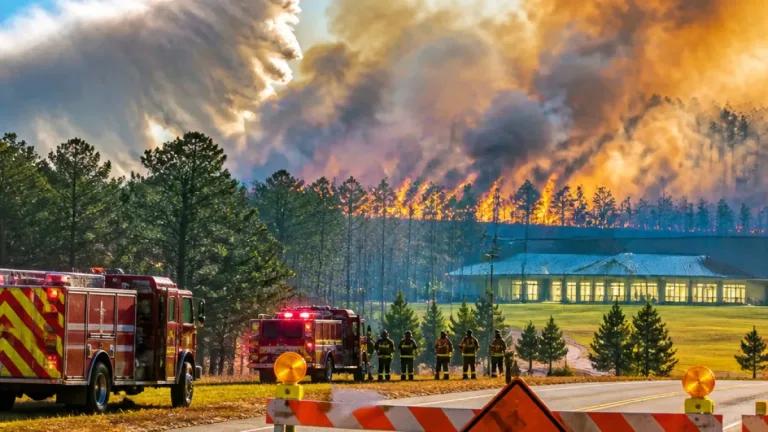
Officials pointed to fires north of the region as likely sources of the haze. One notable incident is the Turner Hill fire, located about 8 miles north of Bonners Ferry. The Idaho Department of Lands reported the blaze began around 8:30 p.m. Wednesday and was estimated at approximately 300 acres as of Thursday evening.
The Turner Hill fire prompted Level 3 “go now” evacuations for a series of roads and neighborhoods, including the 3000 block of Turner Hill Road east to U.S. Highway 95, Holmes Road, Fleming Creek Road, Kings Row and Fawn Lane. Evacuations later expanded south toward the Moonshadow Road area, where responders placed some zones in a “set” status while others remained “go.”
| Item | Reported value / status |
|---|---|
| Spokane Valley pollutant level (8 a.m.) | 168 (unhealthy) |
| Spokane Valley pollutant level (3 p.m.) | 62 (moderate) |
| Downtown Spokane peak | 111 (between 10–11 a.m.) |
| Turner Hill fire size | ~300 acres |
Local response and what residents should know
Fire authorities committed crews and equipment to the Turner Hill incident, including hand crews, dozer support and air resources. Jonathan Luhnow, fire information duty officer with the Idaho Department of Lands, said multiple rural fire districts were assisting, with three hand crews of about 20 members each engaged on the fire.
Health and weather officials recommend residents monitor updates from the Spokane Regional Clean Air Agency and the National Weather Service. Those with asthma, chronic lung disease, heart conditions, older adults and children should limit outdoor exertion during poor air-quality episodes.
As temperatures rise and atmospheric mixing increases, forecasts indicated the smoke had thinned by Thursday afternoon. Still, changing winds or new fire activity could bring additional smoke back into the area, so continued vigilance and checking local air monitors remain advised.