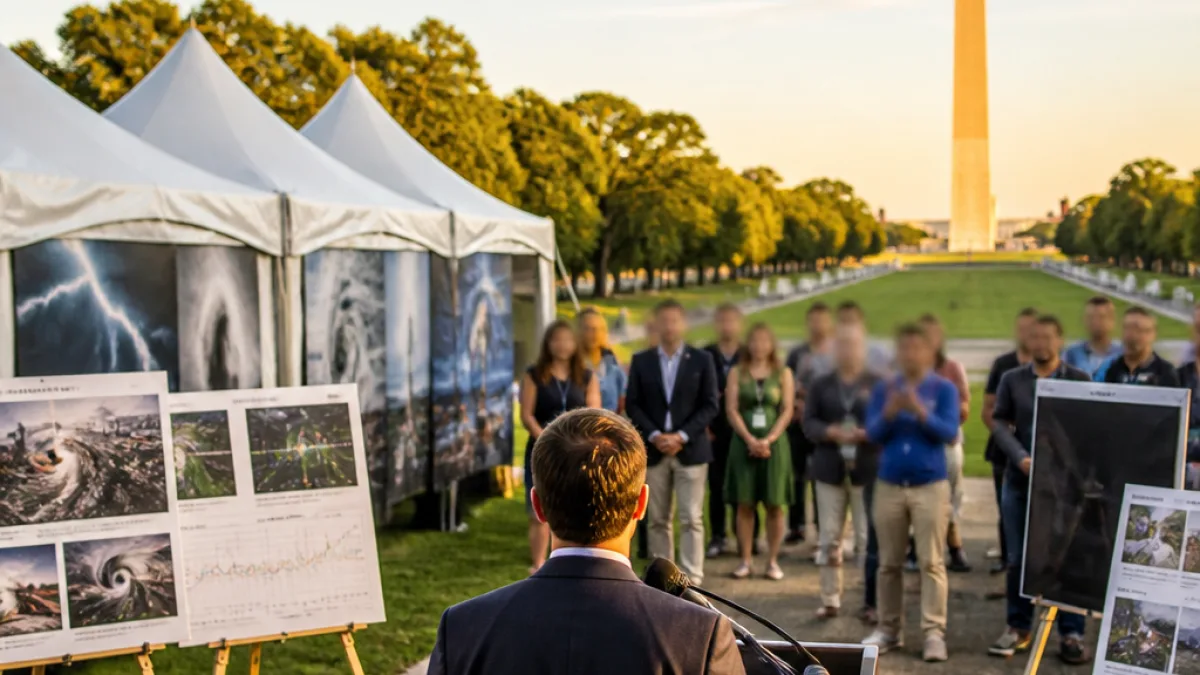
A New Orleans resident whose life was upended by Hurricane Katrina traveled to Washington, D.C. this month to recount her experience at the Museum of Unnatural Disasters, a temporary exhibit on the National Mall, and to press lawmakers for sustained investment in the nation’s weather and disaster agencies.
From evacuation to advocacy
The survivor described the day Katrina changed everything — the mass evacuation on interstate highways, prolonged power failures and the sudden need to leave behind a life and neighborhood. She said she went to the Mall to make a simple but urgent case: better prediction, preparation and recovery will be increasingly critical as climate change drives stronger storms.
“I flew to Washington, D.C., recently to share my survivor’s story at the Museum of Unnatural Disasters, a pop-up exhibit on the National Mall. I wanted to impress upon museum visitors and my members of Congress that we need climate action.”
In her public remarks, she urged federal leaders to prioritize three key functions: fully funding NOAA, ensuring the National Weather Service can deliver timely forecasts, and maintaining robust FEMA support to assist communities in recovery. She warned that hurricanes such as Katrina — and more recent storms she named — will only intensify without policy changes.
Why those agencies matter
The visitor’s emphasis reflects a broader debate in Washington over how to allocate resources to climate science, forecasting infrastructure and disaster relief programs. Advocates say investment in forecasting and preparedness can save lives and reduce long-term recovery costs by enabling earlier evacuations and more resilient planning.
- NOAA — central to climate and ocean science and forecasting.
- National Weather Service — provides real-time warnings and forecast guidance communities rely on during storms.
- FEMA — coordinates federal response and recovery assistance after disasters.
Local and national implications
While the survivor’s account unfolded on the National Mall, the concerns she raised have local resonance across coastal and inland communities. Emergency managers, municipal planners and residents increasingly look to federal forecasts and response capabilities when preparing for hurricane seasons and other extreme weather events.
| Agency | Primary role |
|---|---|
| NOAA | Climate, ocean and atmospheric science |
| National Weather Service | Forecasting and real-time warnings |
| FEMA | Federal disaster response and recovery |
The survivor told visitors and members of Congress that the path forward will not be quick or easy, but that federal commitment is essential to reduce the harm from future storms. Her appeal highlights how personal stories continue to shape policy conversations about preparedness and resilience.
Reporting from Washington, D.C.