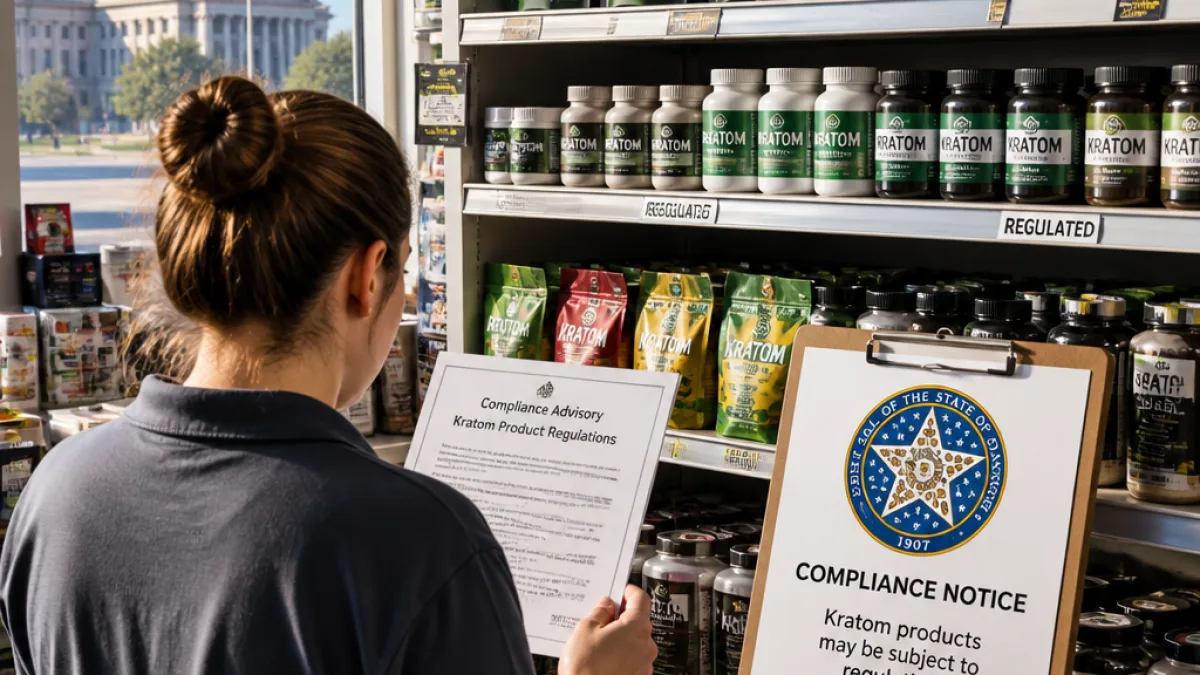
The Oklahoma Bureau of Narcotics and the Oklahoma State Department of Health issued a statewide warning to retailers this week about selling kratom products that exceed limits set under new state law. Officials say stores that carry illegally potent or otherwise noncompliant items may face enforcement action or civil liability.
New limits took effect in 2025
Senate Bill 891, known as the Kratom Consumer Protection Act, took effect Nov. 1, 2025. The measure draws a line between traditional kratom formulations and a wave of highly concentrated products that state officials say pose greater risk of addiction and overdose. State agencies say those concentrated products, often sold in convenience stores, are the primary concern.
Mark Woodward with the Oklahoma Bureau of Narcotics told retailers they cannot assume the state will notify them before action is taken.
“You need to know what you’re selling and don’t leave it up to the state thinking, ‘Well, the state needs to come in and tell me if my products are illegal,’”
Enforcement and public reporting
Because kratom is not classified as a Controlled Dangerous Substance in Oklahoma, the Bureau of Narcotics does not have direct enforcement authority over every provision of SB 891. Still, the bureau and the Department of Health are working together to educate sellers and consumers about the law and the risks tied to high-potency kratom products.
Officials warned stores that the State Department of Health can impose sanctions against outlets that sell products violating the law. Woodward also noted potential civil exposure for businesses if a customer suffers harm from a product sold in apparent disregard of legal limits.
- SB 891 (Kratom Consumer Protection Act) effective Nov. 1, 2025
- State agencies: Oklahoma Bureau of Narcotics and Oklahoma State Department of Health
- Primary concern: concentrated kratom products sold in gas stations and similar outlets
What consumers and retailers should do
Officials say retailers should audit their inventory, verify product labeling and potency claims, and stop selling items that may exceed the legal threshold. Consumers who find products they believe violate the law are encouraged to report concerns through the State Department of Health’s complaint channels.
The bureau emphasized that many users describe highly potent kratom formulations as producing effects similar to opioids and reported addictive patterns. That distinction is central to the state’s effort to limit certain commercial kratom products while keeping traditional, lower-potency forms available under regulatory standards.
| Item | Detail |
|---|---|
| Law | Senate Bill 891 (Kratom Consumer Protection Act) |
| Effective date | Nov. 1, 2025 |
| Agencies involved | Oklahoma Bureau of Narcotics; Oklahoma State Department of Health |
State officials say their immediate goal is outreach and education, but they cautioned that continued sales of banned or dangerously potent formulations could lead to enforcement actions or civil suits. Retailers uncertain about compliance are being urged to seek guidance and remove questionable products until they can confirm legality.