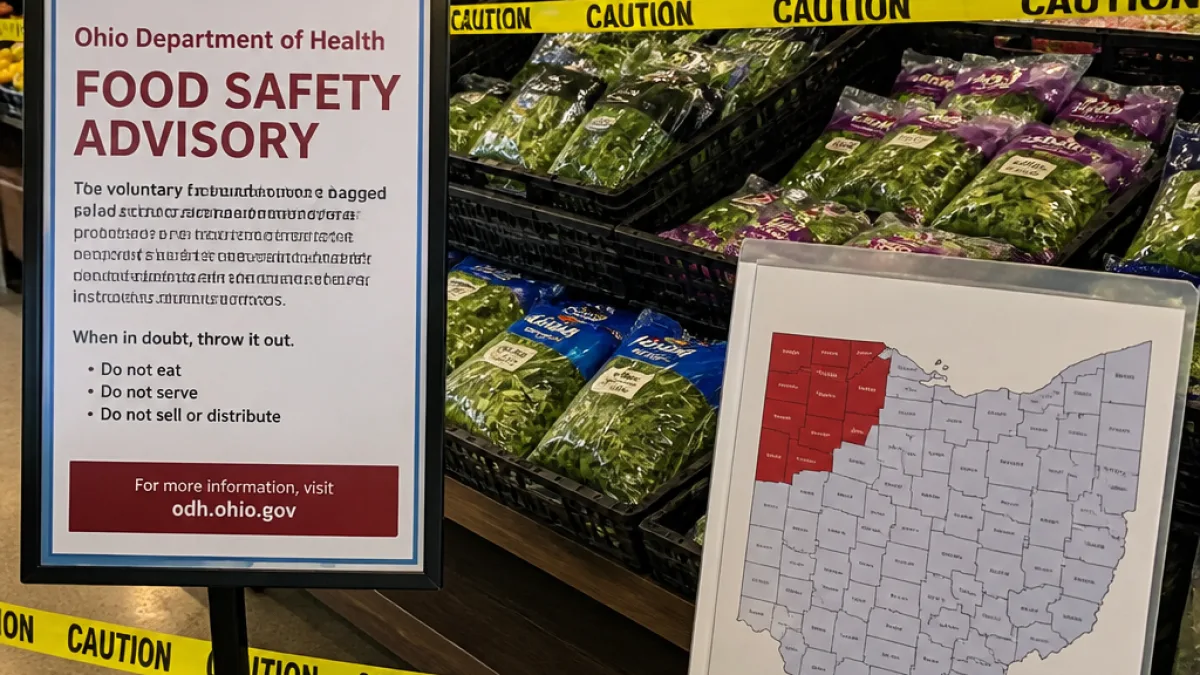
The Ohio Department of Health reported a rapid and substantial rise in confirmed cases of cyclosporiasis, the parasitic illness that causes severe diarrhea, with totals jumping to 1,274 as of Thursday. That figure represents more than a twofold increase from earlier in the week, when the department recorded 364 cases.
Where the surge is concentrated
State health officials say every county has recorded cases, but northwestern Ohio has been disproportionately affected. The director of the Ohio Department of Health, Dr. Bruce Vanderhoff, noted the increase follows similar outbreaks in neighboring states, particularly Michigan.
“Interestingly, if we go just north into Michigan, they're reporting thousands of cases,” Vanderhoff said, adding that northwestern counties in Ohio have borne a larger share of infections.
Health authorities have not yet identified a definitive source for the outbreak. Investigators are focused on produce as a likely vehicle for transmission; cyclospora is commonly associated with contaminated fruits and leafy vegetables. Officials caution that both imported and locally grown produce can be affected.
What residents should do
- Wash fresh produce thoroughly before eating, especially leafy greens and berries.
- Avoid bagged salads for the time being when possible.
- If you develop persistent watery diarrhea, seek medical care; specific treatment is available.
Dr. Vanderhoff emphasized that antibiotics prescribed by a physician can shorten the course of illness, but symptoms may persist for an extended period without treatment. Officials have urged clinicians to consider cyclospora in patients with prolonged gastrointestinal symptoms and to report confirmed cases through the state surveillance system.
| Report date | Confirmed cases |
|---|---|
| Midweek (prior) | 364 |
| Thursday (updated) | 1,274 |
The rapid rise in reported infections echoes patterns seen in nearby states and underscores challenges for public-health investigators trying to trace a common source. For Ohio residents, the immediate actions are practical: handle fresh produce carefully, avoid prepackaged salads when possible, and consult a medical provider if diarrhea is severe or does not resolve.
Health officials continue to monitor the situation and update the public as laboratory and epidemiological investigations proceed.