City, police and community push for clarity after Campaign Zero analysis
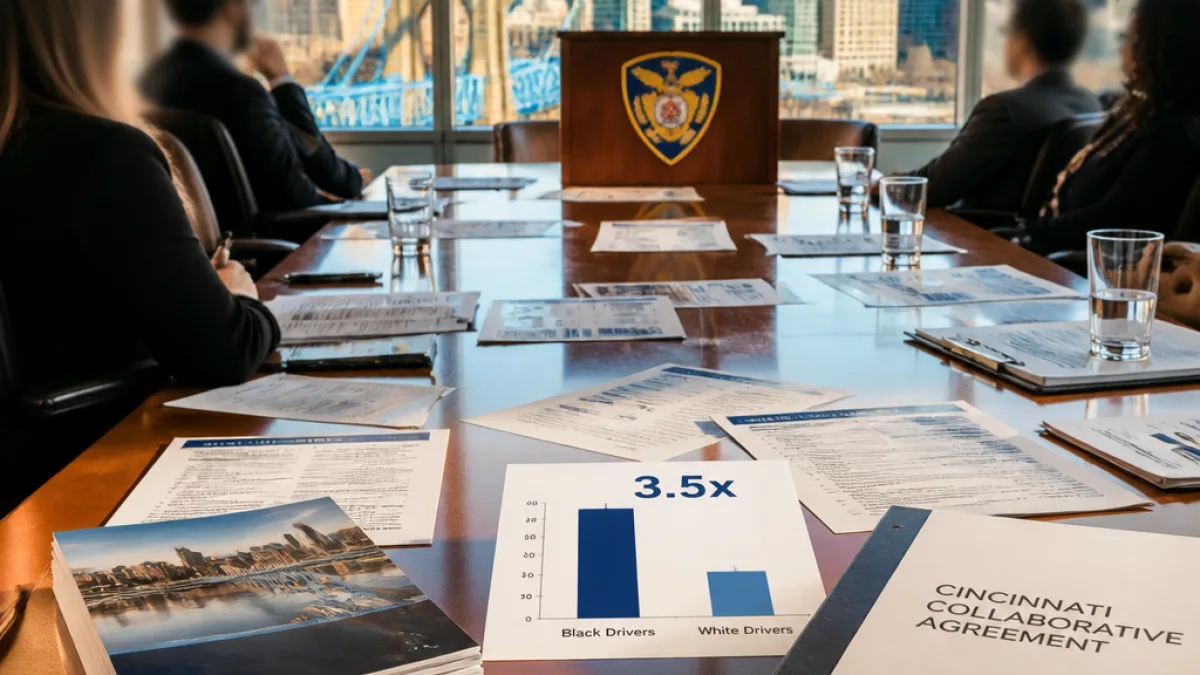
Cincinnati officials convened an open meeting Thursday night after a third-party analysis alleged significant racial disparities in Cincinnati Police Department stops. The report from Campaign Zero found that, based on officers' contact cards, Black residents were stopped three-and-a-half times more often than white residents in records dating back to 2009.
The meeting drew department leaders, city administrators and community representatives to discuss next steps, data accuracy and accountability under the city's long-standing policy framework, the Cincinnati Collaborative Agreement, first implemented in 2002.
"We had the foresight of seeing that 25 years ago, saying that we want to see that, so everybody sees it," said community leader Iris Roley, noting the value of outside scrutiny on the data.
Interim Police Chief Adam Hennie emphasized the department's obligation to follow the collaborative framework and to accept recommendations. "It has been clearly laid out. I'm going to be held accountable to what that refresh says," he said, adding he will report progress to the city manager and elected officials.
City seeks independent review and broader context
City Manager Sheryl Long joined the call for transparency and accountability, saying those elements are essential to rebuilding trust between residents and law enforcement. City leaders said they were not consulted before Campaign Zero released its report but have engaged the group afterward to provide context and offer additional data that was not included in the initial analysis.
- Report source: Campaign Zero analysis of CPD "contact cards" (stops recorded by officers)
- Key finding: Black residents stopped 3.5 times more than white residents in the dataset
- Action pledged: independent review of the data and collaborative follow-up ahead of a September conference
The contact cards are a product of reporting requirements established by the Collaborative Agreement, which was designed to make stops and interactions visible to the public and oversight partners. Officials say those records remain central to evaluating whether practices align with policy goals and civil rights protections.
| Measure | Value |
|---|---|
| Reported disparity | 3.5 times more stops of Black residents vs. white residents |
| Data range | Records dating back to 2009 |
What’s at stake for Cincinnati and Ohio
The findings raise questions about policing practices in Cincinnati and could influence enforcement, oversight and training across Hamilton County. The Collaborative Agreement — a model other jurisdictions watch — forms the basis for local compliance and community trust. How city officials respond may affect federal or state scrutiny, ongoing community-police relations, and preparations for the Collaborative Agreement Conference scheduled for September.
Officials at Thursday's meeting said they will pursue an independent review of the data used in the Campaign Zero report and continue dialogue with the group to ensure the city's fuller datasets and context are considered. The independent review and forthcoming conference will be the next opportunities for residents and leaders to assess whether the city's policing aligns with both legal standards and community expectations.