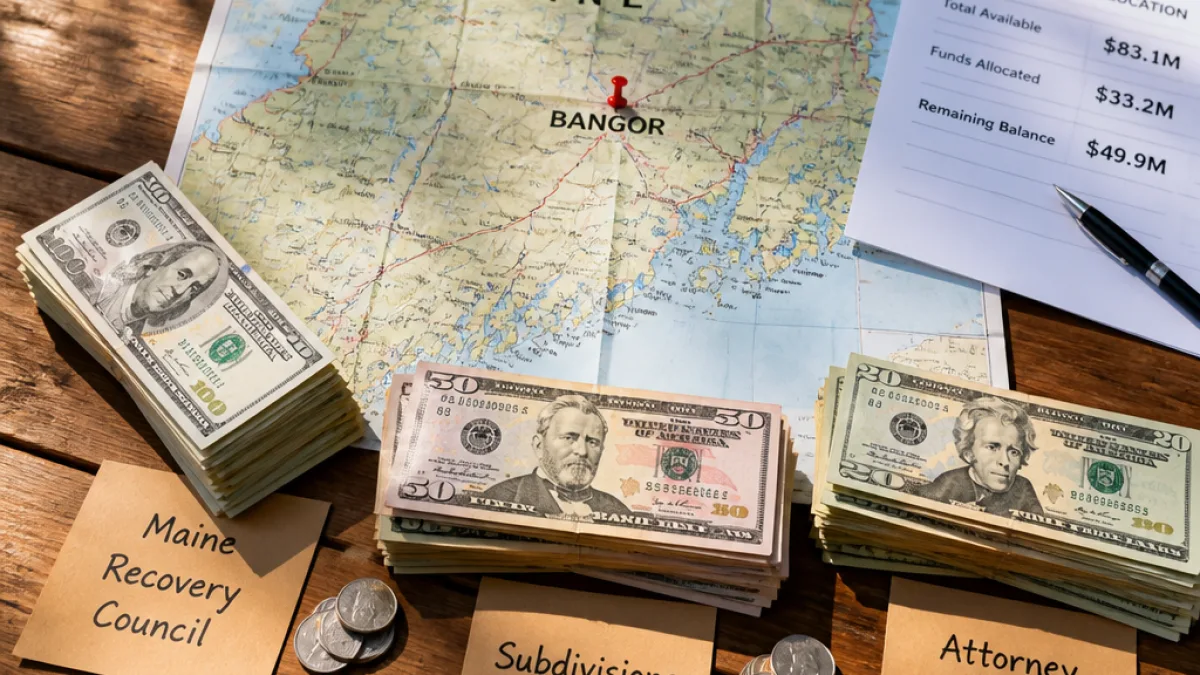
AUGUSTA — Four years after settlement payments began arriving in Maine, the state has received about $83.1 million of an expected $261 million tied to national opioid litigation and has spent roughly $33.2 million, according to data compiled by the Maine Opioid Settlement Support Center.
How the money is divided
The statewide agreements set aside settlement proceeds for four broad purposes: addiction prevention, harm reduction, treatment and recovery services. Under the formula agreed to by state leaders, the distribution schedule assigns:
- 50% to the Maine Recovery Council
- 30% to subdivisions — a combination of counties and 21 larger communities
- 20% to the attorney general’s office
That split is intended to ensure both statewide coordination and local flexibility, said the materials published by the support center, which launched last summer to track distributions and spending.
Where the money is now
According to the center’s spending dashboard, as of this week:
- The Maine Recovery Council has received $41.8 million and spent $14.3 million.
- The attorney general’s office has received $17.2 million and disbursed just over half of that amount.
- Subdivisions as a group have received $24.1 million and distributed just under $10 million.
Some counties contain separate municipal subdivisions. For example, the city of Bangor is scheduled to receive $4.36 million through 2038 under the subdivision allocation.
| Recipient | Received | Spent/Distributed |
|---|---|---|
| Maine Recovery Council | $41.8 million | $14.3 million |
| Attorney General’s Office | $17.2 million | Just over half |
| Subdivisions (counties & 21 communities) | $24.1 million | Just under $10 million |
| Total to date | $83.1 million | $33.2 million |
Local and statewide implications
Officials and community groups have flexibility under the settlement to target funds across prevention, treatment, harm reduction and recovery programming. That has led to a variety of projects already under way or planned, including expanded treatment access, naloxone distribution and support for recovery services. A recent example cited by local stakeholders is a recovery high school at the University of Maine at Fort Kent, which secured a significant portion of its funding from settlement proceeds.
Still, the spending pace — about one-third of funds received so far — highlights the multiyear nature of the work. The total expected through 2038, now projected at roughly $261 million after additional settlements raised the earlier estimate of $230 million, will be paid out over the next decade-plus. That means counties, cities and statewide entities will continue planning and contracting for services with money arriving in installments.
What communities should know
For municipal officials, health providers and community organizations, a few practical points stand out:
- Funds are restricted to activities that address prevention, harm reduction, treatment and recovery; they cannot be used for unrelated budget items.
- Subdivisions should track allocations and reporting requirements to ensure continued eligibility for future installments.
- Stakeholders should coordinate locally and with the Maine Recovery Council to avoid duplication and amplify impact.
As Maine continues to receive payments over the coming years, the effectiveness of programs funded by settlement money will hinge on transparent spending, measurable outcomes and collaboration between state and local partners. For communities wrestling with the human and economic toll of opioid addiction, those decisions will shape services and supports for years to come.
(Reporting contributed from state spending data compiled by the Maine Opioid Settlement Support Center and local reporting on municipal allocations.)