Local concentration raises concerns as summer season begins
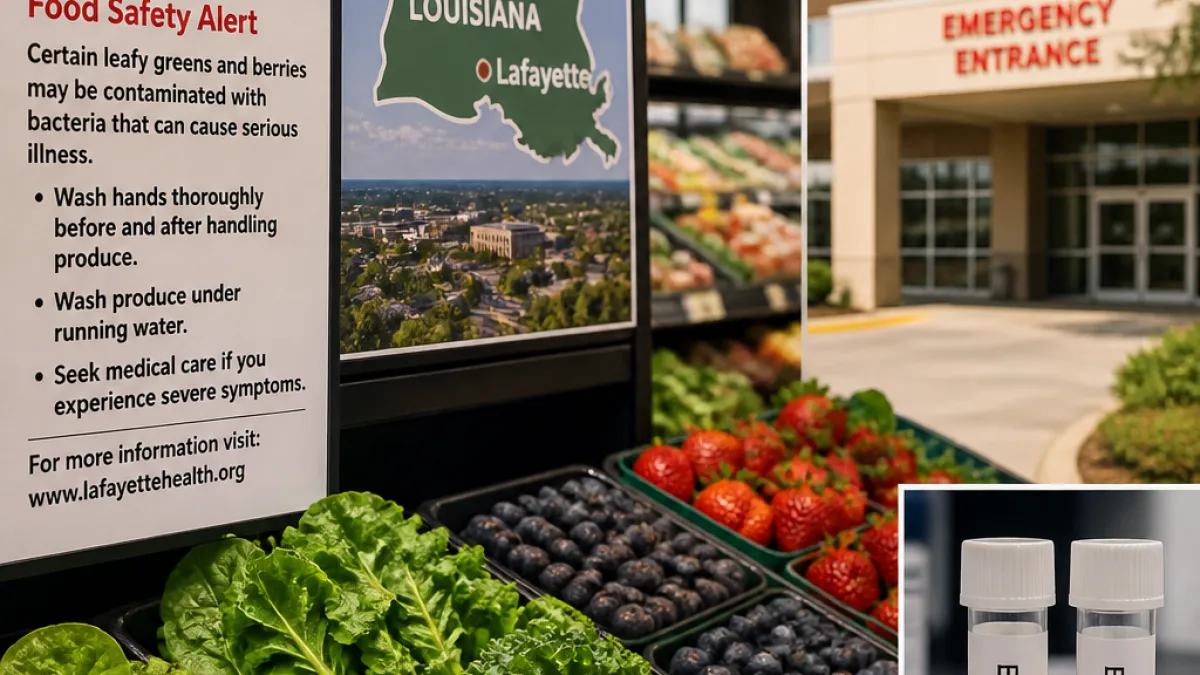
The Lafayette area is among the Louisiana communities reporting the highest concentrations of Cyclospora infections after state health officials said confirmed cases more than doubled in a week. Authorities reported at least 55 confirmed cases statewide, including five hospitalizations, up from 23 cases the week before.
Cyclospora is a parasite that causes gastrointestinal illness. Symptoms commonly include nausea, vomiting and diarrhea. Health officials note that while mild cases sometimes clear without testing, most infections require an antibiotic to fully resolve.
"55 confirmed cases statewide"
What’s known and what’s not
State and local health officials say current cases are sporadic and have not been traced to a single farm, processing plant or batch of produce. The pattern aligns with seasonal trends: Cyclospora infections in Louisiana are more common between June and October.
Federal monitoring has also shown a broader rise: since May 1, the Centers for Disease Control and Prevention has confirmed more than 1,600 cases nationwide. Locally, the Lafayette and Baton Rouge areas are the hotspots identified in the most recent state report.
How residents can reduce risk
Health officials offered practical steps residents can take to lower their chance of becoming infected. These are straightforward household measures that matter most when preparing fresh produce:
- Wash hands with soap and water before handling food.
- Rinse produce under cold running water; do not use soap or bleach on produce.
- Trim away damaged areas of fruits and vegetables.
- Avoid cross-contamination with raw meats, especially poultry.
- Refrigerate produce until use and do not leave it at room temperature for more than two hours.
Local consequences and health care impact
Although officials report only a handful of hospitalizations so far, a local surge in cases can strain clinics and emergency departments, particularly during the busy summer months when other enteric illnesses and heat-related visits also increase. Prompt medical attention is important when symptoms are severe or prolonged; clinicians may prescribe antibiotics to clear the infection.
Public-health investigators will continue interviewing patients and reviewing supply chains, but at this point there is no single source or recall to report. That means individual habits—careful washing, prompt refrigeration and attentiveness to symptoms—are the first line of defense for Lafayette households.
Data snapshot
| Metric | Count |
|---|---|
| Confirmed cases in Louisiana (current report) | 55 |
| Hospitalizations | 5 |
| Cases reported previous week | 23 |
| U.S. cases since May 1 (CDC) | >1,600 |
Officials will update the public if investigators identify a common source or issue more targeted guidance. In the meantime, Lafayette residents should take simple precautions when buying, storing and preparing fresh produce and seek medical care when symptoms persist.