Rescue teams from Louisiana have mobilized to assist Texas officials after flash flooding in the Texas Hill Country turned deadly, Gov. Greg Abbott confirmed Thursday.
Neighbors lending manpower and equipment
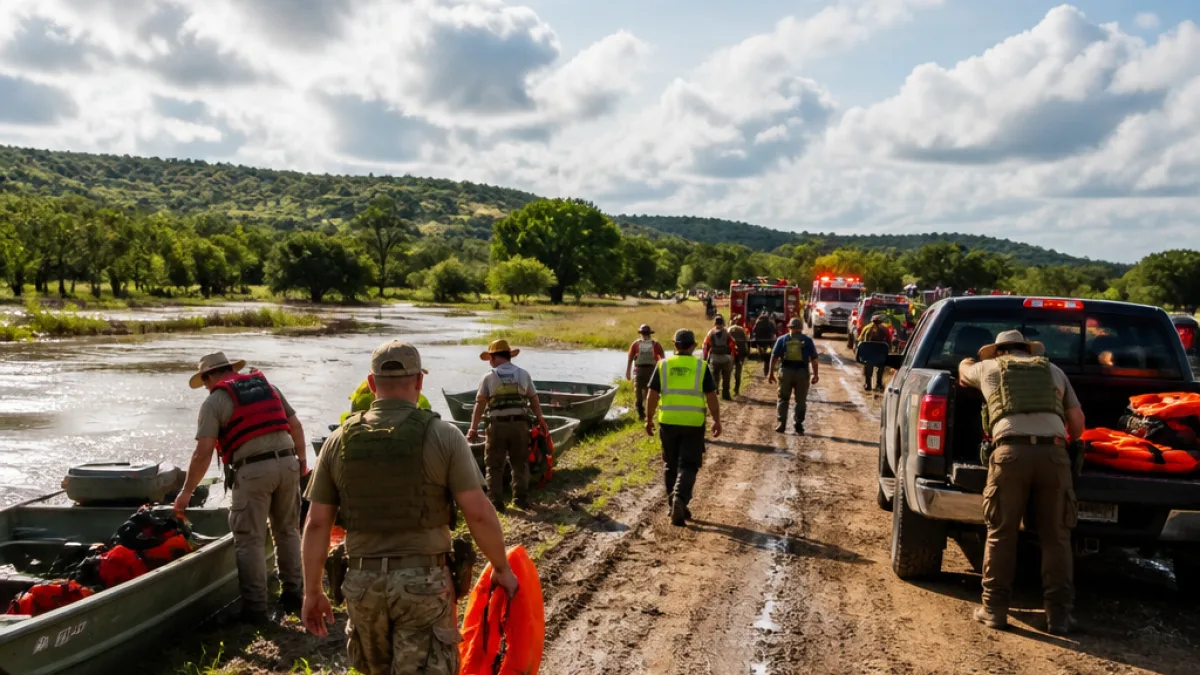
Local agencies, volunteer organizations and Louisiana municipal fire departments are operating alongside Texas responders as crews work to evacuate families and assess flood damage. Authorities confirmed one fatality so far.
The United Cajun Navy said it pre-positioned drones and rescue teams outside the most-impacted area and is coordinating deployments with local officials rather than self-deploying.
“We’re not self-deploying — it’s a big no-no; everyone learned that after last year’s event,”
Josh Gill, a coordinator with local response efforts, said evacuation operations were nearing completion even as additional rain was forecast.
“Once that response is complete, the water recedes — then its how do we start looking at the recovery operations, helping people get on with their lives,”
How Louisiana is contributing
Several Louisiana departments and volunteer teams have crossed the state line to assist. Among the known deployments:
- Baton Rouge Fire Department — sending personnel as part of mutual aid; department leadership described the move as an extension of long-standing cooperation with Texas counterparts.
- West Feliciana Parish — personnel embedded with state Urban Search and Rescue elements.
- United Cajun Navy — pre-staged drones and rescue teams, coordinating with local officials before moving into the impact area.
Baton Rouge Fire Department spokesman Billy Zachary framed the deployment as reciprocal assistance between neighboring states with similar flood risks.
“Unfortunately, flooding is no stranger to us here in Louisiana, and we are grateful to have had the support of the Texas USAR task force here whenever we experienced hurricanes or major flood disasters like in 2016,”
“So this is about neighbors helping neighbors, and we are just happy to be able to go over there and stand shoulder to shoulder whenever they need it.”
Context and what comes next
Officials warned more rain could arrive over the weekend, though forecasts indicated peak flood levels would likely be lower than the catastrophic event a year ago that killed more than 130 people in Texas, including the 25 children who died at a summer camp over the Fourth of July. Emergency teams say the immediate priorities are finishing evacuations, searching for anyone trapped, and then shifting into recovery and support for displaced residents.
| Resource | Role |
|---|---|
| United Cajun Navy | Pre-staged drones, rescue teams; coordinating with local officials |
| Baton Rouge Fire Department | USAR support; on-scene personnel |
| West Feliciana responders | USAR Task Force 2 contributors |
For Louisiana residents, the deployment underscores how state and volunteer resources are regularly called beyond parish lines during major weather emergencies. Agencies say the best immediate step for concerned family members is to monitor official social media and emergency management channels for reunification and resource center information.
As response teams work through evacuation and recovery phases, Louisiana crews expect to remain in Texas until authorities determine local operations are complete and it's safe for responders to return home.