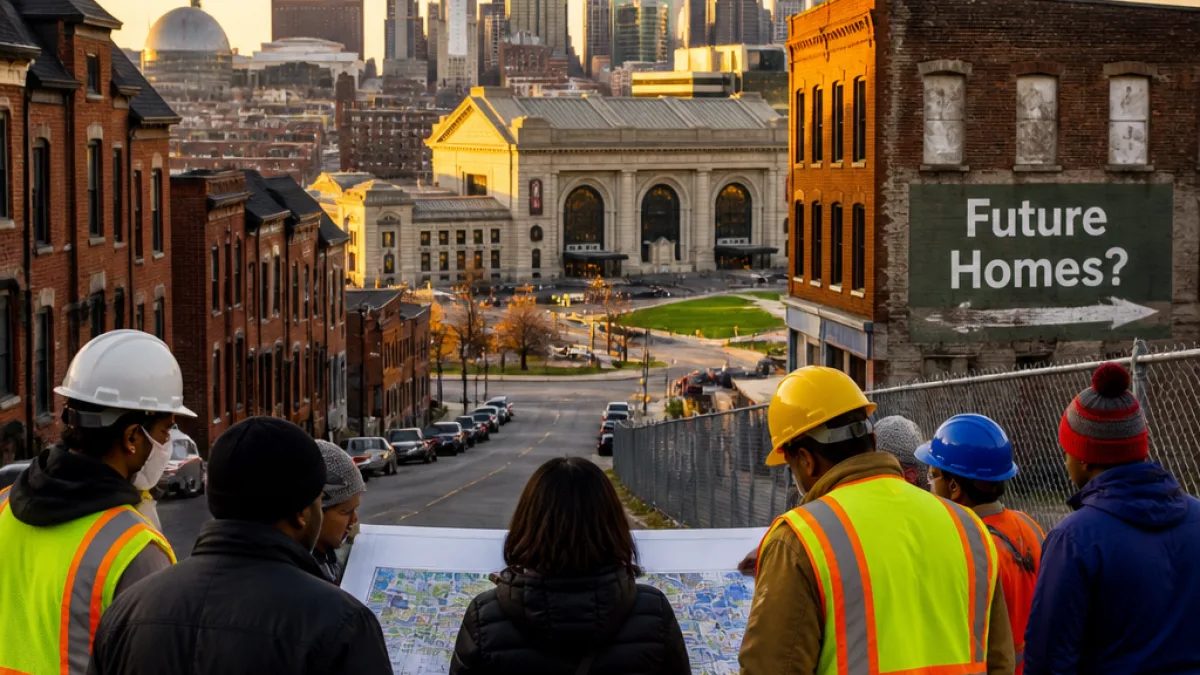
KANSAS CITY, Mo. — Lawmakers are advancing a housing affordability bill that targets rising home prices and aims to expand routes into homeownership for Kansas City families and renters. The measure approaches the problem on several fronts: loosening local zoning, encouraging manufactured housing and creating grants to turn vacant buildings into homes.
Voices from Oak Park and the building trades
Tyanna Smith, a resident at Oak Park Townhomes who came to Kansas City after fleeing a domestic violence situation in Arizona, described how precarious housing can be for people with limited resources.
“Oh it’s hard. Cuz they want three times rent and... that’s what makes it hard. They want the three times of rent and they ain’t got the three times. You can only really afford the rent and whatever else you got,”
Her account highlights an everyday barrier: screening practices that require applicants to show incomes often three times a unit’s rent, a requirement many say shuts out low- and moderate-income renters.
What the bill would do
Advocates and builders say the bill aims to make multiple policy changes rather than a single fix. Will Ruder, executive vice president of the KC Home Builders Association, urged policymakers to treat homeownership as a practical possibility, not merely an investment.
“There’s got to be that possibility of home ownership. Like a real possibility. Not just, oh just stop buying coffee and stop going out to eat and you’ll be able to afford a house. It’s much more complicated than that,”
Ruder also cautioned that traditional entry-level housing has shifted upward in price: “Now we’re talking about starter homes in the 350, 400, 450 range? That’s not a starter home.”
Components and local implications
The bill contains several discrete elements that could change how Kansas City grows and who can afford to live here. Local leaders and housing advocates say the changes could increase supply and create more immediate, lower-cost options — especially if cities adopt the recommended zoning changes and make use of grants for building conversions.
- Loosen zoning rules: Permit more types of housing in neighborhoods historically limited to single-family homes.
- Expand manufactured housing: Encourage more modular and factory-built homes as lower-cost alternatives.
- Convert vacant buildings: Create grant programs to turn underused commercial or institutional properties into residences.
| Policy area | Intended effect |
|---|---|
| Zoning reform | Increase housing mix and density to add supply |
| Manufactured housing | Provide lower-cost, quicker-to-build options |
| Vacant-building grants | Convert empty properties into affordable units |
Local stakes and next steps
For residents like Smith, the measure represents a potential pathway out of unstable housing. For builders and trade groups, it’s a signal of needed change, but not a complete solution. The bill’s effectiveness will hinge on implementation at the city level — whether Kansas City planners and housing officials adopt new zoning flexibility, allocate resources to conversions and support manufactured-home developments.
Policy discussions now shift from concept to logistics: defining which zoning changes cities must adopt, how conversion grants will be administered, and what standards manufactured housing must meet. Those details will determine whether the bill increases truly affordable housing or simply nudges the market without reaching the renters and would-be buyers most in need.
As the debate continues, Kansas City residents, housing advocates and builders will be watching which parts of the bill survive through committees and how quickly local leaders move to apply any new tools to the city’s housing stock.