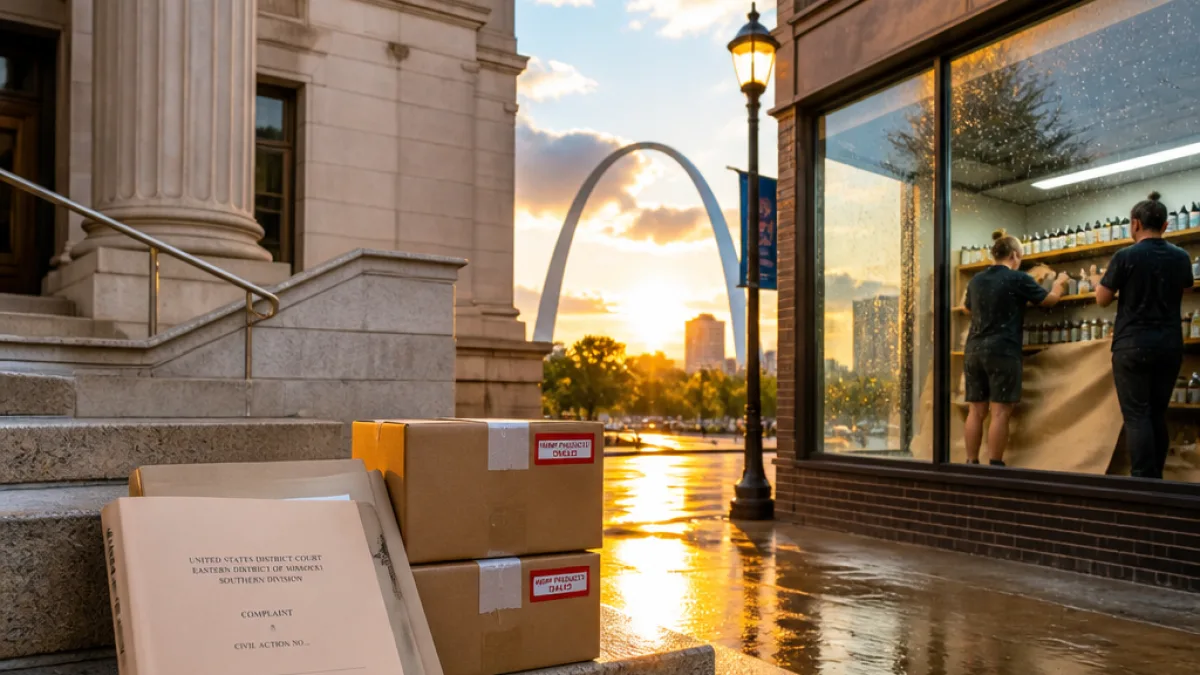
A coalition of hemp businesses filed a federal lawsuit Thursday seeking to stop Missouri’s new law that would ban intoxicating hemp products beginning Nov. 12.
The complaint, filed in U.S. District Court for the Western District, names Gov. Mike Kehoe, Attorney General Catherine Hanaway and Sarah Wilson, director of the Missouri Department of Health and Senior Services, as defendants. Plaintiffs include St. Louis-based MNG 2005, Inc. — the parent company of 55 CBD Kratom stores — the Missouri Hemp Trade Association and Wisconsin-based Lifted Liquids Inc.
What the lawsuit says
The businesses contend the law lawmakers passed this spring contains definitions for hemp and marijuana that are “unconstitutionally vague,” creating uncertainty for retailers and manufacturers. The plaintiffs argue that ambiguity in the legislation — House Bill 2641 — could sweep legitimate products off the market and leave businesses without a clear path to compliance.
“A lot of this stuff is kind of in the weeds,” Craig Katz, government relations and compliance manager for MNG 2005, said. “It’s very difficult to understand. And when people are trying to legislate it, if they don’t understand it, you come up with something like HB2641, which doesn’t make a whole heck of a lot of sense.”
How the law would work
The bill, one of the first signed by Kehoe this year, largely aligns state policy with a federal prohibition Congress approved last year. Under the Missouri measure, effective Nov. 12, the state would remove intoxicating hemp products, including THC seltzers sold in bars and grocery stores, from the consumer marketplace.
The statute also creates conditional pathways: if Congress were to reverse its federal action allowing such products, Missouri would restrict them to licensed marijuana dispensaries. If a federal ban is delayed for years, Missouri’s law would still bar most products except intoxication-designated beverages.
Practical stakes for Missouri businesses and consumers
The plaintiffs say the law threatens retail inventories, supply chains and businesses that rely on hemp-derived products. The state has tasked the attorney general’s office with enforcement, though Hanaway’s spokeswoman said the office had not yet been served with the lawsuit. Kehoe’s office and the Department of Health and Senior Services declined to comment because the matter is pending litigation.
- Effective date: Nov. 12
- Key plaintiffs: MNG 2005, Missouri Hemp Trade Association, Lifted Liquids Inc.
- Named officials: Gov. Mike Kehoe, AG Catherine Hanaway, DHSS Director Sarah Wilson
| Issue | Effect under the law |
|---|---|
| Retail sale of intoxicating hemp products | Banned statewide starting Nov. 12 |
| Congress reverses federal ban | Products only allowed in licensed marijuana dispensaries |
| Federal ban delayed | Most products still banned except certain beverages |
The lawsuit raises broader questions about how Missouri will regulate hemp as it navigates shifting federal policy. For consumers, bars and grocery retailers that currently stock hemp-derived THC drinks could see choices disappear if the ban takes effect. For industry groups, the litigation is an attempt to preserve market access and push back against what they call unclear statutory language.
As the case proceeds, it will test how much deference Missouri courts give to the legislature’s definitions in an area of law that remains technically and politically complex. The outcome may determine whether intoxicating hemp products remain available outside the state’s marijuana dispensary system or are removed from shelves entirely next fall.