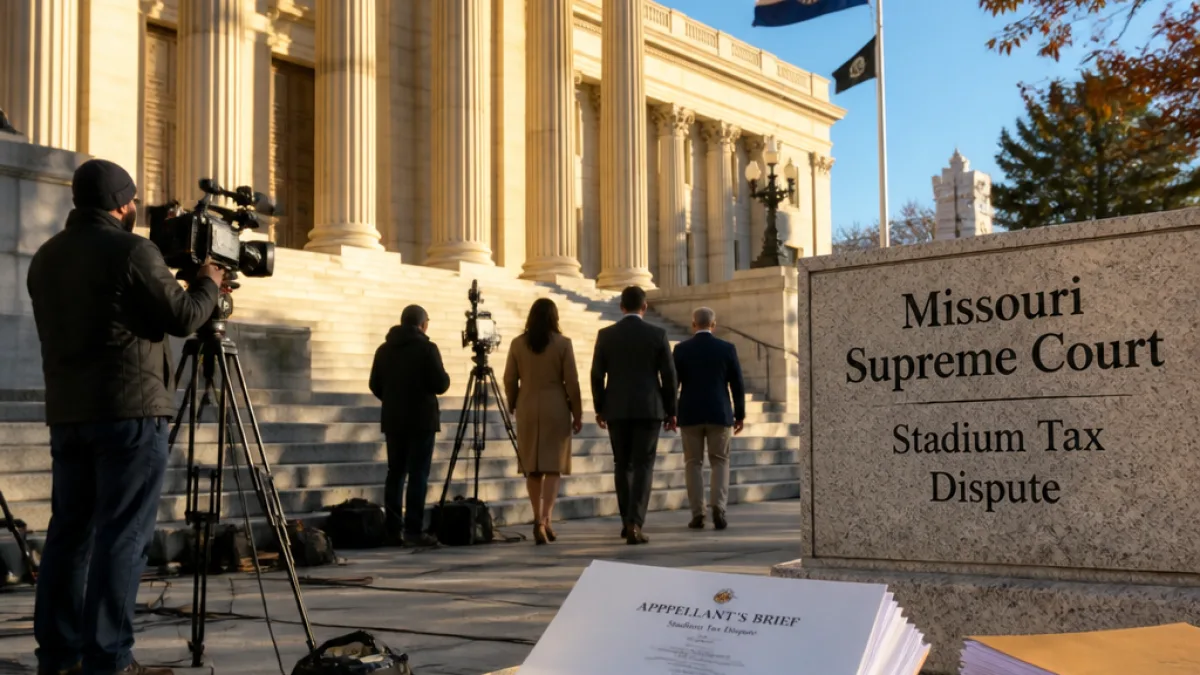
The Missouri Supreme Court on Tuesday focused not on whether the state's controversial stadium tax incentive law violates the constitution, but on a preliminary — and pivotal — question: do the three plaintiffs have standing to sue?
Standing is the first hurdle
State Sen. Mike Moon, state Rep. Bryant Wolfin and conservative activist Ron Calzone filed the lawsuit after lawmakers approved the tax incentive package in a special 2025 session that supporters said was needed to keep the Kansas City Chiefs and Royals from relocating. A Cole County judge dismissed the suit earlier this year without reaching the constitutional claims. The case returned to the capital when the Supreme Court agreed to hear an appeal of that dismissal.
At Tuesday’s oral arguments, attorneys debated whether the law already has generated concrete government spending or obligations that would give the challengers the legal right to sue. The plaintiffs’ lawyer, Bevis Schock, pointed to implementation steps the state has taken — including a new Department of Revenue form and computer programming — that were estimated in a legislative fiscal analysis to cost money.
“It has to be created. It has to cost something,”
Schock argued those required actions and the associated outlays are sufficient to show an injury from government action — the basic requirement for standing under Missouri law.
Deputy Solicitor General Michael Patton, representing the state, countered that projected costs in a fiscal note are estimates and do not by themselves prove that funds were actually spent. He also said ordinary duties performed by existing agency staff don’t necessarily become new public expenditures every time a law assigns an agency a new task.
What’s at stake beyond standing
If the court finds the plaintiffs do have standing, the lawsuit would go back to Cole County, where the challengers would get a chance to press their constitutional arguments. Those claims include allegations that lawmakers violated rules requiring a bill to stick to a single subject and that the legislation strayed from its original purpose. The suit also challenges provisions that allow public money to help finance privately owned professional sports facilities.
- Single-subject rule: Plaintiffs say the law bundled unrelated provisions into one bill.
- Purpose limitations: The suit claims the final measure differed from the bill lawmakers originally considered.
- Public financing concerns: The challengers contest whether state funds can be used to support privately owned sports venues.
The dispute is part of a broader conversation in Missouri about how far the state should go to retain or attract major sports franchises — and about legislative process during special sessions. The incentive package was approved during a special session called, in part, in response to competitive offers from other states and municipalities seeking the teams.
| Implementation item | Legislative estimate |
|---|---|
| Department of Revenue form | $10,000 |
| Computer programming | $175,000 |
For critics, the case offers a route to challenge both the substance of the incentives and the way they were enacted. For supporters of the law, a decision that the plaintiffs lack standing would keep the statute insulated from judicial review — at least for now.
The Supreme Court has not indicated when it will issue a ruling on standing. If it sends the case back to Cole County, Missouri’s courts could soon take up a high-profile constitutional fight over public spending and legislative procedure that may reverberate through future special sessions and economic development deals.