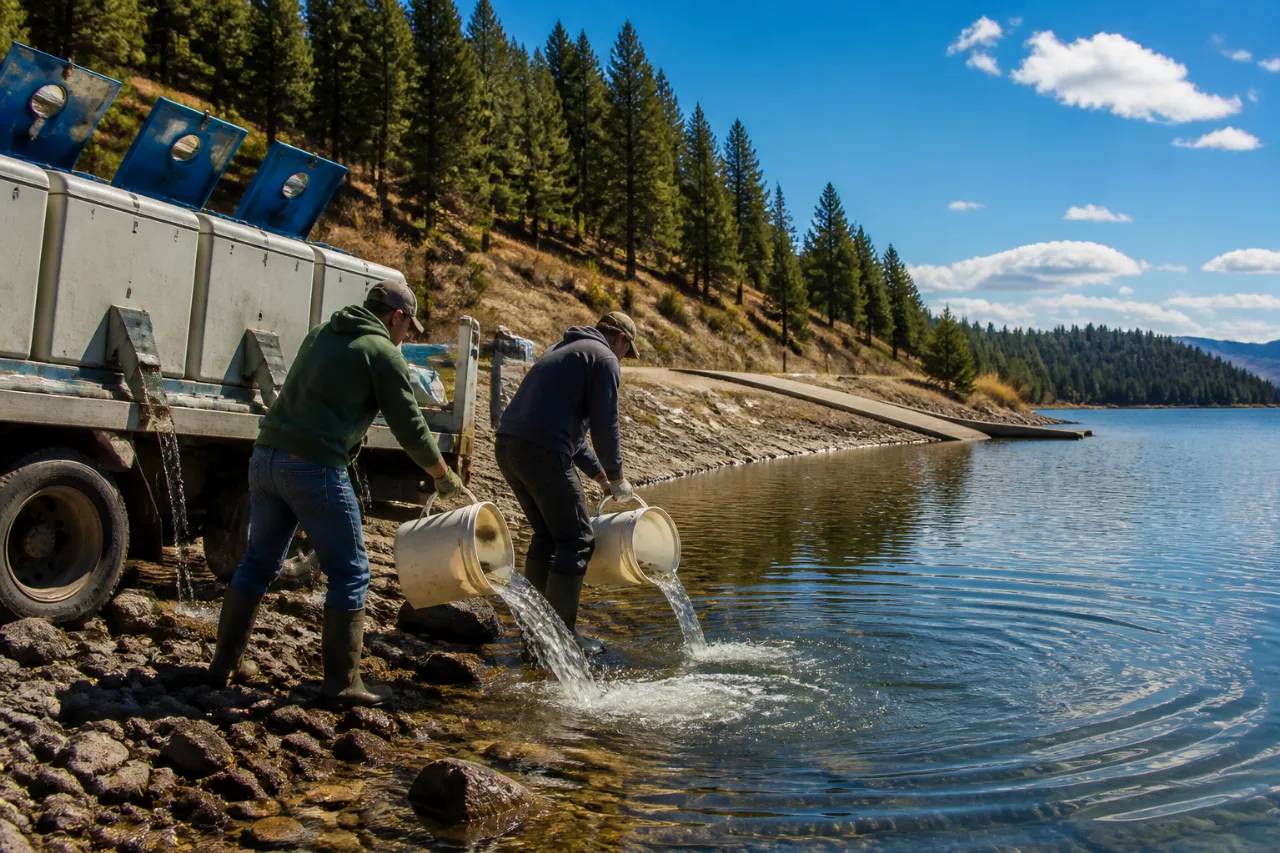
The Idaho Department of Fish and Game has released approximately 1 million kokanee fingerlings raised from its first-ever captive broodstock, agency officials announced Thursday. The releases, carried out in June, included stockings at lakes and reservoirs such as Hayden Lake and Lower Twin Lake.
Why the captive broodstock matters
Fisheries staff say the captive-broodstock approach is intended to stabilize kokanee production from year to year. Historically, Fish and Game captured adult kokanee from wild runs to generate eggs for hatcheries. When adult survival in the wild falls, that model can lead to fewer fingerlings the next year.
“Raising and rearing fish for anglers is nothing new for Fish and Game because we’ve done it for over a century, but this is a new twist that we think will benefit kokanee anglers,” said Beau Gunter, the agency’s state hatchery production manager.
How the program worked
The captive-broodstock effort began in fall 2022. Eggs taken from adults in the North Fork Payette River were hatched at Cabinet Gorge Fish Hatchery in the Panhandle. After about a year, roughly 15,000 of those juvenile kokanee were transferred to the Grace Fish Hatchery in southeast Idaho, where they were reared for two more years to reach spawning age. The fingerlings released this month are the offspring of those spawned adults.
Fish and Game has long sought to stock around 7 million kokanee fingerlings annually. According to the agency, hatchery production can help buffer fluctuations in wild adult survival that would otherwise reduce annual stocking totals.
Where the first generation were stocked
- Anderson Ranch Reservoir — 66,934 fingerlings
- Arrowrock Reservoir — 201,217 fingerlings
- Deadwood Reservoir — 53,505 fingerlings
- Other waters included Hayden Lake and Lower Twin Lake (numbers not specified in the agency notice)
| Reservoir | Fingerlings released |
|---|---|
| Anderson Ranch Reservoir | 66,934 |
| Arrowrock Reservoir | 201,217 |
| Deadwood Reservoir | 53,505 |
“Within about four years, our fisheries and hatchery crews have taken it from a concept to young kokanee being released, which included raising the captive broodstock from eggs to adults.”
Fishery managers said many of the newly released fingerlings should reach catchable size within two to three years, offering a near-term payoff for anglers. The move mirrors methods used in the agency’s sockeye salmon program, which now produces about 1 million young sockeye annually, Fish and Game noted.
For anglers and communities that rely on recreational fishing, the captive-broodstock program is meant to reduce the risk of year-to-year swings in fish availability. At the same time, it represents a longer-term commitment of hatchery resources and staff time as captive brood fish are raised to adulthood before their offspring are stocked.
Officials did not provide stocking counts for every lake named in the announcement. Anglers who want location-specific details or future stocking schedules can contact the Idaho Department of Fish and Game or check the agency’s stocking reports for updates.
This first large-scale release marks an early milestone for a program that began as an internal fisheries initiative and expanded into operational hatchery work. If the captive-broodstock model proves consistent and productive, it could become a regular tool in Idaho’s effort to maintain steady recreational kokanee fisheries across the state.