State officials announced Thursday that a last-minute, informal agreement with Idaho Power will prevent a major water curtailment this irrigation season — but the outcome underlines a recurring pattern of narrowly avoided water emergencies across Idaho.
What happened this year
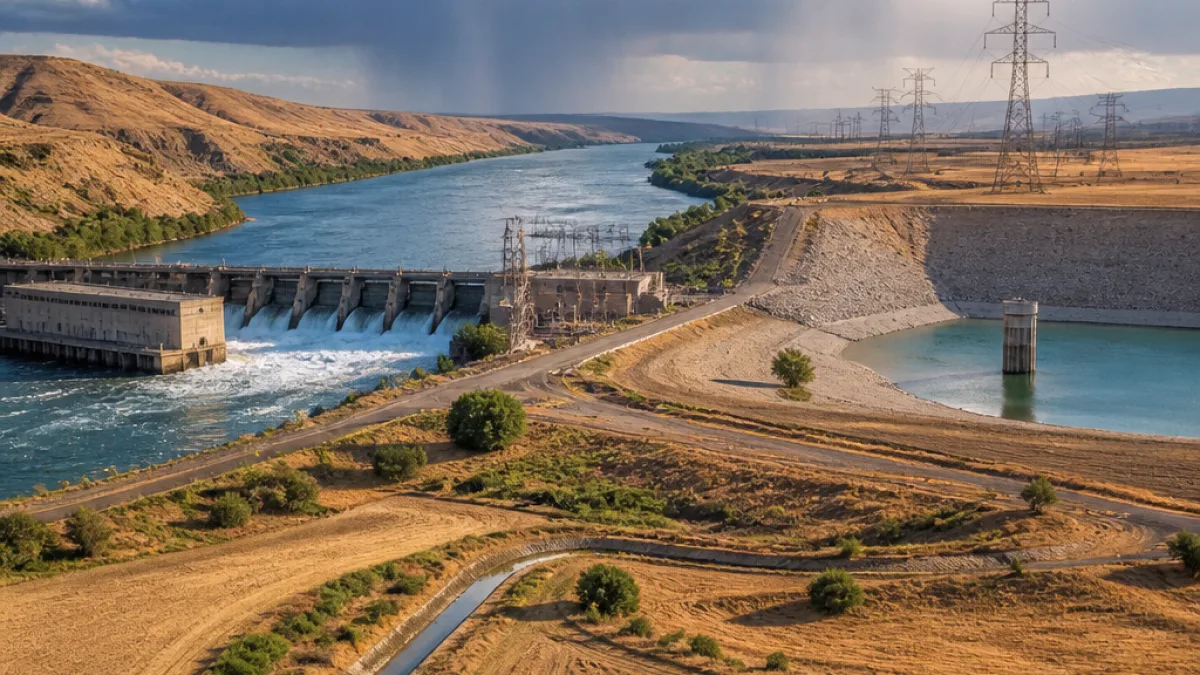
The Idaho Department of Water Resources (IDWR) says Idaho Power agreed not to pursue curtailment in exchange for a set of concessions. The threat hinged on so-called trust water rights, created under the 1984 Swan Falls Agreement, which guarantees minimum flows on the Snake River to support hydropower operations.
Those minimums come with a proviso: if flows fall below a fixed lower limit, some newer water rights can be curtailed. For roughly four decades that lower trigger was rarely approached. This year, flows dipped below that threshold for the first time and at one point threatened to remain low enough to force widespread irrigation cutoffs.
"I think we're coming out of the woods," said Nick Miller, water administration bureau chief of the Idaho Department of Water Resources, after recent storms boosted flows.
Who would have been affected
IDWR warned about 4,000 trust water rights holders — mostly farmers and ranchers across the southern half of Idaho — that they might have to stop irrigating if curtailment moved forward. In response, Gov. Brad Little recommended that the Idaho Water Resources Board purchase 5,900 acre-feet of storage water to offset low flows.
- Primary stakeholders: Idaho Power, irrigators holding trust water rights, IDWR, Idaho Water Resources Board.
- Geographic reach: Magic Valley, Thousand Springs area, and watersheds extending to the Lost River Basin in central Idaho.
- Triggering mechanism: Swan Falls minimum flow provisions and the trust water cutoffs tied to hydropower guarantees.
Broader pattern and local implications
This episode fits a larger, yearslong trend: repeated near-miss water crises have cropped up across the state, from conflicts between surface water irrigators in the Magic Valley and interests in eastern Idaho, to falling spring discharges that affect fish farms near Thousand Springs. The geographic footprint of stress is widening, looping in basins like the Lost River that until recently were peripheral to the debate.
The short-term agreement and seasonal rains bought time, but they do not resolve the structural tensions in Idaho’s water management framework. The Swan Falls trust water mechanism was intended as a compromise: guaranteed flows for hydropower in exchange for permitting new water uses, with contingency cutoffs if flows declined. That framework is now being tested in an era of more frequent extremes.
Practical takeaways for local communities
For farmers, ranchers and rural communities, the immediate message is to monitor IDWR communications closely this summer. The state has tools — purchases of stored water, negotiated agreements — that can avert curtailment in some years, but those are stopgap measures.
| Item | Detail |
|---|---|
| Trust water rights at risk | ~4,000 holders warned by IDWR |
| Temporary mitigation | Idaho Power concession + 5,900 acre-feet recommendation |
| Legal framework | 1984 Swan Falls Agreement |
Long-term solutions will require lawmakers, water managers, hydropower operators and irrigation districts to examine whether the existing balances and thresholds still make sense amid changing hydrology. Without durable policy changes, Idaho is likely to keep relying on emergency measures and fortunate weather swings to avoid periodic curtailments.
This year’s narrow escape provides a brief respite for water users across southern Idaho, but it also serves as a reminder: we have repeatedly walked back from the brink. The question now is whether the state will move beyond short-term fixes and craft a resilient approach that reduces the need for luck.