
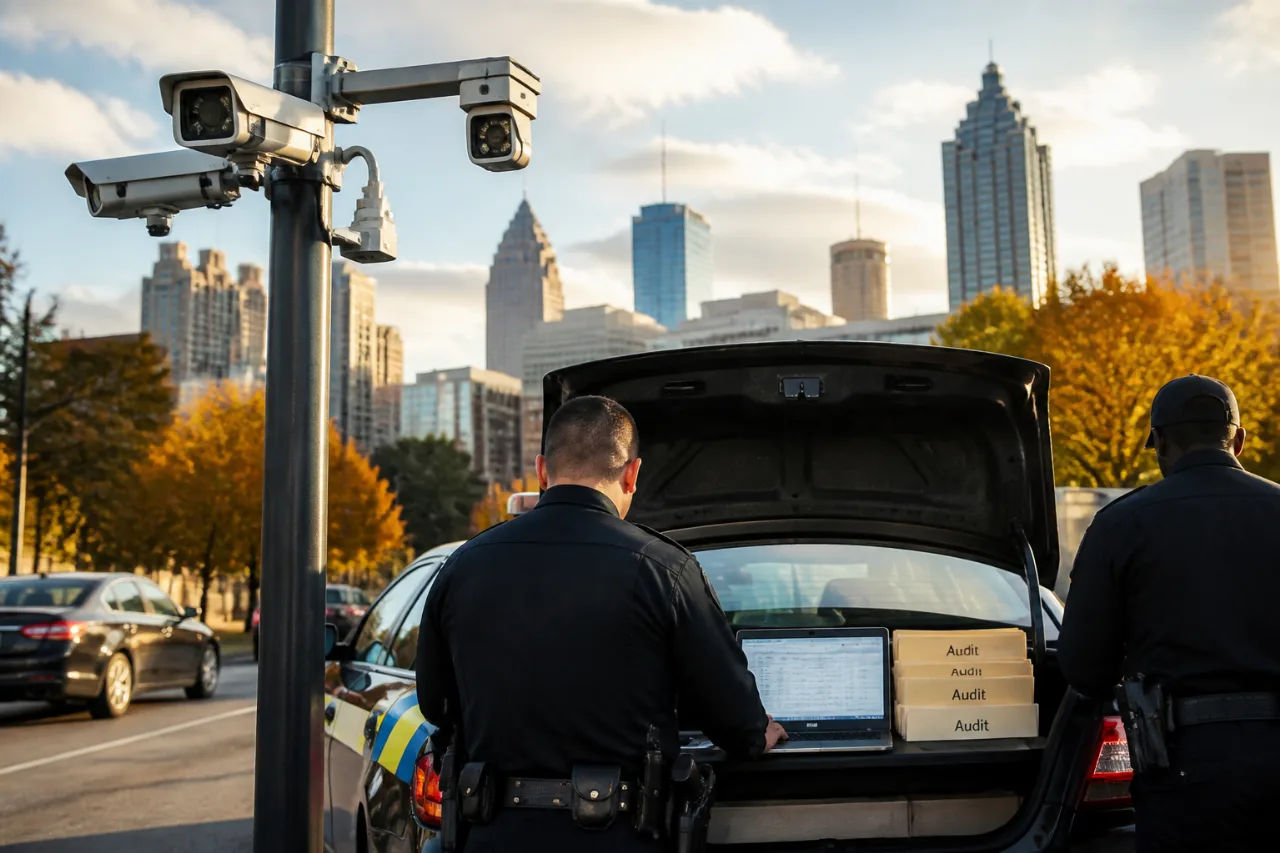
ATLANTA — Law enforcement agencies across Georgia are facing scrutiny after at least 10 police officers were arrested and charged in recent weeks for allegedly misusing the Flock license‑plate reader database for personal reasons, officials and advocates said.
What happened
The incidents include the firing and charging of Greene County Deputy Quin'sha Goss, as well as separate charges against five officers in Albany. Earlier this month, a lieutenant, a sergeant and a deputy in Cherokee County were charged with violating their oaths in what officials described as improper searches of the system.
The Flock network uses pole‑mounted cameras that scan license plates and capture associated metadata. The data is searchable by participating law enforcement agencies for purposes such as locating stolen vehicles or missing persons. According to company leadership, a new audit‑assistance tool has surfaced unusual search patterns that led agencies to investigate potential misuse.
Reactions from the company and critics
Flock co‑founder Paige Todd defended the technology’s public‑safety value and said the audit tool has helped identify misconduct.
"In this case where misuse happened, the technology itself was not creating the misuse. It was it was human beings,"
By contrast, civil‑rights groups say the cases demonstrate why stricter limits and oversight are needed. Christopher Bruce of the ACLU of Georgia called the arrests a wake‑up call about constitutional protections and the risk of warrantless tracking.
"Jeopardizing your civil rights and civil liberties is never just an unfortunate event. You have constitutional rights, especially a right to privacy. And the question is who polices the police?"
Local implications and oversight questions
For Georgia communities that participate in Flock or similar license‑plate reader networks, the arrests raise practical questions about policy and transparency: who can access searches, what audits are performed, and how agencies discipline improper use.
Information security analysts and civil‑liberties advocates have urged clearer access logs, routine external audits and public reporting of misuse findings. Officials in affected counties have said they are cooperating with investigations; Flock says audit tools are helping to detect irregularities.
- Arrests reported: At least 10 officers statewide
- Notable local incidents: Greene County deputy fired and charged; five Albany officers charged; Cherokee County lieutenant, sergeant, deputy charged earlier
- Company response: Flock cites audit tool that flags unusual searches
| County | Reported action |
|---|---|
| Greene | Deputy fired and charged |
| Albany (Dougherty County) | Five officers charged |
| Cherokee | Lieutenant, sergeant, deputy charged (earlier) |
For residents, the immediate takeaway is that data generated by roadside cameras can be searched by officers with access, and that misuse can prompt criminal or administrative action. Municipal leaders and law‑enforcement agencies that contract with private vendors should be prepared to explain access rules, retention schedules and audit practices to the public.
As investigations proceed, affected counties and the Georgia ACLU have signaled they will press for clearer safeguards to ensure that tracking tools intended for public safety are not used for improper personal searches.
Imani Walker, News Block — Georgia correspondent.