Inspection round finds pests and hot-water problems at several Fort Worth eateries
Fort Worth health inspectors reported multiple instances of cockroaches and rodent droppings during routine food-service checks conducted July 5–11, and two restaurants were temporarily closed after being found without adequate hot water, according to city inspection data compiled by the Star-Telegram.
Under Fort Worth’s demerit system — where a lower score is better — facilities with more than 30 demerits must immediately correct the most serious hazards and begin resolving the remaining violations within 48 hours. None of the establishments in this inspection batch exceeded that threshold, but inspectors cited violations that pose direct risks to food safety and sanitation.
Violations and closures
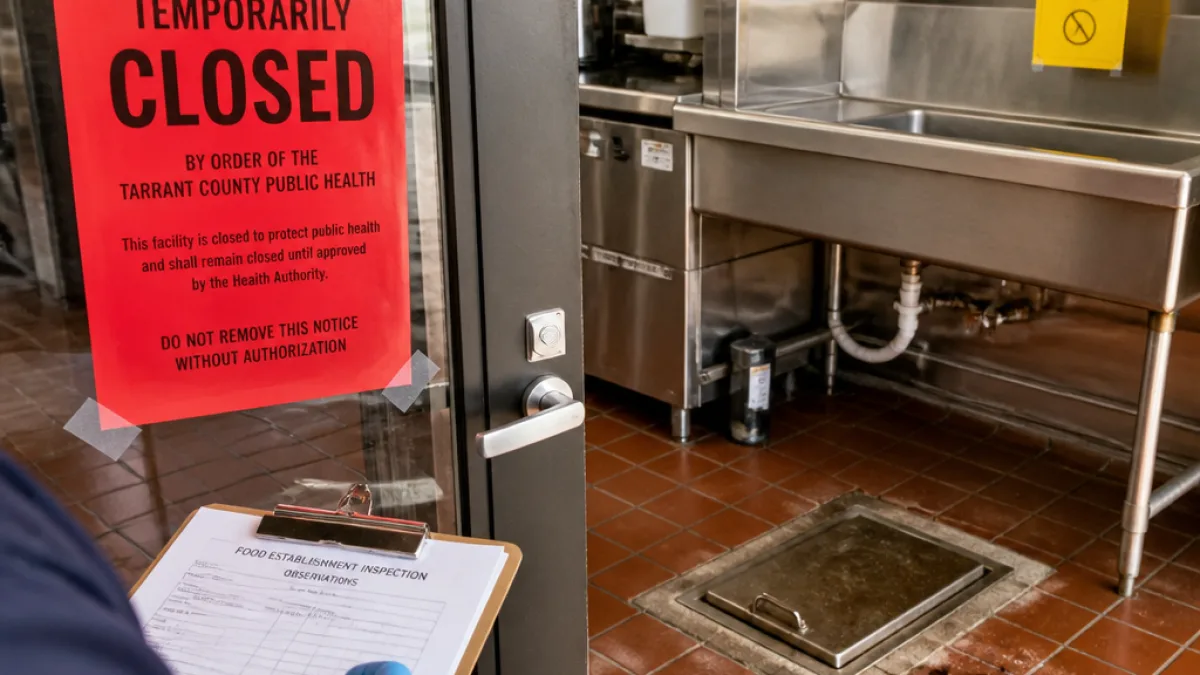
Inspectors cited several violations ranging from improper food storage to live pests. Two establishments were temporarily closed by the city because hand sinks and other critical fixtures lacked sufficient hot water at the time of inspection.
- Tapatia’s Mexican Food, 4707 E. Lancaster Ave. — scored 16. Inspector documented raw eggs stored next to ready-to-eat food, insufficient hot water at sinks, and multiple cockroaches near a kitchen hand sink. The facility was closed until hot water and the roach problem were addressed.
- Paco’s Mexican Cuisine, 1508 W. Magnolia Ave. — scored 12. Violations included undated salsa and food debris on cooking surfaces. The restaurant was temporarily closed for insufficient hot water at hand sinks.
- Carniceria La Altena, 3316 E. Lancaster Ave. — scored 20. Raw chicken was stored above raw beef, some employees lacked accredited food-handler certification, and dead roaches were found under a three-compartment sink and in a restroom.
- Tortilleria Super Sabrosa, 3251 Mansfield Highway — scored 10. Inspectors found meats and cheeses without date marks and observed dead and live cockroaches inside a light shield.
- The Waterford At Fort Worth, 6799 Granbury Road — scored 9. Two old rodent droppings were noted; the report says the issue was corrected during the inspection.
"When the total exceeds 30, the restaurant must take immediate corrective action and begin correcting all other violations within 48 hours."
The city's demerit model places a premium on correcting imminent health hazards. While no facility in this round registered an alarmingly high total, the presence of live pests and inadequate hot water prompted immediate enforcement steps in multiple cases.
Local stakes and public response
Food-safety violations can carry consequences for public confidence and for the businesses themselves. Temporary closures disrupt operations and can affect staffing and revenue, while repeat or severe violations risk higher penalties and longer closures. For Fort Worth consumers, these inspection reports provide a snapshot of which establishments needed on-site remediation and which corrected issues before inspectors left.
| Establishment | Address | Score | Key issue |
|---|---|---|---|
| Tapatia’s Mexican Food | 4707 E. Lancaster Ave. | 16 | Roaches; insufficient hot water; improper egg storage |
| Paco’s Mexican Cuisine | 1508 W. Magnolia Ave. | 12 | Insufficient hot water; food debris; undated salsa |
| Carniceria La Altena | 3316 E. Lancaster Ave. | 20 | Improper meat storage; untrained staff; dead roaches |
| Tortilleria Super Sabrosa | 3251 Mansfield Highway | 10 | Undated products; dead and live cockroaches |
| The Waterford At Fort Worth | 6799 Granbury Road | 9 | Old rodent droppings (corrected on site) |
Health inspections are a routine tool for protecting community health. Fort Worth residents can consult city inspection records to track compliance and choose dining options accordingly. For operators, timely repairs, pest control, proper food storage and certified food-handler training remain the primary ways to avoid repeat violations and potential closures.