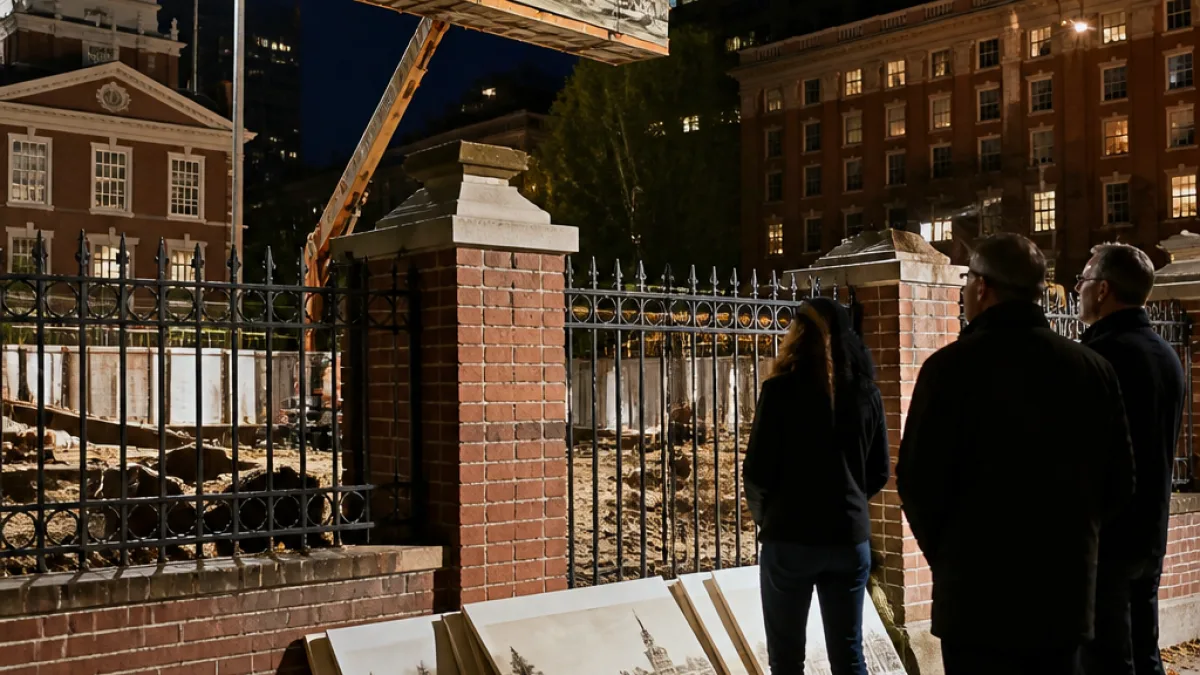
The federal government this week replaced panels that described the history of slavery at the site of President George Washington’s Philadelphia residence, installing a new set of interpretive panels after a federal appeals court ruling cleared the way for the change.
City officials and historians push back
Philadelphia Mayor Cherelle L. Parker condemned the action, saying the panels that had been removed offered a thorough account of the city’s past and the lives of the nine men and women who were enslaved in the house during the 1790s. She criticized the timing of the change, saying it was done "under the cover of darkness."
“Overnight, under the cover of darkness, the federal government removed panels at the President’s House that told a thorough history of Philadelphia,”
The panels taken down in 2010 had detailed how Washington and his household lived alongside people who were enslaved while Philadelphia briefly served as the nation’s capital. The newly installed panels preserve references to slavery and the people who were enslaved there, but remove some of the more pointed headings and contextual material that earlier exhibits presented.
Federal rationale and legal background
The Department of the Interior said the new displays offer historical context and highlight the significance of events that occurred at the President’s House and nearby sites in Independence National Historical Park. The statement also said the updated panels "acknowledge the evils of slavery."
The change follows an appeals-court decision that reversed a lower court order restricting the administration from altering the site’s exhibits earlier this year. A three-judge panel of the U.S. Court of Appeals for the 3rd Circuit allowed the federal government to proceed with installing the new panels.
Reactions from preservation groups
Historic preservation advocates raised concerns the revisions amount to sanitizing or softening the presentation of slavery at a site central to discussions about the nation’s founding. Alan Spears, senior director for cultural resources at the National Parks Conservation Association, warned the revisions appear intended to reduce the intensity of how slavery is interpreted at the site.
- Original panels: Installed in 2010; detailed the presence of enslaved people in the President’s House.
- New panels: Retain references to slavery but remove some earlier headlines and a map of slave trade routes.
- Legal development: Appeals court decision allowed the federal government to reinstall the new panels.
Wider context
The installation comes amid a broader push by the current administration to revise how federally managed historic sites and cultural institutions portray American history. In 2025, the president issued an executive order directing that federal historic sites avoid material that "disparage[s] Americans past or living" and emphasize national achievements and progress. That directive has prompted debates over whether such guidance risks erasing or minimizing difficult aspects of the past.
Philadelphia city officials said they plan to seek further legal review of the case. The dispute highlights ongoing tensions between local elected leaders, historians and the federal government over control of interpretation at nationally significant sites.
| Item | Detail |
|---|---|
| Site | President’s House, Philadelphia |
| Original panels installed | 2010 |
| Legal action | Lower court barred changes; 3rd U.S. Circuit of Appeals reversed that decision |
As legal and civic responses continue, the debate over how to present slavery at historic sites remains a flashpoint in broader conversations about memory, interpretation and public history in the United States.