A sudden dust storm that rolled through the Salt Lake Valley on Wednesday carried material from the exposed bed of the Great Salt Lake into neighborhoods and onto roadways, producing hazardous air and prompting state officials to expand monitoring of airborne contaminants.
The cloud reduced visibility across the valley and deposited a layer of gray dust over homes, vehicles and public spaces. Researchers and health officials said the airborne material includes a mix of minerals and metals — among them contaminants identified in lakebed sediments — that can aggravate respiratory and cardiovascular conditions when breathed in.
Immediate health concern: particle size and concentration
Scientists say the primary risk during these events is from particles small enough to be inhaled. Dr. Kevin Perry, a professor of atmospheric sciences at the University of Utah, said the most relevant measure is PM10 — particles smaller than 10 micrometers.
“I would say that the dust event that we had yesterday is dangerous,”
Perry told reporters that roughly half of PM10 particles are captured in the nose and throat while the remainder can penetrate into the lungs. He said PM10 concentrations during Wednesday’s storm reached roughly four times levels considered healthy, creating an acute threat to people with asthma, chronic lung disease, heart conditions and other vulnerabilities.
What’s in the dust and why it matters
Researchers have identified multiple substances of concern in sediments around the Great Salt Lake. Perry singled out arsenic as one of 13 contaminants documented in lakebed material, though he emphasized that the immediate danger from high dust concentrations — including triggering respiratory distress or cardiovascular events — is the more pressing concern.
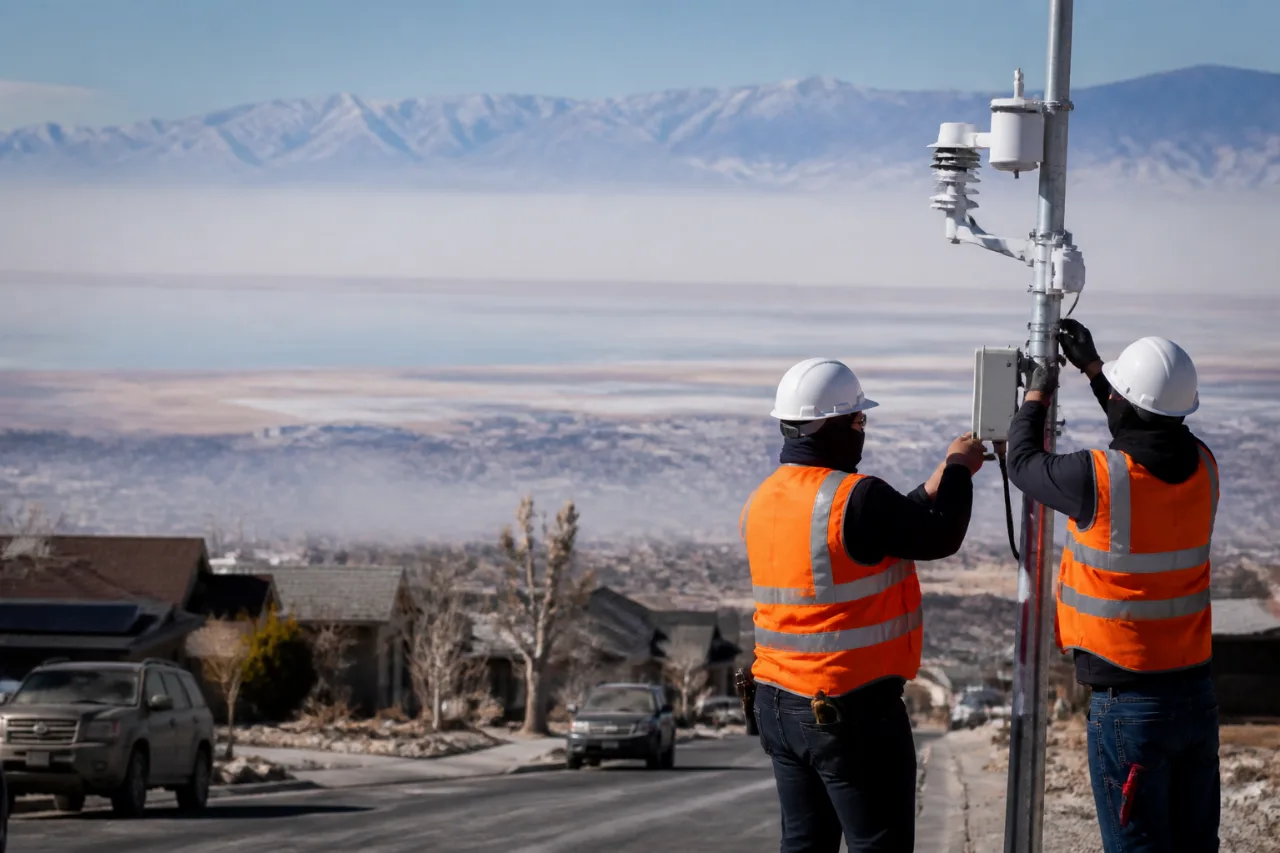
State air-quality officials are responding by increasing their ability to measure and analyze dust emissions. The Utah Division of Air Quality is installing new monitoring equipment designed to track both the frequency of dust events and the composition of particles delivered to populated areas.
Practical impact for residents
Officials warn residents to take precautions during and after dust storms:
- Limit outdoor activity when visibility drops or dust is visible in the air.
- Use masks that can filter fine particles if you must be outside; N95 or equivalent offers better protection against PM10-sized particles than cloth masks.
- Keep windows and doors closed and run air conditioning with clean filters to reduce indoor dust infiltration.
- Seek medical care if you experience breathing difficulty, chest pain, severe coughing or other acute symptoms.
Officials did not release a complete dataset from the Wednesday event, but Perry said such storms occur several times per year in the valley. He estimated they happen about three to eight times annually, depending on weather patterns and lakebed exposure.
| Measure | Reported level |
|---|---|
| PM10 concentration (during storm) | About 4 times healthy level |
| Typical annual events | 3–8 dust events per year (research estimate) |
State monitoring is expected to help answer key questions about how often dust events occur, the specific contaminants they transport and which communities face the greatest exposure. That information will inform public-health guidance and potential mitigation efforts as the Great Salt Lake continues to shrink.
For now, researchers and public-health officials urge residents to treat visible dust clouds seriously and to follow air-quality advisories issued by the Utah Division of Air Quality and local health departments.
Reporting from Salt Lake City.