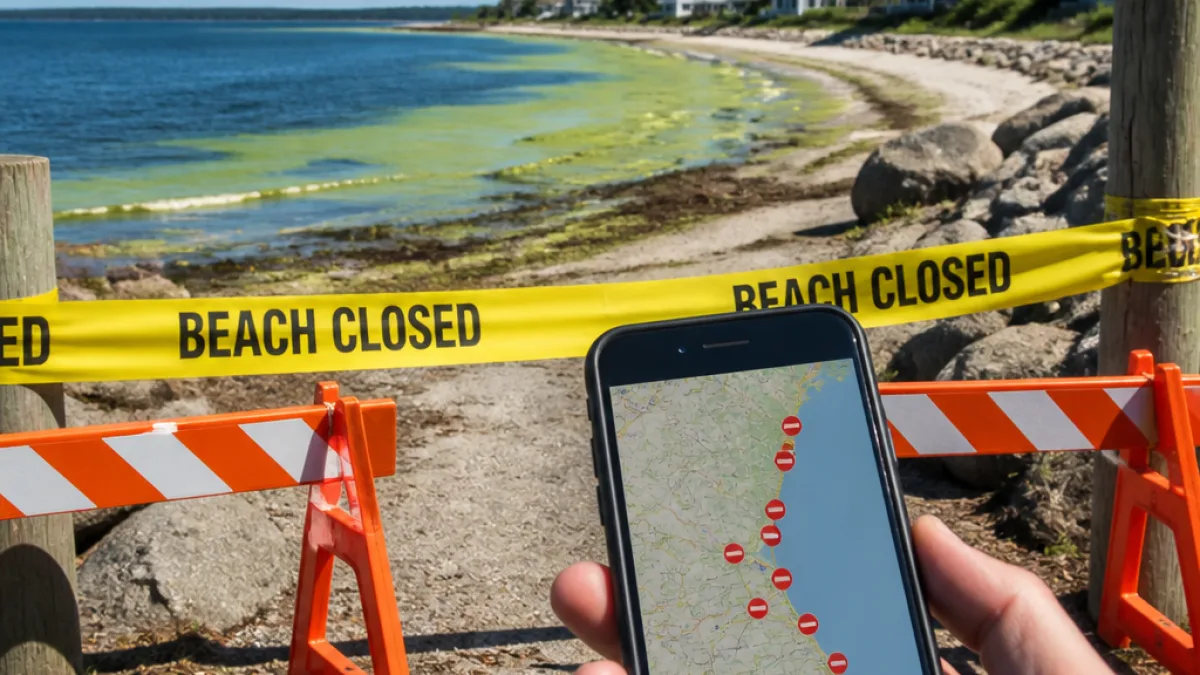
Dozens of beaches across Massachusetts were closed Sunday, July 12, with closures attributed to elevated bacteria levels, harmful cyanobacteria blooms and sewer-related events, according to the state’s interactive beaches dashboard.
Widespread closures span Cape Cod to the Merrimack Valley
The list of closures runs from small inland ponds to ocean-front sites popular with summer visitors. Officials cited varying causes, with many closures attributed to bacterial exceedances, others to harmful cyanobacteria blooms and several tied to combined sewer overflow/straight sewer overflow (CSO/SSO) events.
Examples of beaches closed Sunday include:
- Boston: Tenean — bacterial exceedance
- Nantucket: Sesachacha Pond — harmful cyanobacteria bloom
- Brewster: Cliff Pond at DYS and Main Street — harmful cyanobacteria bloom
- Dartmouth: Jones Town Beach (North and South) — CSO/SSO event; Moses Smith Creek — bacterial exceedance
- Lynn: King's Beach at Eastern Avenue, Kimball Road and Pierce Road — CSO/SSO event
| Sample site | Reason listed |
|---|---|
| Eugenia Fortes Beach (Barnstable) | Bacterial exceedance |
| Mingo Beach (Beverly) | Bacterial exceedance |
| Sesachacha Pond (Nantucket) | Harmful cyanobacteria bloom |
| Salt Pond Beach (Eastham) | Bacterial exceedance |
Public-health and local impacts
Closures like these are aimed at protecting swimmers and beachgoers from exposure to contaminated water. Bacterial exceedances commonly reflect elevated levels of organisms such as enterococci or E. coli, which can increase the risk of gastrointestinal and skin illnesses for swimmers. Cyanobacteria (blue-green algae) blooms can produce toxins that affect humans and animals. CSO/SSO events can discharge untreated or partially treated sewage into recreational waters, prompting closures until conditions improve.
The closures affect both coastal and inland communities, disrupting weekend plans for residents and visitors and placing added pressure on local public-health and environmental officials to monitor and respond to changing water-quality conditions.
Where to get current information
The state maintains an interactive beaches dashboard that lists current closings and the reasons cited by local health departments and water-quality monitoring programs. Beachgoers and municipalities are relying on that resource for up-to-date information on individual sites.
Local health departments and the state Department of Environmental Protection post and remove advisories as testing and investigations proceed. Beach closures remain in effect until local officials determine conditions have returned to acceptable levels.
News Block will continue to monitor updates from the state dashboard and local boards of health for changes to the list of closed beaches.