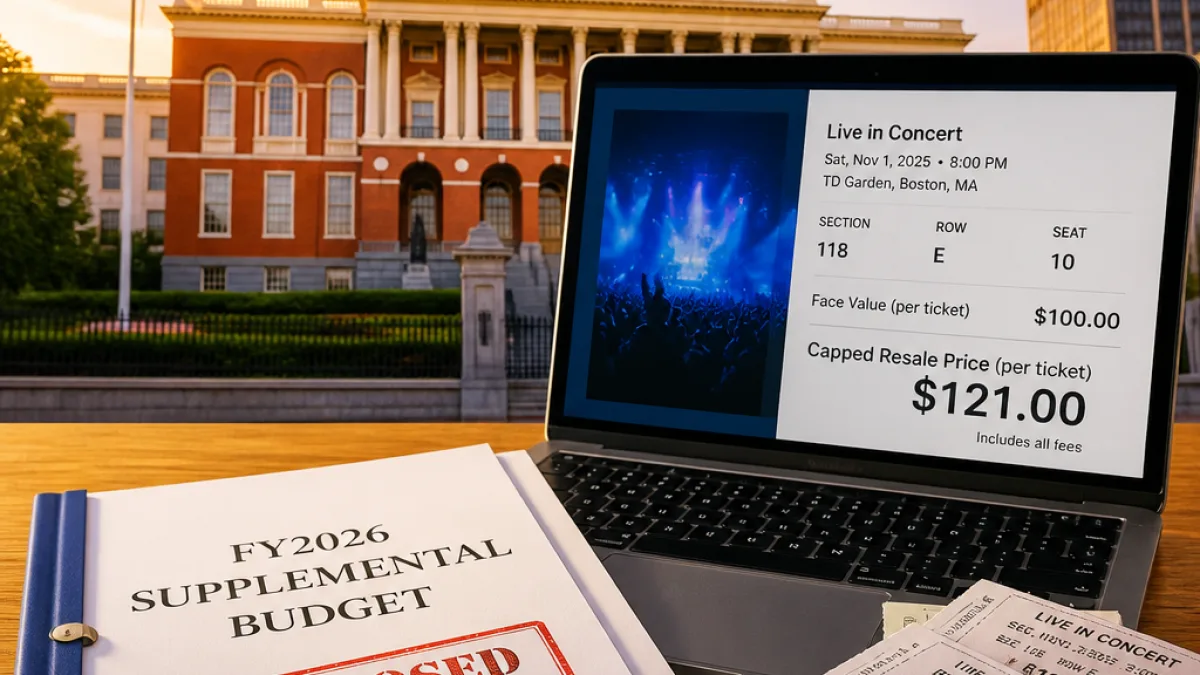
Gov. Maura Healey on Thursday proposed a cap on secondary-market ticket prices for concerts and other live events in Massachusetts, part of a broader supplemental budget measure aimed at protecting consumers from rapidly rising costs charged by resellers.
What the proposal would do
Under the governor’s plan, resale platforms would be restricted in how much they can increase the price of a ticket above its original face value. The administration illustrated the mechanics with a simple example: a ticket sold for $100 could be resold for no more than $121 after markup and fees.
| Original price | Allowed markup (10%) | Allowed fees (10% of resale) | Maximum resale price |
|---|---|---|---|
| $100 | $10 | $11 | $121 |
The cap in Healey’s plan does not extend to professional sports tickets, the administration said. The proposal is packaged as part of a supplemental spending bill that must still be approved by the Legislature.
Support and concerns
The governor played a recorded endorsement from singer-songwriter Noah Kahan, who performed three sold-out shows at Fenway Park in recent days, to highlight artist backing for measures targeting secondary-market abuse. The message said that performers cannot alone fix problems on resale platforms and thanked Massachusetts for prioritizing the issue.
"Artists alone could not tackle market manipulation of secondary resellers. So, thank you so much for making this a priority in Massachusetts."
Industry representatives and ticketing advocates raised objections, arguing that price caps could produce unintended effects. Resale platforms have told regulators that limiting resales won’t address rising primary-market prices and could push buyers toward riskier, informal marketplaces where scams are harder to police.
- Proposal caps reseller markups and limits fees tied to the resale price.
- Sports tickets would be excluded from the cap.
- Legislative approval is required before the measure can become law.
House officials said they had not yet reviewed the governor’s supplemental budget request. If lawmakers take up the proposal, debates are likely to center on enforcement mechanisms, potential effects on ticket availability, and consumer protection versus market disruption.
For Massachusetts consumers, the measure aims to make resale purchases more predictable and to reduce episodes in which fans arrive at venues only to discover tickets purchased through secondary channels were never properly transferred. Advocates for stricter rules say the changes would bring transparency and guardrails to a market that has long frustrated eventgoers.
As the bill moves to Beacon Hill, lawmakers and stakeholders will weigh the balance between curbing exploitative resales and avoiding outcomes that could push transactions into unregulated spaces or alter the dynamics of ticket distribution for performers and venues.