Roberta Kwok offers a corrective to tidy origin stories of discovery in her new book, Lost in Curiosity, which catalogues the small catastrophes and stubborn uncertainties that shape modern research. Published by Sourcebooks and priced at $27.99, the book draws on on-the-ground anecdotes to show how experiments are rarely linear and breakthroughs are often preceded by repeated failure, resource strain and improvisation.
Everyday breakdowns, not just eureka moments
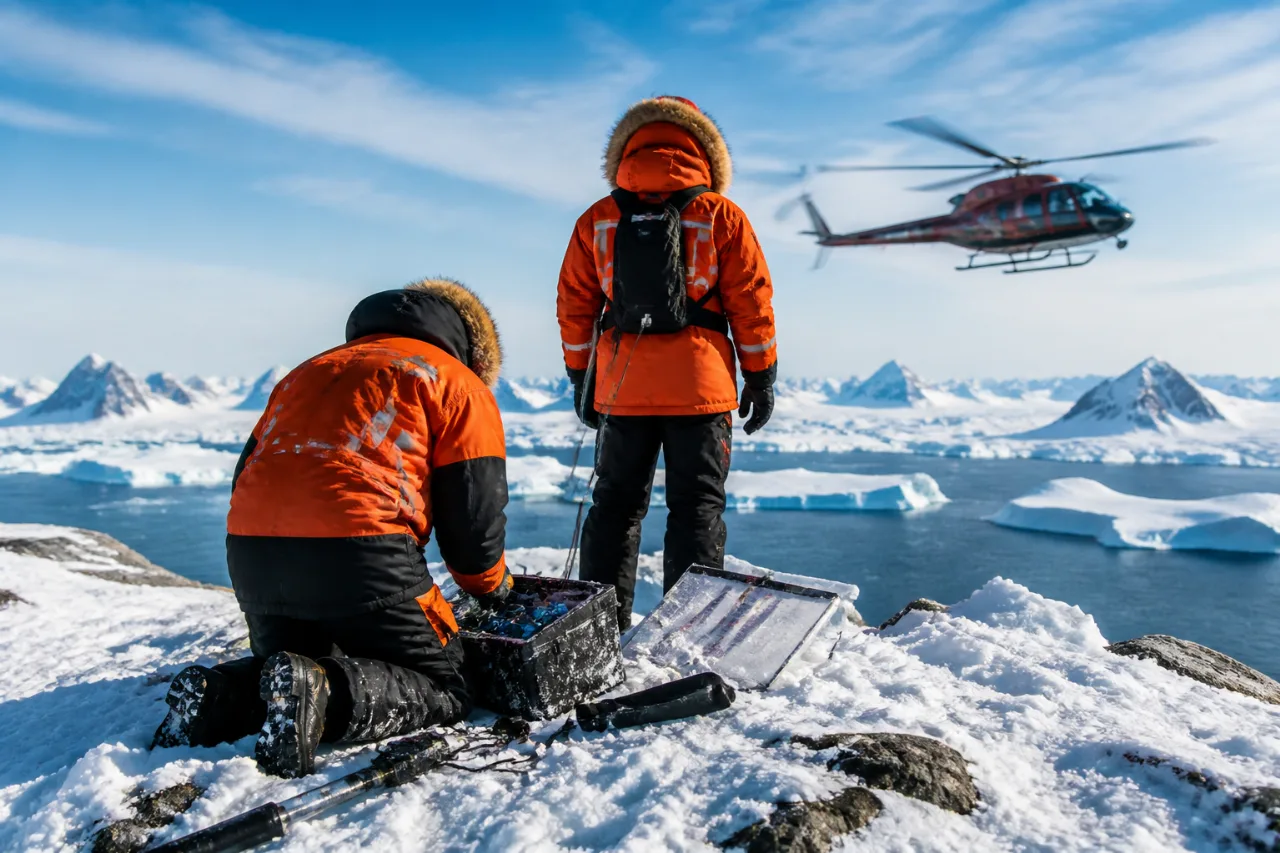
Kwok opens with a field team racing to measure melting ice in Greenland. Bad weather, a helicopter reservation mix-up and the arrival of the COVID-19 pandemic interrupted their work and threatened costly instruments — a sequence of events that illustrates how logistical fragility can determine whether a project succeeds or stalls.
Her reporting moves from polar camps to quiet laboratory mishaps. One chapter recounts the author’s own early graduate-school panic, when she collided a nanomaterial with an expensive detector and spent an hour convinced the instrument was ruined, poring over replacement parts online. Fortunately the device survived — but the episode underscores a point that recurs throughout the book: much of doing science is damage control and contingency planning.
"whoopsie"
What the public misses
Kwok challenges the persistent myth of the solitary genius — the lone scientist who, single-handedly and without misstep, overturns a field. Instead she presents science as collaborative and iterative, with teams and institutions absorbing setbacks and adapting plans. For readers outside research environments, the book demystifies how data are produced and why progress can be slow or nonlinear.
- Common obstacles: equipment failure, weather, scheduling errors, public-health disruptions.
- Human costs: frustration, financial strain and career uncertainty among early-career researchers.
- Institutional lessons: the need for redundancy, flexible funding and realistic timelines.
Implications for research and policy
By collecting stories of mishap alongside perseverance, Kwok’s book signals practical consequences for how research is funded and managed. If much science depends on fragile logistics and expensive, hard-to-replace equipment, then funding models and grant timelines that assume continuous, uninterrupted progress may systematically disadvantage the kinds of projects most vulnerable to delay. The book also speaks to workforce issues: early-career researchers who face repeated, demoralizing setbacks may reconsider academic paths, with implications for talent retention.
| Challenge | Example from the book |
|---|---|
| Field logistics | Helicopter booking errors in Greenland |
| Equipment risk | Potentially damaged $10,000 detector |
| External disruption | COVID-19 grounding research teams |
Lost in Curiosity does not glamourize these failures; it frames them as essential, instructive parts of scientific work. For scientists and non-scientists alike, Kwok’s portraits offer a more nuanced picture of discovery: one in which patience, teamwork and the ability to recover from setbacks matter as much as ingenuity.
The book will be of interest to policymakers, university administrators and anyone who communicates about science, because it reframes expectations about speed, certainty and the visible markers of success.
Ultimately, the narrative is a reminder that nature rarely yields answers on a schedule — and that the processes behind the headlines are often as informative as the headlines themselves.