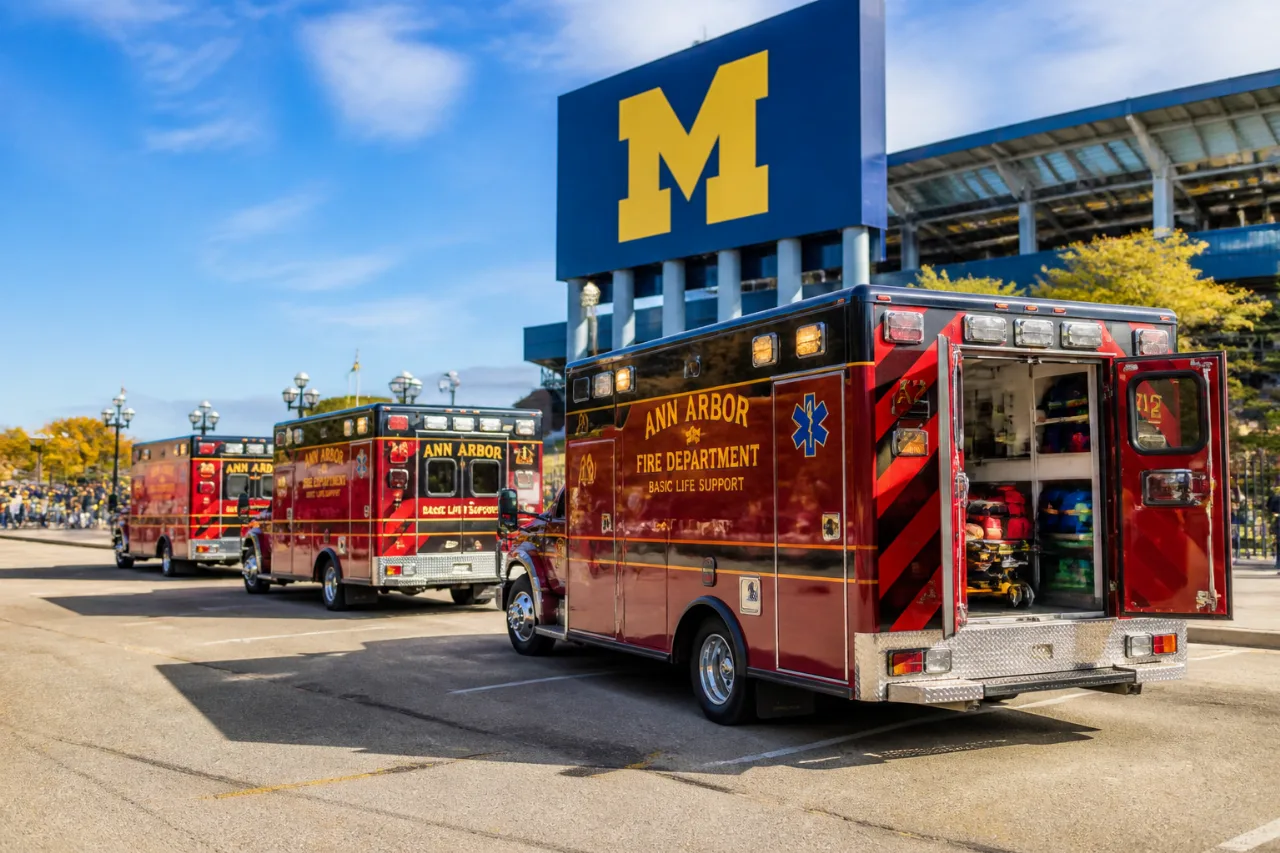
The Ann Arbor Fire Department will expand its ambulance fleet after City Council approved a $346,000 purchase on Monday, July 6. The new vehicle will serve as surge capacity for large public events at Michigan Stadium and elsewhere in the city, and provide backup when other ambulances are unavailable for maintenance or repair.
Why the city is adding another ambulance
The department first began operating an ambulance in 2023 to supplement local emergency medical services amid concerns about delays and a shortage of emergency medical technicians. A second ambulance was approved in 2024 at a cost of about $321,000. The newly approved third ambulance will match the configuration of the existing units.
- Cost approved: $346,000
- Purpose: surge capacity for concerts, Big Ten rivalry games, Ann Arbor Art Fair and other events; cover maintenance downtime
- Capabilities: basic life support transport with cot and loading system
Events driving the need
City officials emphasized the ambulance will be used during significant gatherings that draw large crowds, including concerts at Michigan Stadium. The department specifically cited upcoming shows such as the July 24-25 concerts headlined by country artist Morgan Wallen as examples of when additional capacity will be needed.
“This third ambulance will be used for surge capacity for significant events such as concerts at Michigan Stadium, BIG10 rivalry games, and Art Fair,” Chantel Jackson, safety services administrative manager, said in a memo to council.
What the unit will do and what it won’t
The fire department’s ambulances are configured to provide basic life support (BLS) transport. That is different from advanced life support units staffed by paramedics, which deliver higher-level interventions such as advanced cardiac care. The department’s BLS units fill a gap in local coverage while working alongside private and regional ambulance providers, including Huron Valley Ambulance.
Officials noted that hybrid and fully electric ambulances are still in development by manufacturers. The department expects to replace this spec-model vehicle with a hybrid or electric unit at the end of its anticipated life cycle, roughly eight years from now.
For Ann Arbor residents, the immediate effect should be improved ambulance availability during major events downtown and steadier response coverage when vehicles are sidelined for repairs — a practical step the city is taking to reduce transport delays and address staffing pressures in emergency medical services.